

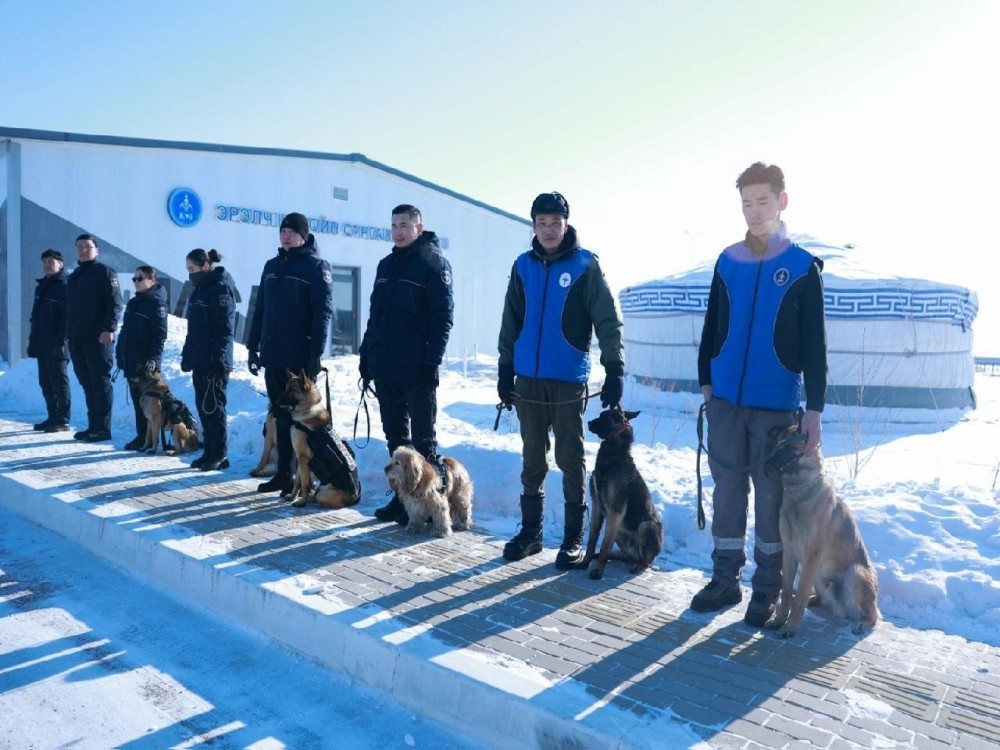
The Head of the City Council and Chair of the Capital Crime-Prevention Coordination Sub-Council, A.Bayar, and council members visited the Search Dog Training Center of the General Customs Department at Chinggis Khaan International Airport.
Established in 1993, the training centre currently houses 53 dogs in total; six of those dogs are deployed at the international airport to help protect Mongolia’s borders by screening passenger luggage and detecting narcotics and psychotropic substances.
B. Naranbadrakh,head of the Search Dog Training Center, said customs sniffer dogs, primarily Malinois, German Shepherd and Labrador Retriever breeds, play a vital role at the air border. He told inspectors that 30–40% of drugs and psychotropic substances detected at the air border are found by sniffer dogs. He added that Malinois dogs can be trained to recognise some 7,000 different odor signatures, and their sense of smell is far more sensitive than that of humans.
The centre’s team noted practical constraints: the average lifespan of a search dog is about 12 years, with an active working life of roughly 8 years. With international flights steadily increasing, officials said more sniffer dogs are needed to maintain 24-hour customs inspection coverage.
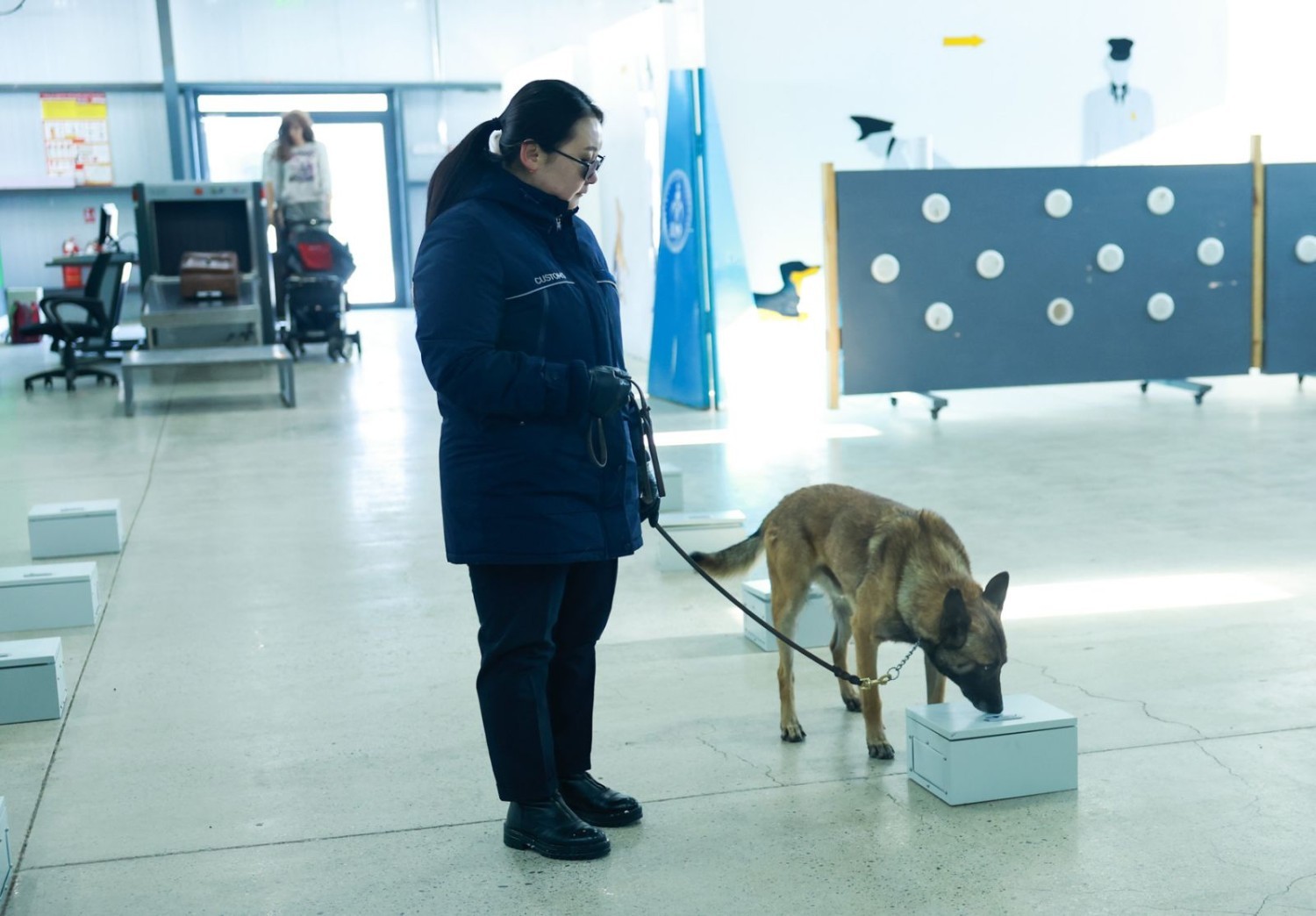
G.Baasandorj, Head of Customs at Chinggis Khaan International Airport, urged inclusion of sniffer dogs in breeding programmes to expand supply. He said deploying pairs of dogs to inspect passengers and cargo would raise screening speed and throughput.
A.Bayar, The Head of the City Council and Chair of the Capital Crime-Prevention Coordination Sub-Council, said the capital’s crime-prevention group will prioritise combating illegal narcotics circulation this year. Citing the Republic of Korea’s long-standing breeding programmes for narcotics-detection dogs, officials will work with relevant organisations to improve Mongolia’s search-dog quality and help prevent the importation of narcotic drugs and psychotropic substances into Ulaanbaatar.
The Head of the City Council and Chair of the Capital Crime-Prevention Coordination Sub-Council, A.Bayar, and council members visited the Search Dog Training Center of the General Customs Department at Chinggis Khaan International Airport.
Established in 1993, the training centre currently houses 53 dogs in total; six of those dogs are deployed at the international airport to help protect Mongolia’s borders by screening passenger luggage and detecting narcotics and psychotropic substances.
B. Naranbadrakh,head of the Search Dog Training Center, said customs sniffer dogs, primarily Malinois, German Shepherd and Labrador Retriever breeds, play a vital role at the air border. He told inspectors that 30–40% of drugs and psychotropic substances detected at the air border are found by sniffer dogs. He added that Malinois dogs can be trained to recognise some 7,000 different odor signatures, and their sense of smell is far more sensitive than that of humans.
The centre’s team noted practical constraints: the average lifespan of a search dog is about 12 years, with an active working life of roughly 8 years. With international flights steadily increasing, officials said more sniffer dogs are needed to maintain 24-hour customs inspection coverage.
G.Baasandorj, Head of Customs at Chinggis Khaan International Airport, urged inclusion of sniffer dogs in breeding programmes to expand supply. He said deploying pairs of dogs to inspect passengers and cargo would raise screening speed and throughput.
A.Bayar, The Head of the City Council and Chair of the Capital Crime-Prevention Coordination Sub-Council, said the capital’s crime-prevention group will prioritise combating illegal narcotics circulation this year. Citing the Republic of Korea’s long-standing breeding programmes for narcotics-detection dogs, officials will work with relevant organisations to improve Mongolia’s search-dog quality and help prevent the importation of narcotic drugs and psychotropic substances into Ulaanbaatar.