

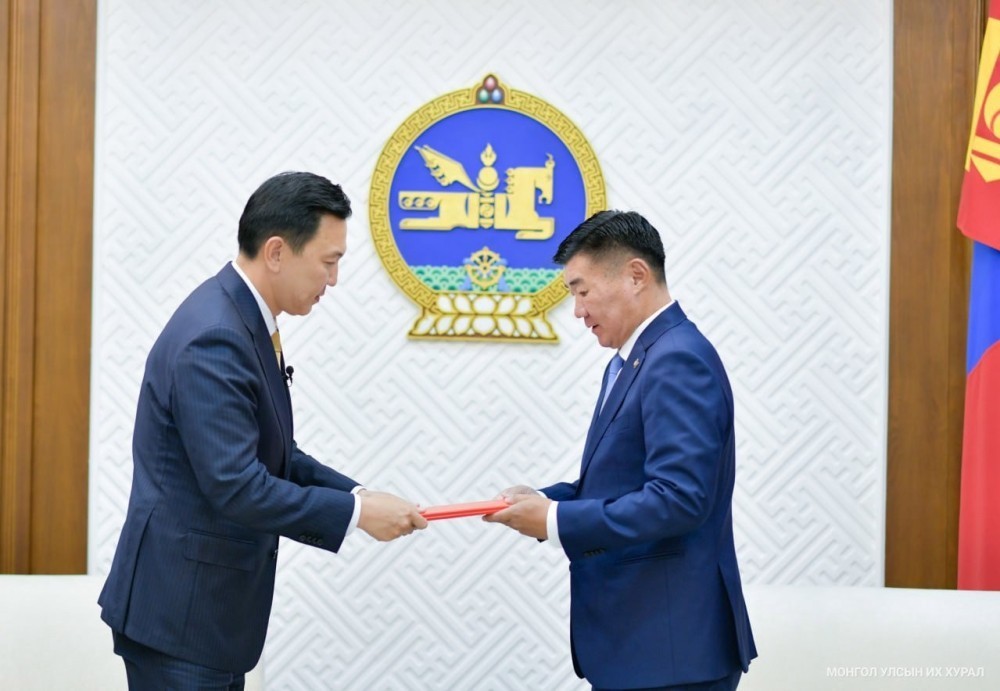
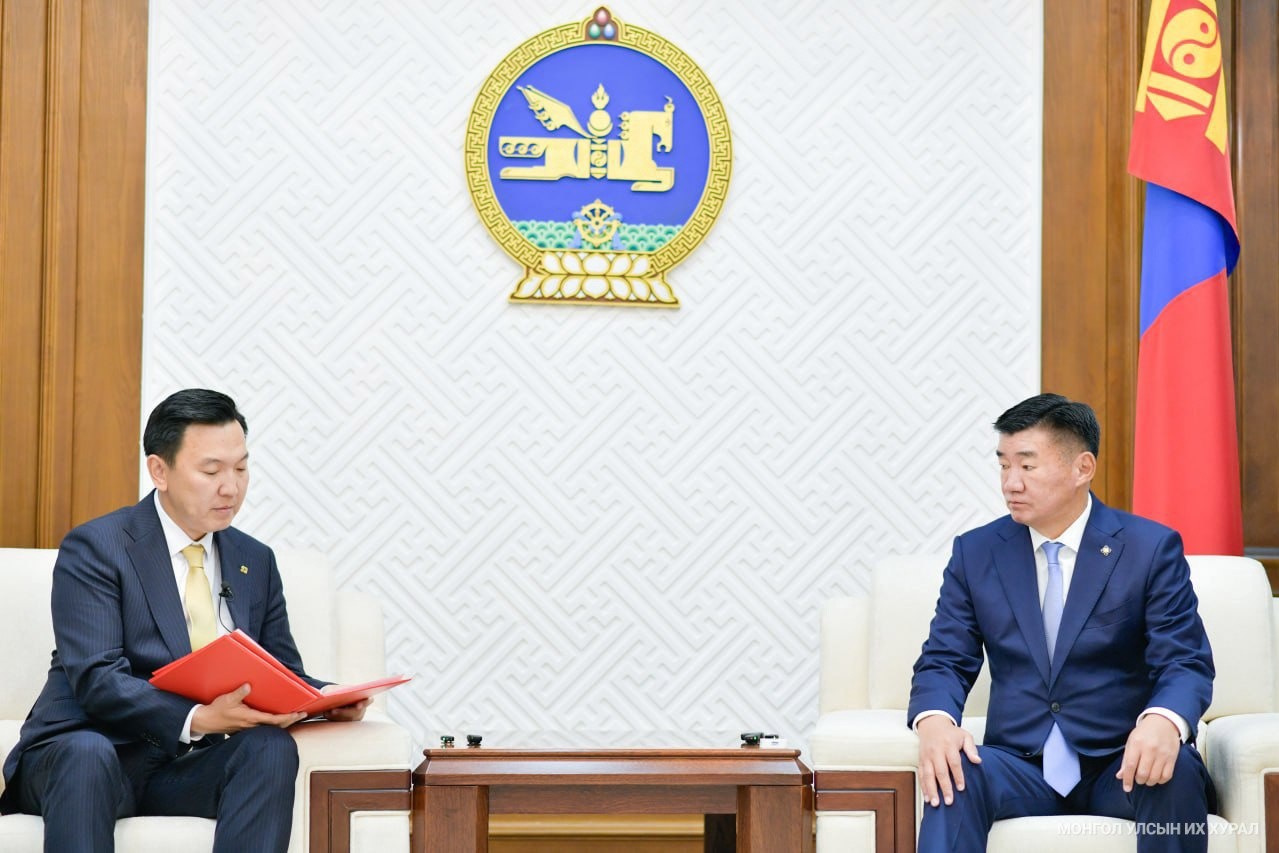
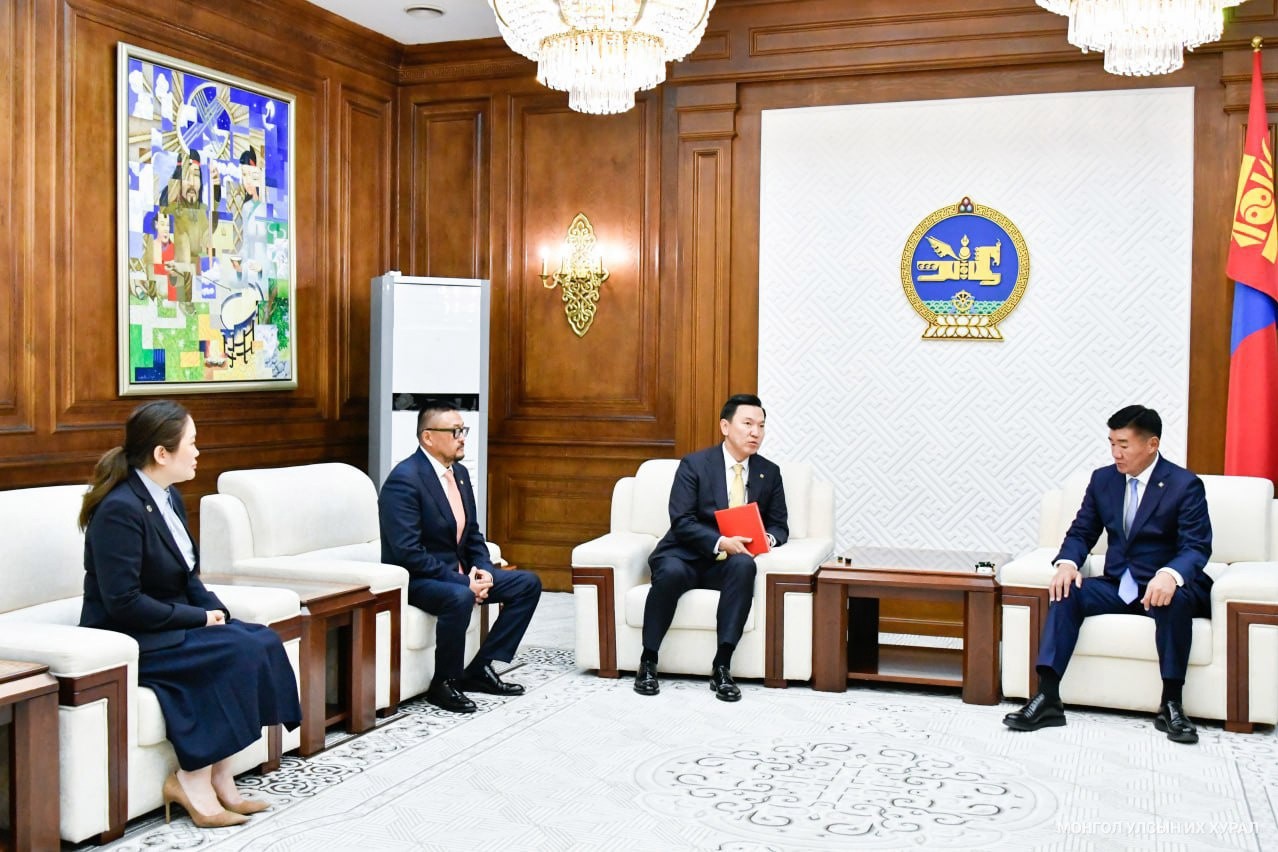
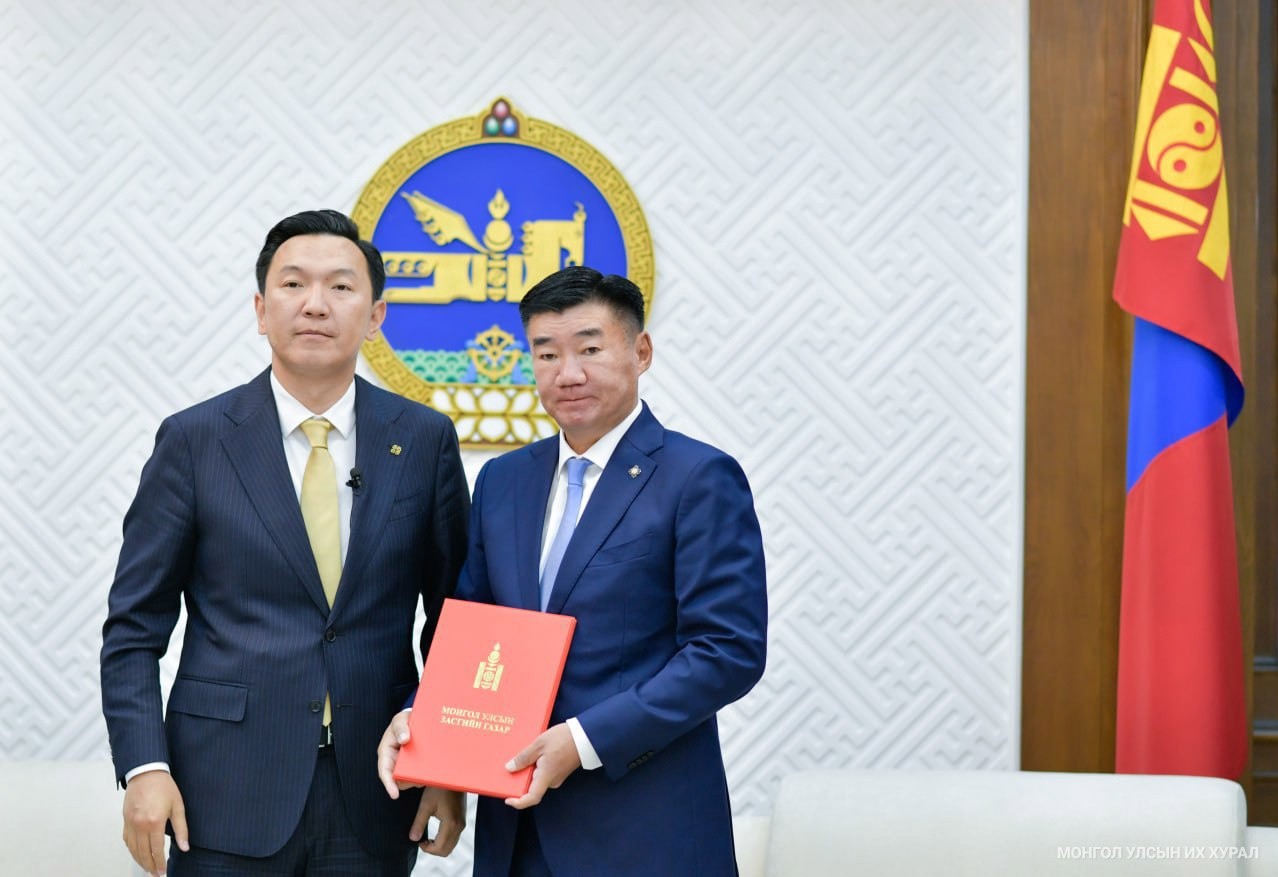
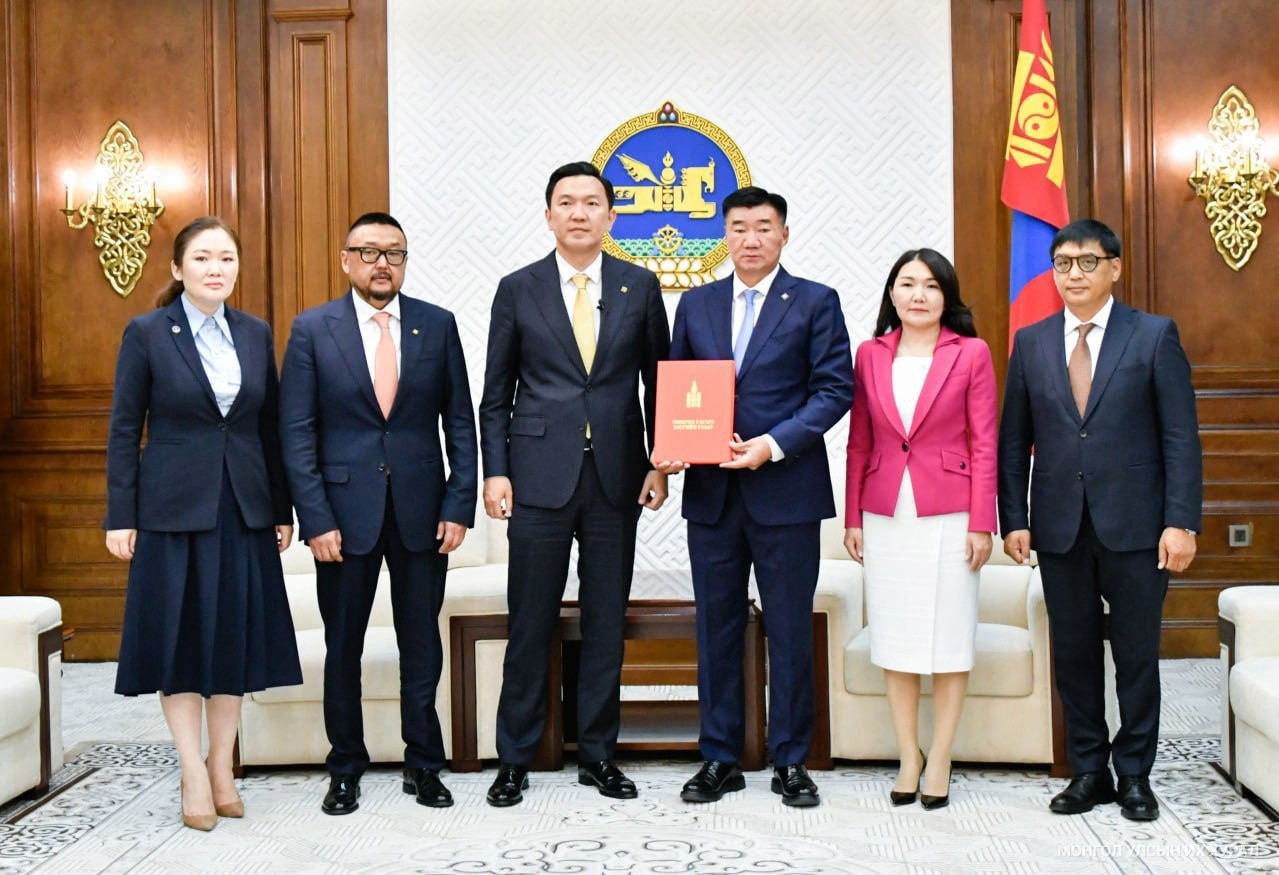
On August 31, 2026, Prime Minister N.Uchral and Minister of Finance and Member of the Parliament Z.Mendsaikhan submitted to Parliament Speaker S.Byambatsogt the draft 2027 Unified Budget Framework Statement, the draft law amending the 2028–2029 Budget Projections Law, and the draft laws on the 2027 State Budget, National Wealth Fund Budget, Social Insurance Fund Budget, and Health Insurance Fund Budget, together with related legislation.
Prime Minister N.Uchral emphasized that under the proposed amendments to the 2027 Unified Budget Framework Statement and the 2028–2029 Budget Projections Law, balanced budget revenue for 2027 is projected at MNT 41.3 trillion, while budget expenditure is projected at MNT 43.6 trillion, resulting in a balanced budget deficit of MNT 2.306 trillion.
The package also includes amendments to the Fiscal Stability Law. The proposed amendments would increase the maximum total expenditure of the consolidated budget specified in Article 12.1.4 by additional revenue from dividends of state-owned enterprises, dividends from the Oyu Tolgoi project, domestic securities, and unspent balances carried over from the previous year that could not be incorporated when the medium-term budget framework statement was prepared.
The draft also proposes that increases in the maximum expenditure ceiling arising from these additional revenue sources would not be subject to the special fiscal requirements set out in Article 6 of the Fiscal Stability Law.
The proposed fiscal requirements are calculated as follows:
Balanced revenue: Balanced budget revenue is determined by calculating the reference prices of major mineral commodities based on price forecasts issued by international financial institutions, while taking into account key macroeconomic indicators and export prospects.
Balanced consolidated budget balance: The consolidated budget balance is planned as either a deficit or surplus not exceeding 2% of GDP for the fiscal year, in accordance with the special fiscal requirements.
Growth rate of consolidated budget expenditure: The growth rate is calculated so that total expenditure does not exceed the higher of the year's non-mineral GDP growth rate or the average non-mineral GDP growth rate over the previous 12 consecutive years. This is intended to keep budget expenditure aligned with underlying economic growth.
For 2027, the maximum consolidated budget expenditure ceiling would also be increased by the amount of additional revenue. The special fiscal requirement concerning expenditure growth would not apply in 2027, and the special requirements would likewise not apply in 2028 and 2029.
Government debt: The nominal stock of government debt is projected not to exceed 50% of GDP at current prices in 2027 and 2028, and 45% in 2029. These levels remain below the ceiling established under Article 6 of the Fiscal Stability Law, which stipulates that the nominal government debt stock must not exceed 60% of GDP at current prices.
The initiators of the draft legislation said the proposed amendments would allow Mongolia to recalculate key macroeconomic and budget indicators in line with updated economic conditions and create a more realistic basis for preparing the 2027 budget.
The amendments are also intended to support the efficient and rational allocation of state budget resources and the effective implementation of fiscal policy.
On August 31, 2026, Prime Minister N.Uchral and Minister of Finance and Member of the Parliament Z.Mendsaikhan submitted to Parliament Speaker S.Byambatsogt the draft 2027 Unified Budget Framework Statement, the draft law amending the 2028–2029 Budget Projections Law, and the draft laws on the 2027 State Budget, National Wealth Fund Budget, Social Insurance Fund Budget, and Health Insurance Fund Budget, together with related legislation.
Prime Minister N.Uchral emphasized that under the proposed amendments to the 2027 Unified Budget Framework Statement and the 2028–2029 Budget Projections Law, balanced budget revenue for 2027 is projected at MNT 41.3 trillion, while budget expenditure is projected at MNT 43.6 trillion, resulting in a balanced budget deficit of MNT 2.306 trillion.
The package also includes amendments to the Fiscal Stability Law. The proposed amendments would increase the maximum total expenditure of the consolidated budget specified in Article 12.1.4 by additional revenue from dividends of state-owned enterprises, dividends from the Oyu Tolgoi project, domestic securities, and unspent balances carried over from the previous year that could not be incorporated when the medium-term budget framework statement was prepared.
The draft also proposes that increases in the maximum expenditure ceiling arising from these additional revenue sources would not be subject to the special fiscal requirements set out in Article 6 of the Fiscal Stability Law.
The proposed fiscal requirements are calculated as follows:
Balanced revenue: Balanced budget revenue is determined by calculating the reference prices of major mineral commodities based on price forecasts issued by international financial institutions, while taking into account key macroeconomic indicators and export prospects.
Balanced consolidated budget balance: The consolidated budget balance is planned as either a deficit or surplus not exceeding 2% of GDP for the fiscal year, in accordance with the special fiscal requirements.
Growth rate of consolidated budget expenditure: The growth rate is calculated so that total expenditure does not exceed the higher of the year's non-mineral GDP growth rate or the average non-mineral GDP growth rate over the previous 12 consecutive years. This is intended to keep budget expenditure aligned with underlying economic growth.
For 2027, the maximum consolidated budget expenditure ceiling would also be increased by the amount of additional revenue. The special fiscal requirement concerning expenditure growth would not apply in 2027, and the special requirements would likewise not apply in 2028 and 2029.
Government debt: The nominal stock of government debt is projected not to exceed 50% of GDP at current prices in 2027 and 2028, and 45% in 2029. These levels remain below the ceiling established under Article 6 of the Fiscal Stability Law, which stipulates that the nominal government debt stock must not exceed 60% of GDP at current prices.
The initiators of the draft legislation said the proposed amendments would allow Mongolia to recalculate key macroeconomic and budget indicators in line with updated economic conditions and create a more realistic basis for preparing the 2027 budget.
The amendments are also intended to support the efficient and rational allocation of state budget resources and the effective implementation of fiscal policy.