

It has now been eight years since American citizen Breanna Wilson first came to Mongolia as a tourist in 2018. Captivated not only by the country's breathtaking landscapes but also by the warmth and hospitality of its people, she soon returned—this time to make Mongolia her home.
Breanna has also completed a solo overland journey from Georgia to Mongolia in her Toyota Land Cruiser. Having chosen to make Mongolia her home she joined us for this edition of "Mongolia Through Foreign Eyes" to share the remarkable adventures of her travels and life. We also spoke with her about how Mongolia and its people appear through the eyes of someone who has chosen to build a life here.
Nationality: United States
Length of stay in Mongolia: 8 years
Current position: Travel writer
MONGOLIA COMPLETELY AMAZED ME
When was your first time arriving in Mongolia?
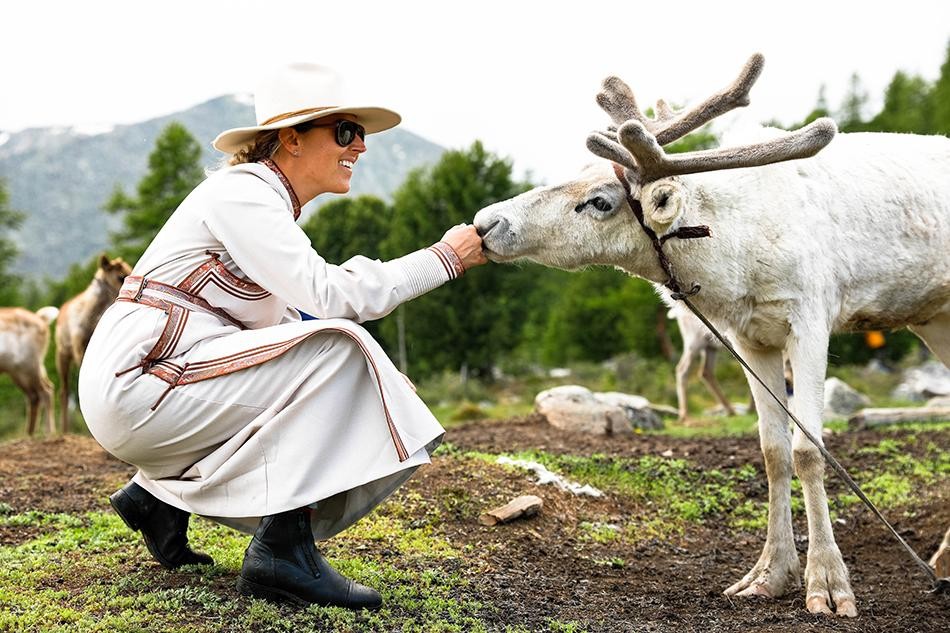
I came in 2018, in June, basically nine years ago at this point. I came just as a tourist, to see what the country was about. At that time, I didn't know much about the country and arrived without any expectations. But Mongolia completely amazed me—the people, the vast landscapes, and especially a horseback riding trip to visit the Tsaatan reindeer herders. That first visit became a life-changing experience. So, that was my first time here.
The interactions with people here are unlike anywhere else. People here are so hospitable, genuine, and kind.
Why did you decide to stay in Mongolia? How did you adapt to life here?
Yeah, it was difficult to adapt. I came for two weeks in 2018, then in 2019 I decided to come back for six months. During that time, I bought a motorcycle with a sidecar with my friend, and we did a little trip out to Central Mongolia. It was a 30 year-old motorcycle. I'm a travel writer by background, so I thought there would be a lot of stories I could cover. I ended up writing a lot about Mongolia at that time. I had never really lived anywhere in Asia, so it was a very eye-opening experience. I just really liked it.
I really like living here. I like living in Ulaanbaatar—it's a very easy city to live in. It's not overwhelming. It's easy to get to the countryside, which I like; within an hour, you're in the middle of what seems like nowhere. So, I really enjoyed that part of living here. I started coming back every summer, and now I basically live here full-time. So now this is my home.
Has living in Mongolia changed the way you see the world?
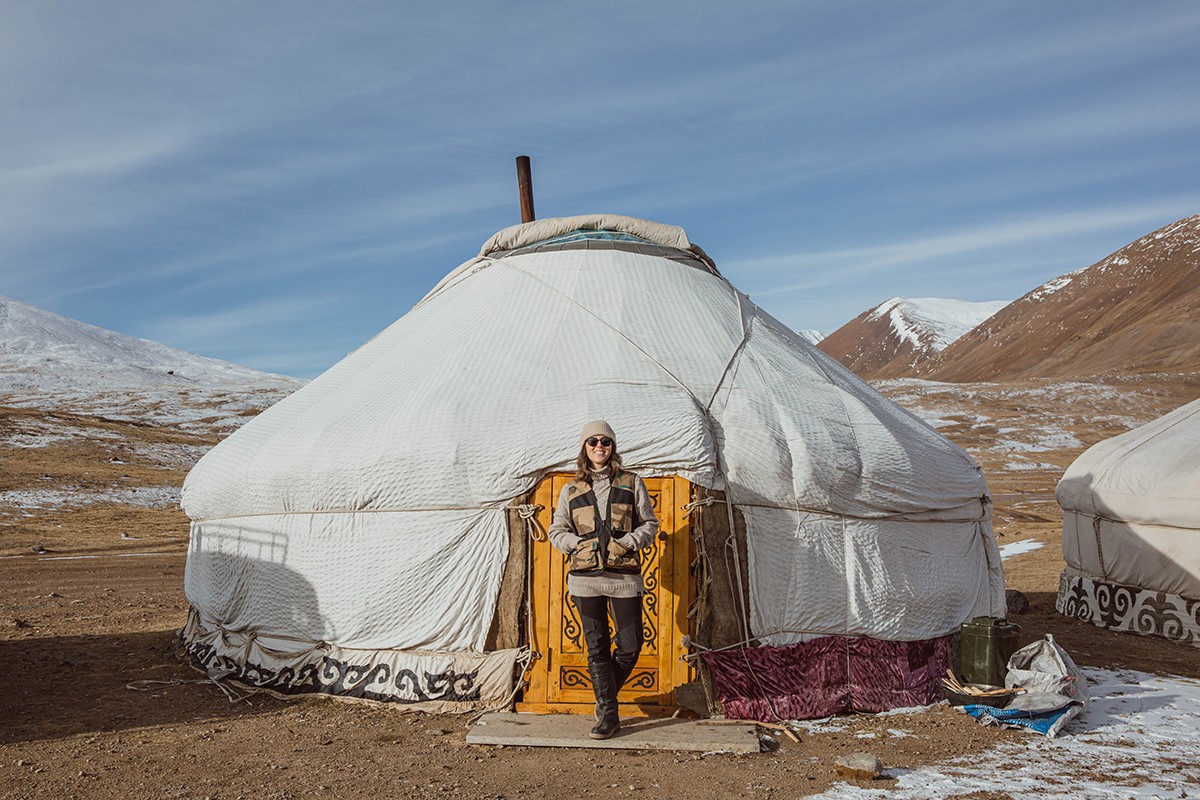
Absolutely. The interactions with people here are unlike anywhere else. People here are so hospitable, genuine, and kind. Even the guy on the street who said he just wanted to make me smile—that's so typical Mongolian. In my first days here, I would go to the countryside during crazy cold days like we had this week, and I'd be underdressed. All of a sudden, someone would hand me a deel, or make sure I had the right boots, saying, "Stay in our ger, it's warmer." That kindness is something I haven't really seen in many other countries, especially not in America, at least where I lived. I never had that sort of hospitality extended to me. I felt that was so special, and I think that's why I continue to go out to the countryside and spend time with families—to know that side of the culture and share it with others.
"I'VE LEARNED THE HARD WAY TO LET THINGS UNFOLD AS THEY NEED TO"
What are the most valuable lessons you've learned from Mongolia's nomadic culture and lifestyle?
When you're in the countryside and you force something, it never works out that way. I've learned the hard way to let things unfold as they need to. Often, when you let go of control and let situations play out, they turn out much better than you could have planned or forced. So, I've learned to let go in many regards—what happens, happens. Mongolian time is a thing, and that's okay. The little moments in between are where special things happen—you see a family setting up a ger in a valley, you run down to help them, or you meet different people while waiting. It's taught me to let go of control, slow down, appreciate the little things, and embrace everything that happens here.
You mentioned that Ulaanbaatar is easy to live in, but I don't think so because of the climate and air pollution. What makes it easy?
It's easy in many ways and very difficult in others, for sure. The easy parts: I walk everywhere, I don't drive. If I drove every day, that would be a much different experience; driving here is a nightmare, and parking too. So, I've learned to adapt my lifestyle. My office is not far from home. So, I can walk to most places. It's easy to make friends, and to find really good restaurants and coffee shops. Now there are so many good coffee shops, which wasn't the case when I first came in 2018. Coffee wasn't really a concept like it is today with baristas and artisanal shops. So, in that sense, it's easy. But the air pollution in winter and the traffic do make it difficult to stay here for 6–7 months under those conditions. I don't mind the cold, snow, or any of that—the traffic and pollution are the real challenges.
By the end of this summer I think I'll make it to all 21—that's my goal
What has been your most memorable adventure in Mongolia?
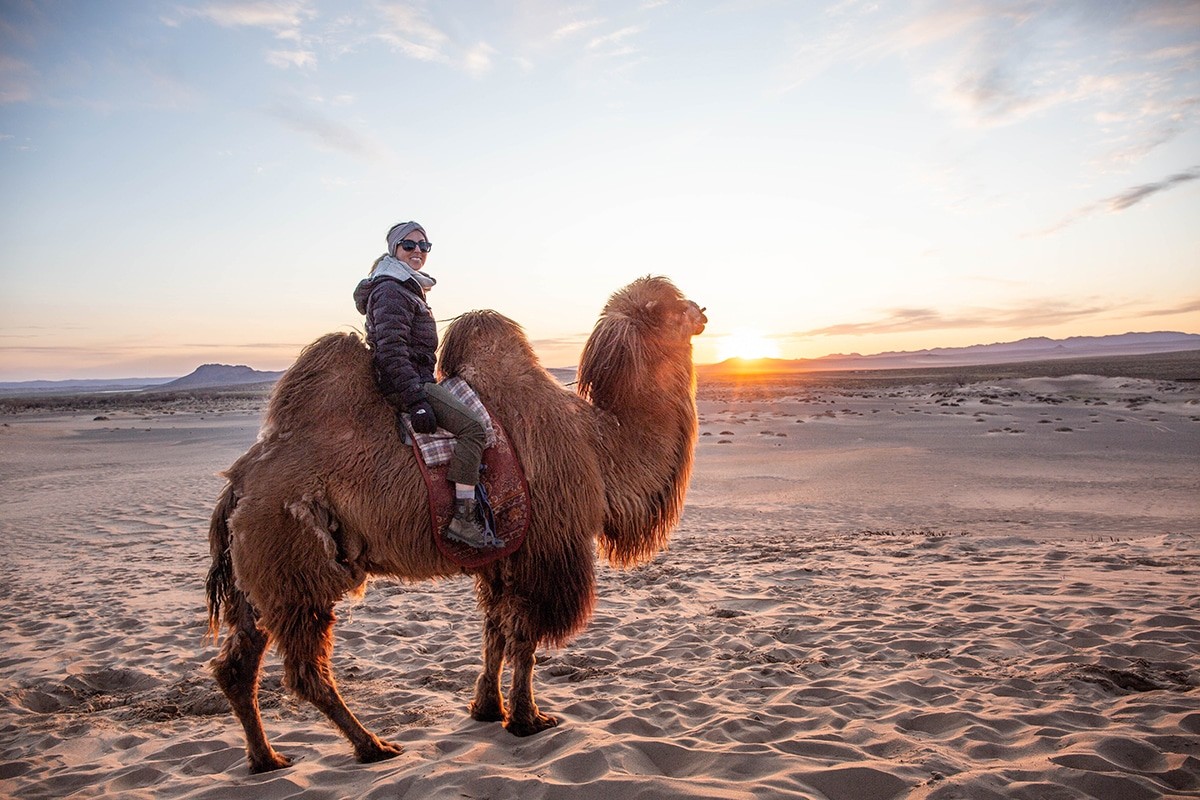
Every time I go on an adventure, I say, "This is the most memorable one," so they all become that. But the first time I came here sticks out as the most impactful—it opened my eyes the most. Sleeping in tents, riding horses for days, riding a reindeer, meeting the Dukha people, that was definitely the experience I think back to most. But every time I go out, it's a new experience. Each area is very different, with different ethnicities and customs. I continue to find new adventures that become my favorites and that I recommend to people. I spent a lot of time in the East recently, and now I tell everyone they need to go to Khentii aimag—it's amazing. The history there, and following in the footsteps of Chinggis Khan, visiting the lakes, springs, and the mountain where they say he was born, and the rituals, it was really special.
How many aimags have you visited in Mongolia?
Not all yet, but by the end of this summer I think I'll make it to all 21—that's my goal. I still need to go to Sukhbaatar in the east, and I've driven through many in the southwest, but I want to spend more time in them to consider them crossed off my list.
You organize and suggest travel for foreigners, right? Please tell us more.
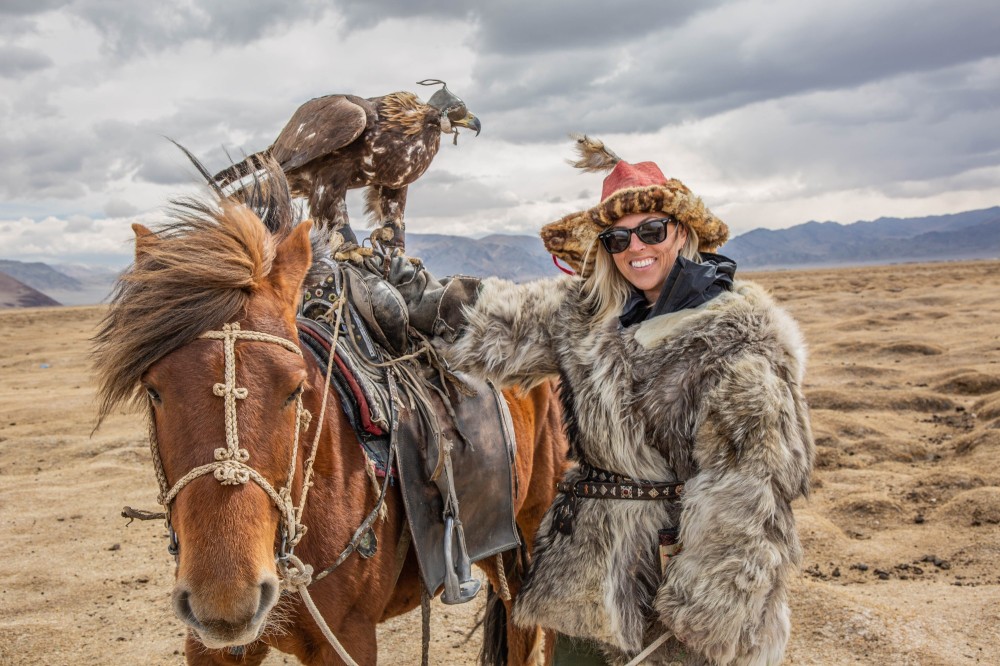
Yes. I have a Mongolian travel blog called Meanwhile in Mongolia and I also work with local partners to offer tours and experiences—to the Gobi Desert, to Central Mongolia to stay with nomadic families, and a trip to the eagle hunters in the west, Bayan-Ulgii. Basically, we want to give foreigners the same experience I had to meet families, have those interactions, and see how special Mongolia is.
I'll keep doing that until the car can't anymore.
Do you have a favorite place in Mongolia? What makes it special?
I spend a lot of time in Arkhangai because I've met some really special families there who have become like family to me. I love going out to see them, slow down, and jump into whatever they're doing—helping with animals, combing goats for cashmere in April, herding goats and sheep, shoveling manure, cleaning up for their summer move. There's always something to do, and I like to be helpful. Most of the time I'm with tourists or friends, and we all help—that way we get things done, and we learn about the lifestyle by doing it with them. We're here in warmer months, but maybe we'll start winter tours too.
Even for Mongolians, you can see all four seasons in one day, right?
Yes, it's wonderful. I tell people thinking about coming here to just bring layers. You never know what you'll get. Even if it was nice one day, and then I'm posting snow—people say, "But you just said it was nice and sunny!" I know, but it's Mongolia, it’s unpredictable. You can't prepare for anything; you just have to be prepared for everything.
-161228-871172488.jpeg)
I saw you did a solo trip from Georgia to Mongolia in a Toyota Land Cruiser. Please tell us about that.
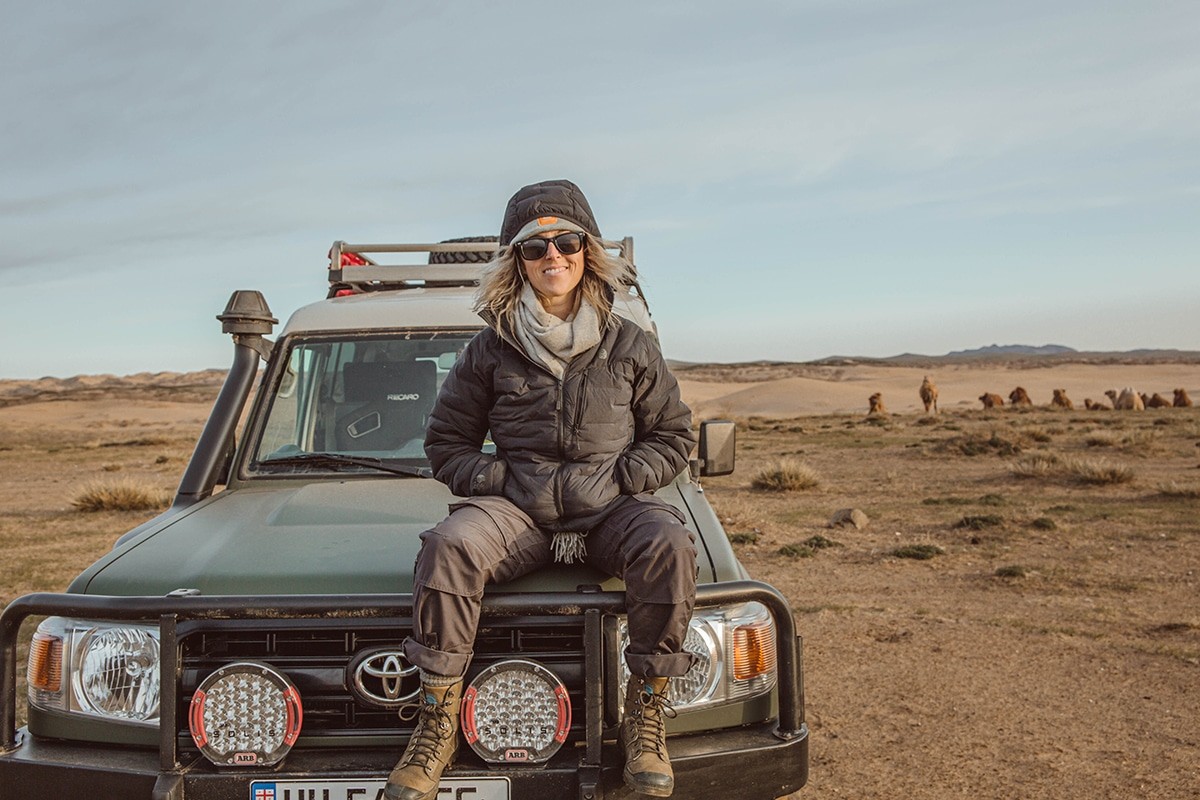
Yes, I bought my Toyota Land Cruiser 78 in Tbilisi and converted it—built out the back with a bed, kitchen, fridge-freezer, and water tank. Everything I need to overland and live out of it. I built it in Tbilisi, then in April 2023 I packed up and drove it here through Azerbaijan, Kazakhstan, and the Russian Altai. It took me just over three weeks to get from Tbilisi to Mongolia.
Why did you make that decision?
I had been coming to Mongolia for several years. When the pandemic started, I got stuck in Tbilisi—that's where I was when everything closed, even though my life was still here in Mongolia. So, I was trapped outside. Once borders opened, I decided to drive the car I'd bought and built there, so I could use it here to explore Mongolia. I didn't know if I'd keep it here or drive back, but I ended up importing and registering it here. Now it's how I travel around Mongolia, and I'll keep doing that until the car can't anymore.
Was it challenging alone, getting stuck, lack of fuel, etc.? How did you manage?
It can be overwhelming and draining on long trips, but to me, the countryside is my happy place. Even a bad day out there is a great day. I've had fuel filters clog and start beeping in the middle of nowhere, flat tires—I have basic mechanical knowledge, which I learned on the go. YouTube is great, and now I have Starlink, so if something goes wrong, I can call someone or look up what to do. I'm cautious about routes, especially alone, because if I get stuck, it can be scary.
So, I avoid mud and risky places. But getting into some situations teaches me what I need to know. It's tiring, so I take breaks—like in Dornod, I spent a couple of days relaxing, catching up on work, sleeping in a bed, and showering. I go slow to avoid getting overwhelmed. When something went wrong on that trip, I spent the night where I broke down, figured it out the next morning, and slowly drove back after completely removing my broken front shock absorber and it was fine.
MONGOLIA AS A PLACE TO RECONNECT WITH NATURE
Are you planning to publish a book about Mongolia?
Maybe one day. I have an e-book for first-time visitors that explains how things work here and important things to know. A book may be in the works at some point.
Younger generations are aware and trying to preserve these intangible heritages, so they don't get lost.
What is something Mongolians often take for granted but should be proud of?
I think Mongolians are pretty good about being proud and preserving their heritage. I don't feel they take much for granted anymore. But I like to point out little things to travelers—like the horsehair rope tied around a ger. Those are things Mongolians might not think of every day, but they're made with care and respect, and they're part of the culture. With modernization, it's easier to buy nylon rope at the black market, but the fact that families still use handmade ropes that have been made that way for hundreds or thousands of years—that's amazing to me. I always tell families how beautiful it is, and they are proud to share. Those small traditions are special. I think it's starting to come back even the Mongolian script is becoming important again. Younger generations are aware and trying to preserve these intangible heritages, so they don't get lost.
What opportunities do you see for Mongolia's tourism industry in the future?
I see it growing, with huge potential in adventure tourism. In a world where people are online so much, outsiders can come here and really disconnect and reconnect to nature, animals, and the nomadic way of living. I think that's the strongest asset. Mongolia is becoming a place where people come to reset themselves—to escape offices, computers, and be back where humans are meant to be, in nature, with feet on the ground and hands in rivers or feeling the rain. That's where the opportunities are.
From your perspective as someone working in the tourism industry, what policies should the government prioritize to further develop the tourism sector? Additionally, what role do you believe private businesses should play in supporting and promoting tourism?
That's a big question. It's complicated. But as long as heritage is preserved, taught, and accessible to everyone—not just foreigners who can spend a lot of money—it will remain as Mongolia’s biggest opportunity. Summer camps where local city kids go to the countryside and live with nomadic families are amazing. It should be available to all Mongolians, not just visitors. Private businesses like OI Heritage and the Mongolian Calligraphy Center are also essential.
How many countries have you traveled to?
I never counted—maybe 40 or 50. I've been very lucky to have a job that allowed me to travel so much. Out of all of them, I chose Mongolia.
Is there anything you'd like to add that I haven't asked?
I just want to thank the Mongolian people and everyone who has supported me. From the very beginning, I've received such a warm welcome, so many kind messages online, and incredible support whenever I've needed help. Even when I post something like, "I'm stuck here—I need some advice," people are always willing to help.
I'm truly grateful for that kindness and generosity. I hope Mongolians continue to share that spirit with others. As for me, I'll keep telling stories about Mongolia and sharing my experiences so more people can see what it's really like to travel across this beautiful country as a solo female traveler.
Thank you for your time. May your journey always be safe, successful, and filled with good fortune.
Breanna Wilson on Instagram: @breannajwilson
It has now been eight years since American citizen Breanna Wilson first came to Mongolia as a tourist in 2018. Captivated not only by the country's breathtaking landscapes but also by the warmth and hospitality of its people, she soon returned—this time to make Mongolia her home.
Breanna has also completed a solo overland journey from Georgia to Mongolia in her Toyota Land Cruiser. Having chosen to make Mongolia her home she joined us for this edition of "Mongolia Through Foreign Eyes" to share the remarkable adventures of her travels and life. We also spoke with her about how Mongolia and its people appear through the eyes of someone who has chosen to build a life here.
Nationality: United States
Length of stay in Mongolia: 8 years
Current position: Travel writer
MONGOLIA COMPLETELY AMAZED ME
When was your first time arriving in Mongolia?
I came in 2018, in June, basically nine years ago at this point. I came just as a tourist, to see what the country was about. At that time, I didn't know much about the country and arrived without any expectations. But Mongolia completely amazed me—the people, the vast landscapes, and especially a horseback riding trip to visit the Tsaatan reindeer herders. That first visit became a life-changing experience. So, that was my first time here.
The interactions with people here are unlike anywhere else. People here are so hospitable, genuine, and kind.
Why did you decide to stay in Mongolia? How did you adapt to life here?
Yeah, it was difficult to adapt. I came for two weeks in 2018, then in 2019 I decided to come back for six months. During that time, I bought a motorcycle with a sidecar with my friend, and we did a little trip out to Central Mongolia. It was a 30 year-old motorcycle. I'm a travel writer by background, so I thought there would be a lot of stories I could cover. I ended up writing a lot about Mongolia at that time. I had never really lived anywhere in Asia, so it was a very eye-opening experience. I just really liked it.
I really like living here. I like living in Ulaanbaatar—it's a very easy city to live in. It's not overwhelming. It's easy to get to the countryside, which I like; within an hour, you're in the middle of what seems like nowhere. So, I really enjoyed that part of living here. I started coming back every summer, and now I basically live here full-time. So now this is my home.
Has living in Mongolia changed the way you see the world?
Absolutely. The interactions with people here are unlike anywhere else. People here are so hospitable, genuine, and kind. Even the guy on the street who said he just wanted to make me smile—that's so typical Mongolian. In my first days here, I would go to the countryside during crazy cold days like we had this week, and I'd be underdressed. All of a sudden, someone would hand me a deel, or make sure I had the right boots, saying, "Stay in our ger, it's warmer." That kindness is something I haven't really seen in many other countries, especially not in America, at least where I lived. I never had that sort of hospitality extended to me. I felt that was so special, and I think that's why I continue to go out to the countryside and spend time with families—to know that side of the culture and share it with others.
"I'VE LEARNED THE HARD WAY TO LET THINGS UNFOLD AS THEY NEED TO"
What are the most valuable lessons you've learned from Mongolia's nomadic culture and lifestyle?
When you're in the countryside and you force something, it never works out that way. I've learned the hard way to let things unfold as they need to. Often, when you let go of control and let situations play out, they turn out much better than you could have planned or forced. So, I've learned to let go in many regards—what happens, happens. Mongolian time is a thing, and that's okay. The little moments in between are where special things happen—you see a family setting up a ger in a valley, you run down to help them, or you meet different people while waiting. It's taught me to let go of control, slow down, appreciate the little things, and embrace everything that happens here.
You mentioned that Ulaanbaatar is easy to live in, but I don't think so because of the climate and air pollution. What makes it easy?
It's easy in many ways and very difficult in others, for sure. The easy parts: I walk everywhere, I don't drive. If I drove every day, that would be a much different experience; driving here is a nightmare, and parking too. So, I've learned to adapt my lifestyle. My office is not far from home. So, I can walk to most places. It's easy to make friends, and to find really good restaurants and coffee shops. Now there are so many good coffee shops, which wasn't the case when I first came in 2018. Coffee wasn't really a concept like it is today with baristas and artisanal shops. So, in that sense, it's easy. But the air pollution in winter and the traffic do make it difficult to stay here for 6–7 months under those conditions. I don't mind the cold, snow, or any of that—the traffic and pollution are the real challenges.
By the end of this summer I think I'll make it to all 21—that's my goal
What has been your most memorable adventure in Mongolia?
Every time I go on an adventure, I say, "This is the most memorable one," so they all become that. But the first time I came here sticks out as the most impactful—it opened my eyes the most. Sleeping in tents, riding horses for days, riding a reindeer, meeting the Dukha people, that was definitely the experience I think back to most. But every time I go out, it's a new experience. Each area is very different, with different ethnicities and customs. I continue to find new adventures that become my favorites and that I recommend to people. I spent a lot of time in the East recently, and now I tell everyone they need to go to Khentii aimag—it's amazing. The history there, and following in the footsteps of Chinggis Khan, visiting the lakes, springs, and the mountain where they say he was born, and the rituals, it was really special.
How many aimags have you visited in Mongolia?
Not all yet, but by the end of this summer I think I'll make it to all 21—that's my goal. I still need to go to Sukhbaatar in the east, and I've driven through many in the southwest, but I want to spend more time in them to consider them crossed off my list.
You organize and suggest travel for foreigners, right? Please tell us more.
Yes. I have a Mongolian travel blog called Meanwhile in Mongolia and I also work with local partners to offer tours and experiences—to the Gobi Desert, to Central Mongolia to stay with nomadic families, and a trip to the eagle hunters in the west, Bayan-Ulgii. Basically, we want to give foreigners the same experience I had to meet families, have those interactions, and see how special Mongolia is.
I'll keep doing that until the car can't anymore.
Do you have a favorite place in Mongolia? What makes it special?
I spend a lot of time in Arkhangai because I've met some really special families there who have become like family to me. I love going out to see them, slow down, and jump into whatever they're doing—helping with animals, combing goats for cashmere in April, herding goats and sheep, shoveling manure, cleaning up for their summer move. There's always something to do, and I like to be helpful. Most of the time I'm with tourists or friends, and we all help—that way we get things done, and we learn about the lifestyle by doing it with them. We're here in warmer months, but maybe we'll start winter tours too.
Even for Mongolians, you can see all four seasons in one day, right?
Yes, it's wonderful. I tell people thinking about coming here to just bring layers. You never know what you'll get. Even if it was nice one day, and then I'm posting snow—people say, "But you just said it was nice and sunny!" I know, but it's Mongolia, it’s unpredictable. You can't prepare for anything; you just have to be prepared for everything.
I saw you did a solo trip from Georgia to Mongolia in a Toyota Land Cruiser. Please tell us about that.
Yes, I bought my Toyota Land Cruiser 78 in Tbilisi and converted it—built out the back with a bed, kitchen, fridge-freezer, and water tank. Everything I need to overland and live out of it. I built it in Tbilisi, then in April 2023 I packed up and drove it here through Azerbaijan, Kazakhstan, and the Russian Altai. It took me just over three weeks to get from Tbilisi to Mongolia.
Why did you make that decision?
I had been coming to Mongolia for several years. When the pandemic started, I got stuck in Tbilisi—that's where I was when everything closed, even though my life was still here in Mongolia. So, I was trapped outside. Once borders opened, I decided to drive the car I'd bought and built there, so I could use it here to explore Mongolia. I didn't know if I'd keep it here or drive back, but I ended up importing and registering it here. Now it's how I travel around Mongolia, and I'll keep doing that until the car can't anymore.
Was it challenging alone, getting stuck, lack of fuel, etc.? How did you manage?
It can be overwhelming and draining on long trips, but to me, the countryside is my happy place. Even a bad day out there is a great day. I've had fuel filters clog and start beeping in the middle of nowhere, flat tires—I have basic mechanical knowledge, which I learned on the go. YouTube is great, and now I have Starlink, so if something goes wrong, I can call someone or look up what to do. I'm cautious about routes, especially alone, because if I get stuck, it can be scary.
So, I avoid mud and risky places. But getting into some situations teaches me what I need to know. It's tiring, so I take breaks—like in Dornod, I spent a couple of days relaxing, catching up on work, sleeping in a bed, and showering. I go slow to avoid getting overwhelmed. When something went wrong on that trip, I spent the night where I broke down, figured it out the next morning, and slowly drove back after completely removing my broken front shock absorber and it was fine.
MONGOLIA AS A PLACE TO RECONNECT WITH NATURE
Are you planning to publish a book about Mongolia?
Maybe one day. I have an e-book for first-time visitors that explains how things work here and important things to know. A book may be in the works at some point.
Younger generations are aware and trying to preserve these intangible heritages, so they don't get lost.
What is something Mongolians often take for granted but should be proud of?
I think Mongolians are pretty good about being proud and preserving their heritage. I don't feel they take much for granted anymore. But I like to point out little things to travelers—like the horsehair rope tied around a ger. Those are things Mongolians might not think of every day, but they're made with care and respect, and they're part of the culture. With modernization, it's easier to buy nylon rope at the black market, but the fact that families still use handmade ropes that have been made that way for hundreds or thousands of years—that's amazing to me. I always tell families how beautiful it is, and they are proud to share. Those small traditions are special. I think it's starting to come back even the Mongolian script is becoming important again. Younger generations are aware and trying to preserve these intangible heritages, so they don't get lost.
What opportunities do you see for Mongolia's tourism industry in the future?
I see it growing, with huge potential in adventure tourism. In a world where people are online so much, outsiders can come here and really disconnect and reconnect to nature, animals, and the nomadic way of living. I think that's the strongest asset. Mongolia is becoming a place where people come to reset themselves—to escape offices, computers, and be back where humans are meant to be, in nature, with feet on the ground and hands in rivers or feeling the rain. That's where the opportunities are.
From your perspective as someone working in the tourism industry, what policies should the government prioritize to further develop the tourism sector? Additionally, what role do you believe private businesses should play in supporting and promoting tourism?
That's a big question. It's complicated. But as long as heritage is preserved, taught, and accessible to everyone—not just foreigners who can spend a lot of money—it will remain as Mongolia’s biggest opportunity. Summer camps where local city kids go to the countryside and live with nomadic families are amazing. It should be available to all Mongolians, not just visitors. Private businesses like OI Heritage and the Mongolian Calligraphy Center are also essential.
How many countries have you traveled to?
I never counted—maybe 40 or 50. I've been very lucky to have a job that allowed me to travel so much. Out of all of them, I chose Mongolia.
Is there anything you'd like to add that I haven't asked?
I just want to thank the Mongolian people and everyone who has supported me. From the very beginning, I've received such a warm welcome, so many kind messages online, and incredible support whenever I've needed help. Even when I post something like, "I'm stuck here—I need some advice," people are always willing to help.
I'm truly grateful for that kindness and generosity. I hope Mongolians continue to share that spirit with others. As for me, I'll keep telling stories about Mongolia and sharing my experiences so more people can see what it's really like to travel across this beautiful country as a solo female traveler.
Thank you for your time. May your journey always be safe, successful, and filled with good fortune.
Breanna Wilson on Instagram: @breannajwilson