



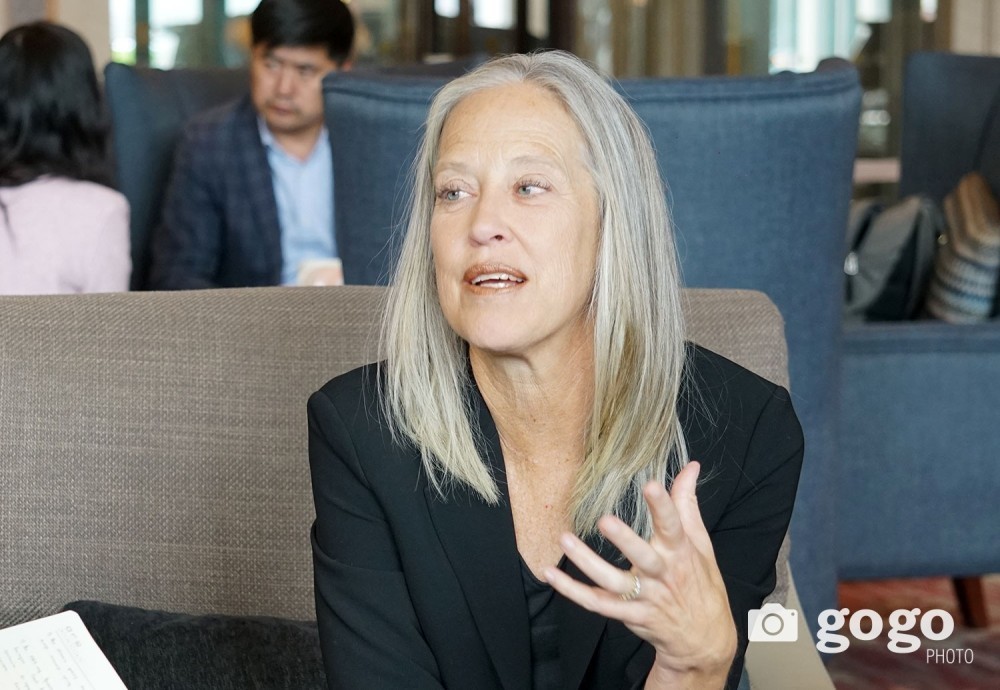
Teach For All is a global network of locally led organizations working to ensure that all children have access to quality education and opportunities to reach their full potential. Beyond supporting teachers and leaders in underserved communities, the network aims to foster long-term leadership and systemic change in education.
We spoke with Wendy Kopp, CEO and Co-founder of Teach For All.
Is this your first time visiting Mongolia?
Yes, I came to visit Teach for Mongolia.
Back in 1989, when you were writing your thesis at Princeton, did you ever imagine that your Teach For America initiative would grow into a massive movement spanning over 60 countries worldwide?
No, never. At the beginning of Teach for America, I was not thinking about the rest of the world at all. When I started this journey I could never have imagined that it would bring me here to Mongolia.
But I'm so grateful to all the incredible people around the world who believed in this idea and were determined to make it their own. One way or another, they connected with the approach that Teach For America first pioneered, and that eventually led to the creation of Teach For All—a global network of independent organizations all working toward the same mission
It's been an extraordinary privilege to work alongside them and learn from them. One of the most powerful lessons we've learned is that we can move much faster when we share ideas and solutions across borders. That has been incredibly energizing.
Could you share one of the best success stories or cases from the Teach For All network that has surprised or inspired you the most?
Well, I first thought of this idea when I was a university student. Our generation was known as the "me generation". People thought we just cared about ourselves. We all wanted to go work in banks. And I felt that that wasn't right, that our generation was searching for something we weren't finding in terms of an opportunity to make a real difference in the world. And I had become, as a public policy major, concerned about the inequities that persist across our country and also had come to believe so much in the power of education for giving young people their freedom and one day all this came together in this idea.
Why aren't we being recruited as aggressively to commit two years to teach in our country's urban and rural public schools as we were being recruited at the time to commit two years to work in banks and consulting firms?
So that was the original idea. And I became very obsessed with it and have been obsessed with it ever since. What we've learned is that those two years are so important for the kids the teachers reach, but they're also completely transformational for the teachers themselves. And they end up being foundational for a lifetime of leadership in tackling the inequities in the education system. And I think what's been most inspiring is to see so many examples of places in the world, like all over the U.S., and in India and Latin America, all over Europe, like places where a lot of these people, a lot of the teaching fellows have been placed over time and transformed by the experience and have never left the work and are working throughout the whole kind of ecosystem around kids at every level of the education system and policy and in the NGO sector.
And we've seen that where there are enough of them in a place, it can make a huge impact in kind of building the capacity to continuously improve the systems around kids.
Today's era of rapid technological advancement and artificial intelligence, what do you think "no longer works" in the education sector, and what will "remain timelessly valuable"?
I think what we've learned is that technology amplifies whatever is already there. If you introduce technology into a school with a strong mission, where the entire teaching staff is united around a shared purpose and has built a culture that inspires students to embrace that purpose, then technology can become an incredibly powerful tool.
But if you introduce technology into a school where those foundations are missing, it can easily become a major distraction rather than a solution.
We've seen this over the past two decades during the rise of educational technology, and I believe we'll see exactly the same pattern in the age of artificial intelligence.
What remains timelessly valuable isn't the technology itself—it's strong leadership, a clear sense of purpose, great teaching, and a school culture that helps every child thrive. AI will amplify those strengths, but it cannot replace them.
NO QUICK FIX FOR TEACHER SHORTAGES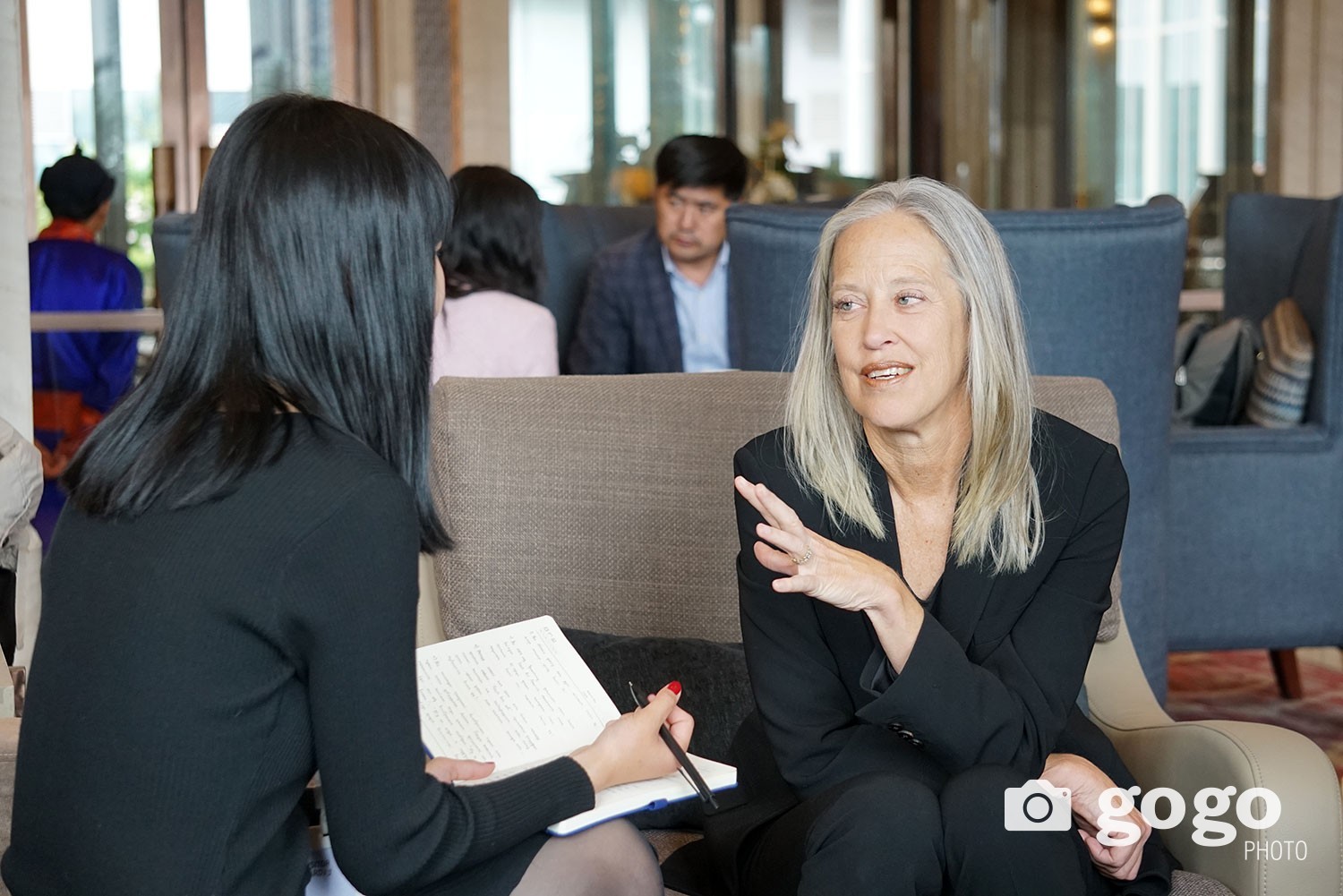
What do you see as Mongolia's greatest advantages and biggest challenges in this regard?
We had the opportunity to meet with Minister Enkh-Amgalan Luvsantseren, and I was impressed by how comprehensive his vision is for strengthening the education system. They're thinking about everything—from curriculum reform and strengthening the teaching profession to developing a stronger digital education strategy.
To me, the ideas are there. The real question is how to turn those ideas into meaningful progress. That's true in any country. If we want to fundamentally improve the outcomes of an education system, we need to mobilize enough people to lead that change.
That's exactly what Teach for Mongolia is working to do. Our goal is to reach a point where it's not just a handful of people, but many of Mongolia's most promising future leaders who choose to dedicate their talent and energy to transforming education.
Ultimately, I believe our success—or failure—will depend on whether we can inspire enough of the country's next generation of leaders to take on that challenge together.
What kind of impact or transformation do you hope Teach for Mongolia will bring to the Mongolian education sector over the next 10 years?
What I've seen over the past two days—meeting Teach for Mongolia's incoming fellows, current teaching fellows, and alumni who have completed their two-year commitment—is that the organization has built an incredibly strong foundation in a relatively short period of time.
The real question now is whether Teach for Mongolia can build on that foundation and scale its impact to match the magnitude of the educational challenges facing Mongolia.
If it succeeds, I believe it can help cultivate a generation of leaders who are deeply committed to educational equity and capable of driving lasting, system-wide change. That's ultimately the opportunity ahead.
I hope you have had a chance to look over the current state and system of education in Mongolia. As an expert, what do you think we should focus on or implement more effectively in our education sector?
I think there's a great deal of research on what drives improvement in education systems around the world. One of the clearest findings is that the most important factor is a shared sense of purpose across society—a collective commitment to ensuring that every child can thrive.
That means every aspect of education—from investing in technology and strengthening teacher development to improving the curriculum—should be guided by that single purpose: helping every student succeed.
To achieve that, we need leadership at every level, from the top of the education system to the broader society, united around the belief that our future is shaped in our classrooms.
The children we nurture in our classrooms today will determine the kind of country we become tomorrow. If we can help everyone recognize the importance of education and rally around that shared purpose, I believe we'll achieve the progress we're striving for.
Due to the shortage of teachers, the government has decided to offer free university education to students who pursue teaching degrees. Some argue that this is, in a way, devaluing the teaching profession. The reality is that the main reason fewer people are choosing to teach in public schools is the low salary. As someone who works in the education sector, we'd love to hear your thoughts on this issue. What do you think would be a more effective solution?
I don't think there's a quick fix to the challenge of teacher shortages—or to improving both the quality and quantity of the teaching workforce.
Ultimately, it requires elevating education as a national priority. We need stronger school leadership that creates positive school cultures where teachers want to work and build their careers.
We also need to think more strategically about how we recruit talented people into the profession, raise the status of teaching, and select candidates based on high standards. At the same time, we must invest not only in high-quality pre-service preparation but also in continuous professional development throughout teachers' careers.
And, as you pointed out, we need to ensure that teachers are compensated in a way that reflects the value of their contribution to society.
In the end, addressing this challenge requires a comprehensive approach. There isn't a single policy that will solve it—it takes sustained investment across multiple fronts.
You were named by Forbes as one of the top leaders over 50, and you are also a mother of four. As an exemplary model of female leadership who has consistently led and worked in this sector for over 30 years, what is your secret?
I think my secret is that I love what I do. I feel so lucky to have found my way to this mission that is so important and that has enabled me to work with so many other people who are drawn to the same kind of purpose and vision and values.
"OUR FELLOWS REACH 9,300+ STUDENTS"
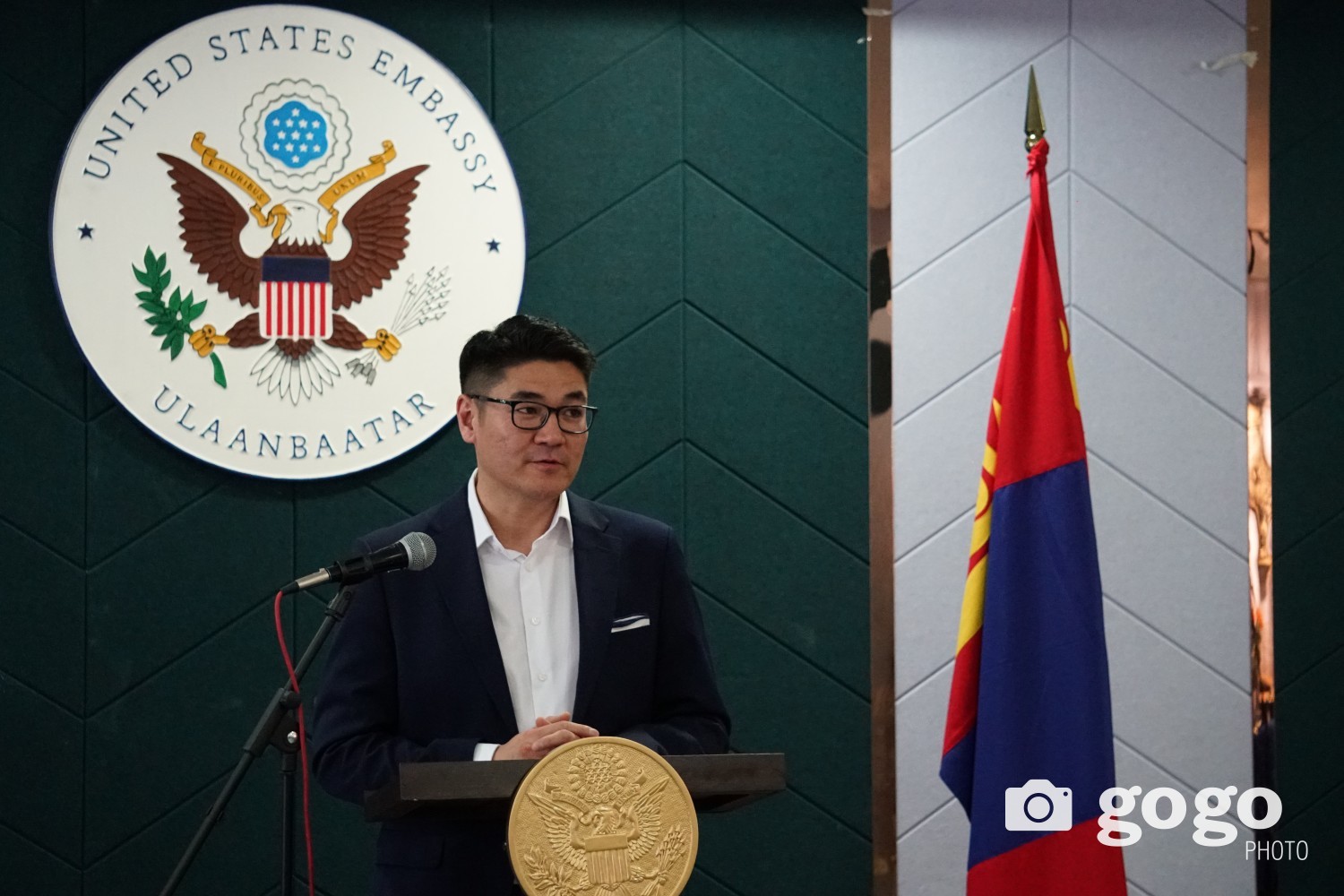
When and why was the Teach for Mongolia program launched in Mongolia?
Teach for Mongolia was founded in 2022 with a simple belief: where a child is born should never determine the quality of education they receive.
We joined the global Teach For All network to address educational inequity by recruiting and developing outstanding young leaders to teach in underserved rural communities and become lifelong champions for education.
Since our founding, we've served exclusively in rural Mongolia. Our third cohort has recently completed its two-year fellowship, and we've just recruited our fifth cohort. Today, our fellows are serving in provinces including Dornod, Umnugovi, Bayankhongor, Selenge, and Darkhan-Uul.
While our scale is still modest compared to Mongolia's challenges, we've demonstrated that this model works. To date, our fellows have reached more than 9,300 students, and we believe that impact will continue to grow as we expand.
What makes Teach for Mongolia different from other initiatives working to improve education in Mongolia?
I believe every organization in the education sector is making an important contribution, and Mongolia needs all of those efforts. What makes Teach for Mongolia different is that we're not simply trying to solve today's teacher shortage—we're investing in the leadership that will shape Mongolia's education system for decades to come.
Teaching is our starting point, not our end goal. We recruit outstanding young leaders, place them where they're needed most, and immerse them in the realities of rural education. Through that experience, they develop not only as effective teachers but also as lifelong leaders committed to educational equity.
Our vision is that, over time, these leaders will serve not only in classrooms but also as school principals, policymakers, entrepreneurs, researchers, and leaders across government, business, and civil society. Lasting change in education requires leadership at every level, and that's the movement we're working to build.
Ultimately, our success won't be measured only by the number of teachers we place or students we reach. It will be measured by whether we help create a generation of leaders who believe that every child—regardless of where they are born—deserves the opportunity to fulfill their potential.
How do you evaluate the impact of your work?
We look at quality from several perspectives. The first is whether we're addressing a real need. In many rural schools, teacher shortages mean that some subjects go untaught for an entire semester—or even longer—or are taught by teachers outside their area of expertise. Simply ensuring that students have access to qualified teachers is, in itself, an important measure of quality.
Beyond that, we've invested heavily in monitoring and evaluation over the past two years. Our dedicated MERL team tracks not only student outcomes, but also whether we're recruiting the right fellows, providing effective training and coaching, and meeting the expectations of our partner schools.
Most importantly, we listen to our students. Are they engaged? Are they learning? Are they growing? Those are the questions that matter most.
Overall, our results have been very encouraging. At the same time, we believe continuous improvement is essential. We regularly use evidence and feedback to refine our program and ensure we're delivering the impact we set out to achieve.
Thank you for your time.
Teach For All is a global network of locally led organizations working to ensure that all children have access to quality education and opportunities to reach their full potential. Beyond supporting teachers and leaders in underserved communities, the network aims to foster long-term leadership and systemic change in education.
We spoke with Wendy Kopp, CEO and Co-founder of Teach For All.
Is this your first time visiting Mongolia?
Yes, I came to visit Teach for Mongolia.
Back in 1989, when you were writing your thesis at Princeton, did you ever imagine that your Teach For America initiative would grow into a massive movement spanning over 60 countries worldwide?
No, never. At the beginning of Teach for America, I was not thinking about the rest of the world at all. When I started this journey I could never have imagined that it would bring me here to Mongolia.
But I'm so grateful to all the incredible people around the world who believed in this idea and were determined to make it their own. One way or another, they connected with the approach that Teach For America first pioneered, and that eventually led to the creation of Teach For All—a global network of independent organizations all working toward the same mission
It's been an extraordinary privilege to work alongside them and learn from them. One of the most powerful lessons we've learned is that we can move much faster when we share ideas and solutions across borders. That has been incredibly energizing.
Could you share one of the best success stories or cases from the Teach For All network that has surprised or inspired you the most?
Well, I first thought of this idea when I was a university student. Our generation was known as the "me generation". People thought we just cared about ourselves. We all wanted to go work in banks. And I felt that that wasn't right, that our generation was searching for something we weren't finding in terms of an opportunity to make a real difference in the world. And I had become, as a public policy major, concerned about the inequities that persist across our country and also had come to believe so much in the power of education for giving young people their freedom and one day all this came together in this idea.
Why aren't we being recruited as aggressively to commit two years to teach in our country's urban and rural public schools as we were being recruited at the time to commit two years to work in banks and consulting firms?
So that was the original idea. And I became very obsessed with it and have been obsessed with it ever since. What we've learned is that those two years are so important for the kids the teachers reach, but they're also completely transformational for the teachers themselves. And they end up being foundational for a lifetime of leadership in tackling the inequities in the education system. And I think what's been most inspiring is to see so many examples of places in the world, like all over the U.S., and in India and Latin America, all over Europe, like places where a lot of these people, a lot of the teaching fellows have been placed over time and transformed by the experience and have never left the work and are working throughout the whole kind of ecosystem around kids at every level of the education system and policy and in the NGO sector.
And we've seen that where there are enough of them in a place, it can make a huge impact in kind of building the capacity to continuously improve the systems around kids.
Today's era of rapid technological advancement and artificial intelligence, what do you think "no longer works" in the education sector, and what will "remain timelessly valuable"?
I think what we've learned is that technology amplifies whatever is already there. If you introduce technology into a school with a strong mission, where the entire teaching staff is united around a shared purpose and has built a culture that inspires students to embrace that purpose, then technology can become an incredibly powerful tool.
But if you introduce technology into a school where those foundations are missing, it can easily become a major distraction rather than a solution.
We've seen this over the past two decades during the rise of educational technology, and I believe we'll see exactly the same pattern in the age of artificial intelligence.
What remains timelessly valuable isn't the technology itself—it's strong leadership, a clear sense of purpose, great teaching, and a school culture that helps every child thrive. AI will amplify those strengths, but it cannot replace them.
NO QUICK FIX FOR TEACHER SHORTAGES
What do you see as Mongolia's greatest advantages and biggest challenges in this regard?
We had the opportunity to meet with Minister Enkh-Amgalan Luvsantseren, and I was impressed by how comprehensive his vision is for strengthening the education system. They're thinking about everything—from curriculum reform and strengthening the teaching profession to developing a stronger digital education strategy.
To me, the ideas are there. The real question is how to turn those ideas into meaningful progress. That's true in any country. If we want to fundamentally improve the outcomes of an education system, we need to mobilize enough people to lead that change.
That's exactly what Teach for Mongolia is working to do. Our goal is to reach a point where it's not just a handful of people, but many of Mongolia's most promising future leaders who choose to dedicate their talent and energy to transforming education.
Ultimately, I believe our success—or failure—will depend on whether we can inspire enough of the country's next generation of leaders to take on that challenge together.
What kind of impact or transformation do you hope Teach for Mongolia will bring to the Mongolian education sector over the next 10 years?
What I've seen over the past two days—meeting Teach for Mongolia's incoming fellows, current teaching fellows, and alumni who have completed their two-year commitment—is that the organization has built an incredibly strong foundation in a relatively short period of time.
The real question now is whether Teach for Mongolia can build on that foundation and scale its impact to match the magnitude of the educational challenges facing Mongolia.
If it succeeds, I believe it can help cultivate a generation of leaders who are deeply committed to educational equity and capable of driving lasting, system-wide change. That's ultimately the opportunity ahead.
I hope you have had a chance to look over the current state and system of education in Mongolia. As an expert, what do you think we should focus on or implement more effectively in our education sector?
I think there's a great deal of research on what drives improvement in education systems around the world. One of the clearest findings is that the most important factor is a shared sense of purpose across society—a collective commitment to ensuring that every child can thrive.
That means every aspect of education—from investing in technology and strengthening teacher development to improving the curriculum—should be guided by that single purpose: helping every student succeed.
To achieve that, we need leadership at every level, from the top of the education system to the broader society, united around the belief that our future is shaped in our classrooms.
The children we nurture in our classrooms today will determine the kind of country we become tomorrow. If we can help everyone recognize the importance of education and rally around that shared purpose, I believe we'll achieve the progress we're striving for.
Due to the shortage of teachers, the government has decided to offer free university education to students who pursue teaching degrees. Some argue that this is, in a way, devaluing the teaching profession. The reality is that the main reason fewer people are choosing to teach in public schools is the low salary. As someone who works in the education sector, we'd love to hear your thoughts on this issue. What do you think would be a more effective solution?
I don't think there's a quick fix to the challenge of teacher shortages—or to improving both the quality and quantity of the teaching workforce.
Ultimately, it requires elevating education as a national priority. We need stronger school leadership that creates positive school cultures where teachers want to work and build their careers.
We also need to think more strategically about how we recruit talented people into the profession, raise the status of teaching, and select candidates based on high standards. At the same time, we must invest not only in high-quality pre-service preparation but also in continuous professional development throughout teachers' careers.
And, as you pointed out, we need to ensure that teachers are compensated in a way that reflects the value of their contribution to society.
In the end, addressing this challenge requires a comprehensive approach. There isn't a single policy that will solve it—it takes sustained investment across multiple fronts.
You were named by Forbes as one of the top leaders over 50, and you are also a mother of four. As an exemplary model of female leadership who has consistently led and worked in this sector for over 30 years, what is your secret?
I think my secret is that I love what I do. I feel so lucky to have found my way to this mission that is so important and that has enabled me to work with so many other people who are drawn to the same kind of purpose and vision and values.
"OUR FELLOWS REACH 9,300+ STUDENTS"
When and why was the Teach for Mongolia program launched in Mongolia?
Teach for Mongolia was founded in 2022 with a simple belief: where a child is born should never determine the quality of education they receive.
We joined the global Teach For All network to address educational inequity by recruiting and developing outstanding young leaders to teach in underserved rural communities and become lifelong champions for education.
Since our founding, we've served exclusively in rural Mongolia. Our third cohort has recently completed its two-year fellowship, and we've just recruited our fifth cohort. Today, our fellows are serving in provinces including Dornod, Umnugovi, Bayankhongor, Selenge, and Darkhan-Uul.
While our scale is still modest compared to Mongolia's challenges, we've demonstrated that this model works. To date, our fellows have reached more than 9,300 students, and we believe that impact will continue to grow as we expand.
What makes Teach for Mongolia different from other initiatives working to improve education in Mongolia?
I believe every organization in the education sector is making an important contribution, and Mongolia needs all of those efforts. What makes Teach for Mongolia different is that we're not simply trying to solve today's teacher shortage—we're investing in the leadership that will shape Mongolia's education system for decades to come.
Teaching is our starting point, not our end goal. We recruit outstanding young leaders, place them where they're needed most, and immerse them in the realities of rural education. Through that experience, they develop not only as effective teachers but also as lifelong leaders committed to educational equity.
Our vision is that, over time, these leaders will serve not only in classrooms but also as school principals, policymakers, entrepreneurs, researchers, and leaders across government, business, and civil society. Lasting change in education requires leadership at every level, and that's the movement we're working to build.
Ultimately, our success won't be measured only by the number of teachers we place or students we reach. It will be measured by whether we help create a generation of leaders who believe that every child—regardless of where they are born—deserves the opportunity to fulfill their potential.
How do you evaluate the impact of your work?
We look at quality from several perspectives. The first is whether we're addressing a real need. In many rural schools, teacher shortages mean that some subjects go untaught for an entire semester—or even longer—or are taught by teachers outside their area of expertise. Simply ensuring that students have access to qualified teachers is, in itself, an important measure of quality.
Beyond that, we've invested heavily in monitoring and evaluation over the past two years. Our dedicated MERL team tracks not only student outcomes, but also whether we're recruiting the right fellows, providing effective training and coaching, and meeting the expectations of our partner schools.
Most importantly, we listen to our students. Are they engaged? Are they learning? Are they growing? Those are the questions that matter most.
Overall, our results have been very encouraging. At the same time, we believe continuous improvement is essential. We regularly use evidence and feedback to refine our program and ensure we're delivering the impact we set out to achieve.
Thank you for your time.