

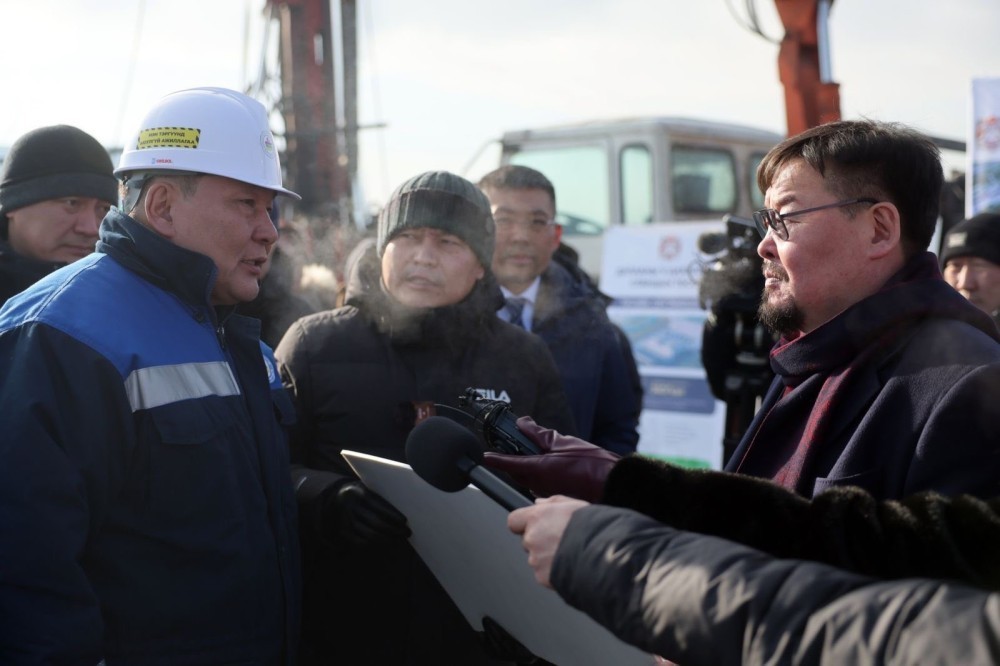
Prime Minister G.Zandanshatar visited the site of the Thermal Power Plant V project on February 3, 2026, a development intended to meet Ulaanbaatar’s growing electricity and heat demand and reduce pressure on the central energy system.
The plant will be built on the former ash pond of TPP-2 in Bayangol district and is planned to have a generation capacity of 300 MW of electricity and 340 Gcal of heat. The design incorporates environmentally friendly technologies, including an air-cooling system that reduces water use and wastewater-reuse solutions.
Officials say the plant will supply electricity to about 100,000 households and heat to 40,000 households. 90% of electricity produced will be fed into the central grid; the remaining 10% will cover the plant’s internal needs.
Earthmoving work will begin on February 15, starting with removal of ash accumulated since TPP-2 began operating in 1961. Main construction work is scheduled to start in April after completion of preparatory works. The construction period is estimated at 2.5 years.
The project is structured as a public–private partnership with a total cost of USD 658.5 million: the private sector will provide 80% of the financing and the capital city 20%.
Prime Minister G.Zandanshatar visited the site of the Thermal Power Plant V project on February 3, 2026, a development intended to meet Ulaanbaatar’s growing electricity and heat demand and reduce pressure on the central energy system.
The plant will be built on the former ash pond of TPP-2 in Bayangol district and is planned to have a generation capacity of 300 MW of electricity and 340 Gcal of heat. The design incorporates environmentally friendly technologies, including an air-cooling system that reduces water use and wastewater-reuse solutions.
Officials say the plant will supply electricity to about 100,000 households and heat to 40,000 households. 90% of electricity produced will be fed into the central grid; the remaining 10% will cover the plant’s internal needs.
Earthmoving work will begin on February 15, starting with removal of ash accumulated since TPP-2 began operating in 1961. Main construction work is scheduled to start in April after completion of preparatory works. The construction period is estimated at 2.5 years.
The project is structured as a public–private partnership with a total cost of USD 658.5 million: the private sector will provide 80% of the financing and the capital city 20%.