

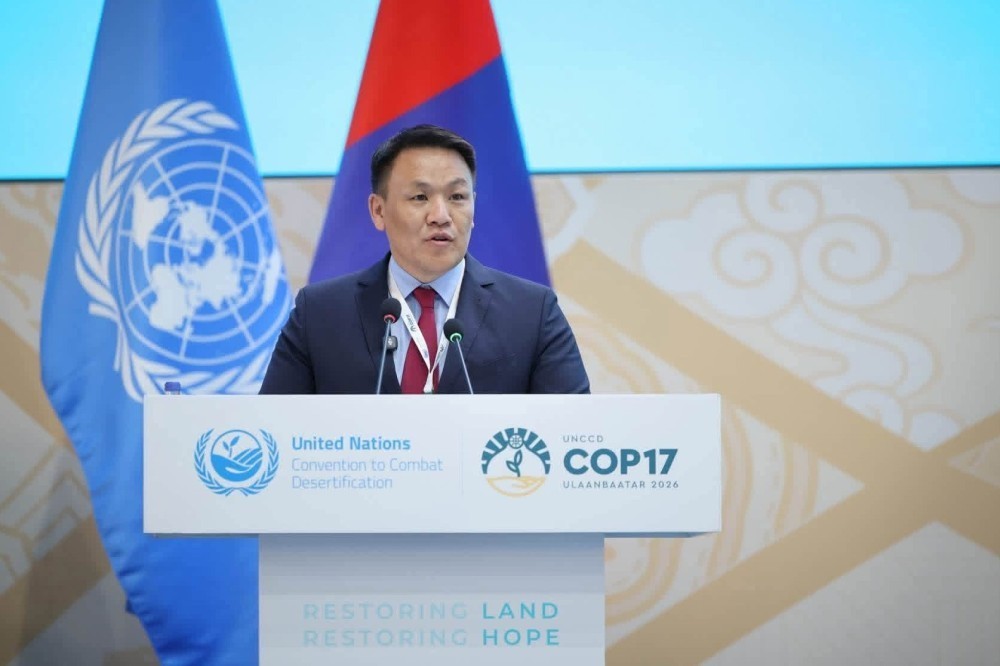
The second Ministerial Meeting on Drought Resilience was held as part of the “Water Day” thematic event at the 17th Conference of the Parties to the United Nations Convention to Combat Desertification (UNCCD COP17).
The frequency of droughts worldwide has increased by 30% since 2000, while their impacts on human lives, livelihoods, and economies continue to grow.
In Mongolia, 81.9% of the country's land area has been affected by desertification, increasing the risk of climate-related disasters such as drought, dzud, and floods.
Against this backdrop, there is a growing need to strengthen early warning systems, disaster prevention and response capabilities, risk financing mechanisms, and landscape-level water conservation.
The Government of Mongolia is promoting the “Blue Horse” initiative to improve the storage and management of surface water.
Under the initiative, reservoirs, artificial lakes, and dams will be constructed to capture excess water from spring floods and summer rainfall. The program will also focus on restoring rivers, springs, and ponds, protecting drinking water sources in the Gobi region, increasing the use of treated wastewater, and improving groundwater management.
The second Ministerial Meeting on Drought Resilience was held as part of the “Water Day” thematic event at the 17th Conference of the Parties to the United Nations Convention to Combat Desertification (UNCCD COP17).
The frequency of droughts worldwide has increased by 30% since 2000, while their impacts on human lives, livelihoods, and economies continue to grow.
In Mongolia, 81.9% of the country's land area has been affected by desertification, increasing the risk of climate-related disasters such as drought, dzud, and floods.
Against this backdrop, there is a growing need to strengthen early warning systems, disaster prevention and response capabilities, risk financing mechanisms, and landscape-level water conservation.
The Government of Mongolia is promoting the “Blue Horse” initiative to improve the storage and management of surface water.
Under the initiative, reservoirs, artificial lakes, and dams will be constructed to capture excess water from spring floods and summer rainfall. The program will also focus on restoring rivers, springs, and ponds, protecting drinking water sources in the Gobi region, increasing the use of treated wastewater, and improving groundwater management.