

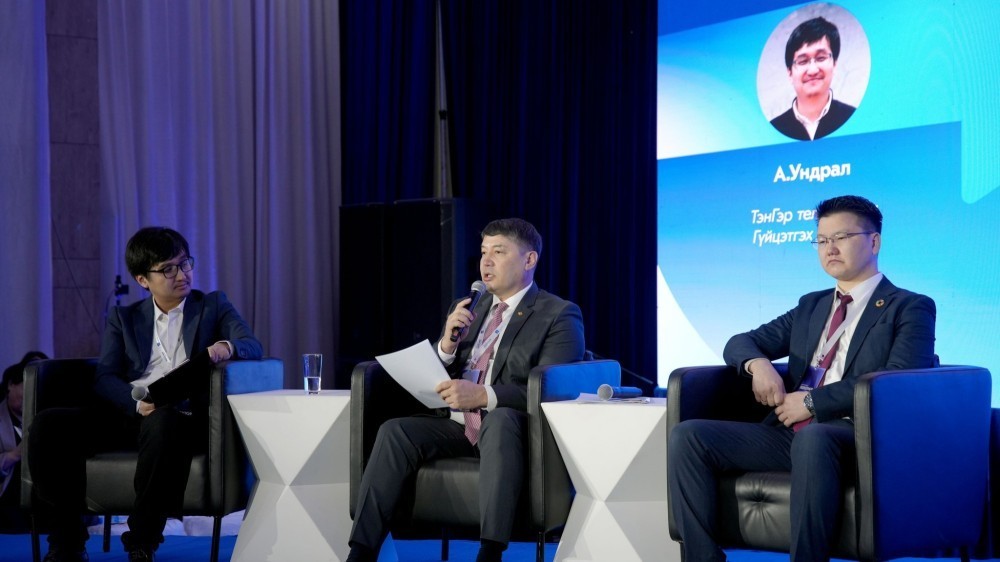
At the initiative of Minister of Family, Labour and Social Protection T.Aubakir, 2026 has been declared the Year of Employment Support in the family, labour and social protection sector. A forum titled “Transforming LABOR”, held in partnership with Mongolian Chamber of Commerce and Industry, brought together government, business and social partners to review the current labour-market situation, discuss future trends and urgent issues, and develop coordinated policy recommendations.
Prime Minister G.Zandanshatar said that technological development, transformation and automation are reshaping employment: artificial intelligence and other advanced technologies are replacing some jobs while creating demand for new skills, increasing the need for lifelong learning. Countries must identify skills needs, update education and training, and help workers enter and transition within the labour market. He urged focusing on both the opportunities and risks of AI and strengthening cooperation between the education and employment sectors so policy responses deliver measurable results.
The government’s five-year development priorities for 2026–2030 aim to align human-resource development with labour-market demand, improve labour relations, raise wages and social protection, support decent work, and expand the middle class. To help deliver on these goals, the Government of Mongolia has approved a “300-day work plan” intended to accelerate economic recovery and ensure economic benefits reach citizens. The plan emphasizes protecting incomes and livelihoods, creating a favourable business environment, and diversifying productivity.
Under the Year of Employment Support, the Ministry plans targeted actions to:
- address women’s labour-market barriers, including undervaluation of childcare and lower average wages;
- reduce the occupational/professional gap (reported at 53%) and narrow mismatches between supply and demand; expand continuous employment opportunities for young people;
- promote decent, income-generating opportunities for older workers.
- The Ministry of Family, Labour and Social Protection is preparing a revised Law on Employment Support. Key reform areas in the draft include: clearer definition of target groups for employment services; adoption of case-management approaches in employment services; and expansion of the employment-registration system into an integrated labour-market information system that uses big data to inform policy and service delivery. Regulations will be updated to strengthen public–private partnerships in employment support, increase employer and job-seeker participation and responsibility, and improve monitoring and evaluation of implementation.
At the initiative of Minister of Family, Labour and Social Protection T.Aubakir, 2026 has been declared the Year of Employment Support in the family, labour and social protection sector. A forum titled “Transforming LABOR”, held in partnership with Mongolian Chamber of Commerce and Industry, brought together government, business and social partners to review the current labour-market situation, discuss future trends and urgent issues, and develop coordinated policy recommendations.
Prime Minister G.Zandanshatar said that technological development, transformation and automation are reshaping employment: artificial intelligence and other advanced technologies are replacing some jobs while creating demand for new skills, increasing the need for lifelong learning. Countries must identify skills needs, update education and training, and help workers enter and transition within the labour market. He urged focusing on both the opportunities and risks of AI and strengthening cooperation between the education and employment sectors so policy responses deliver measurable results.
The government’s five-year development priorities for 2026–2030 aim to align human-resource development with labour-market demand, improve labour relations, raise wages and social protection, support decent work, and expand the middle class. To help deliver on these goals, the Government of Mongolia has approved a “300-day work plan” intended to accelerate economic recovery and ensure economic benefits reach citizens. The plan emphasizes protecting incomes and livelihoods, creating a favourable business environment, and diversifying productivity.
Under the Year of Employment Support, the Ministry plans targeted actions to:
- address women’s labour-market barriers, including undervaluation of childcare and lower average wages;
- reduce the occupational/professional gap (reported at 53%) and narrow mismatches between supply and demand; expand continuous employment opportunities for young people;
- promote decent, income-generating opportunities for older workers.
- The Ministry of Family, Labour and Social Protection is preparing a revised Law on Employment Support. Key reform areas in the draft include: clearer definition of target groups for employment services; adoption of case-management approaches in employment services; and expansion of the employment-registration system into an integrated labour-market information system that uses big data to inform policy and service delivery. Regulations will be updated to strengthen public–private partnerships in employment support, increase employer and job-seeker participation and responsibility, and improve monitoring and evaluation of implementation.