

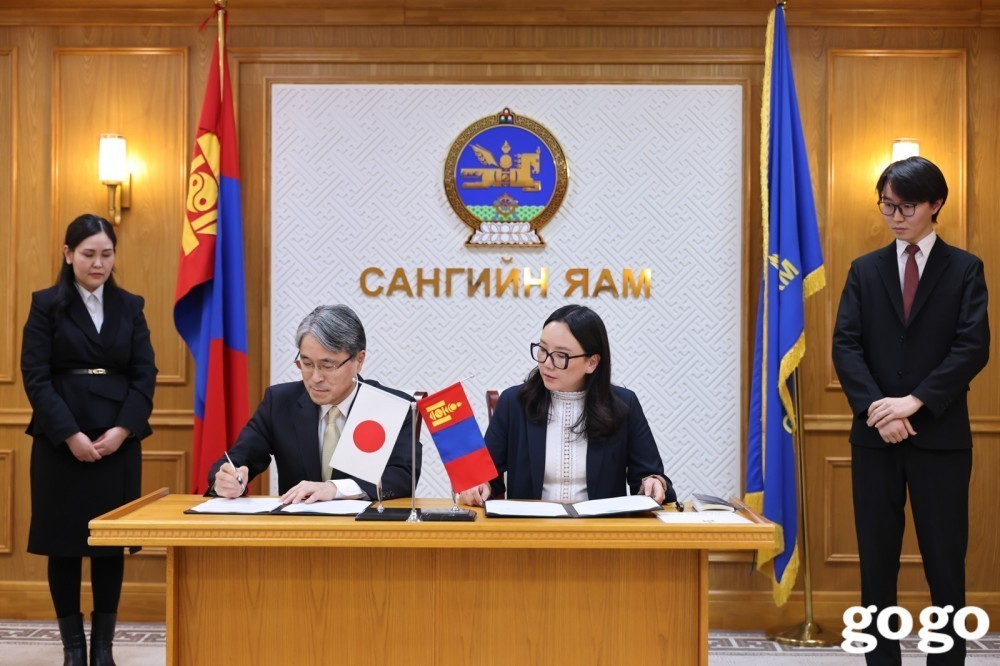
A signing ceremony for the Exchange of Notes and Grant Agreement to implement the Project for provision of equipment to support reliability of power grid took place at the Ministry of Finance on January 14, 2026.
Under the project, the Government of Japan will provide a grant of ¥500 million (about USD 3.14 million) to supply critical equipment to Mongolia’s power system through the Japan International Cooperation Agency (JICA). The equipment, intended to strengthen the reliability and operational resilience of the national grid, will be delivered to the National Power Transmission Grid state-owned enterprise and the National Dispatching Center state-owned enterprise.
Items to be supplied include specialised kit such as mobile transformer diagnostic vehicles and real-time digital simulators for power-grid operations, along with other equipment essential for monitoring, diagnostics and system modelling. Officials said the equipment will help improve grid monitoring, fault diagnosis and operator training, contributing to more reliable electricity supplies.
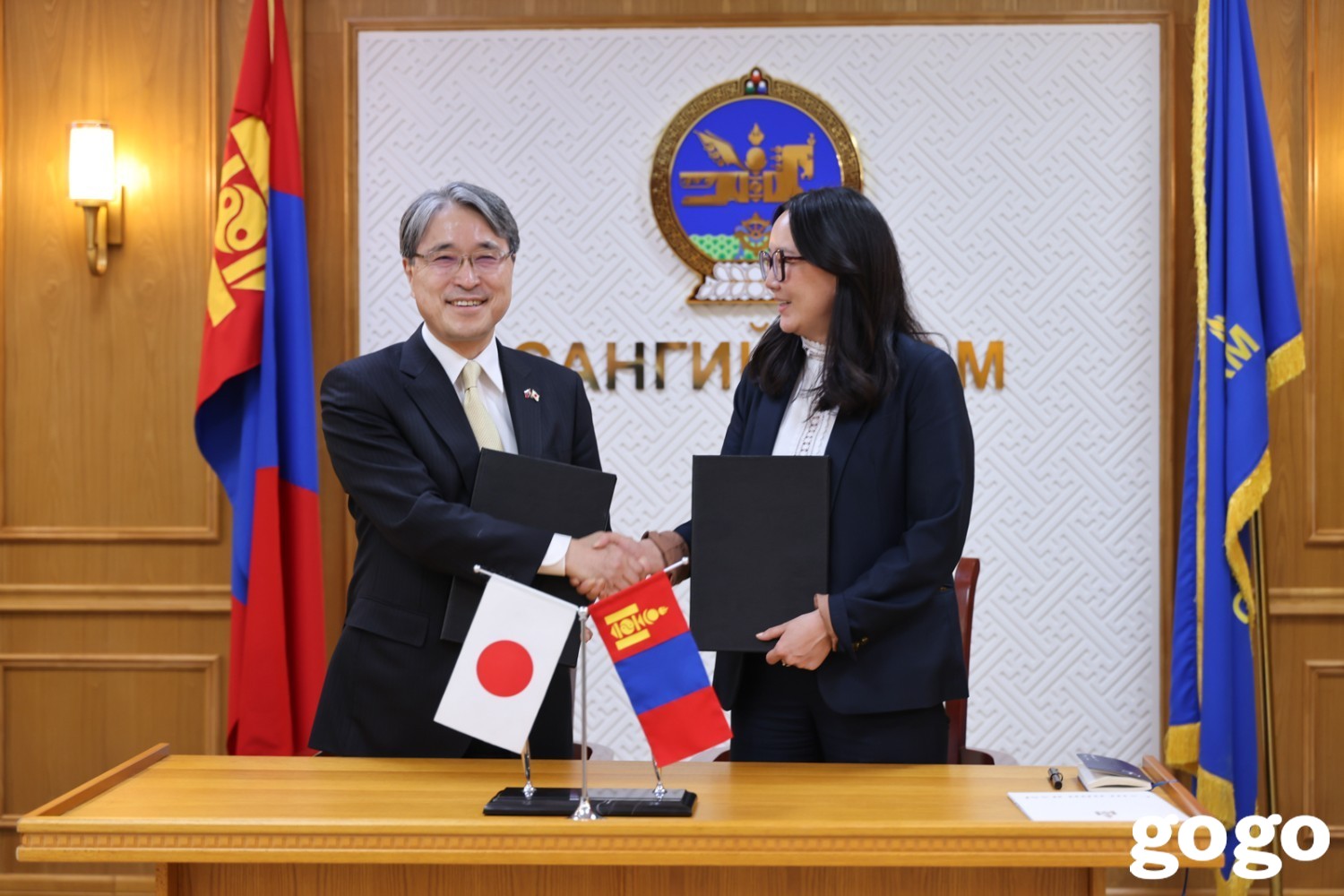
During the ceremony, Japanese Ambassador Igawahara Masaru highlighted the strategic importance of the initiative. He noted that Mongolia currently imports approximately 20% of its domestic electricity from neighboring countries, making energy security a top national priority.
"The Mongolian government aims to address this challenge by tapping into its abundant domestic renewable energy resources," Ambassador Igawahara stated. "However, achieving this transition requires significant improvements to power grid infrastructure, specifically in operational precision and maintenance capabilities."
B.Khulan, Deputy Minister of Finance signed the Memorandum of Understanding and Grant Agreement for the “Project for provision of equipment to support reliability of power grid” funded by a ¥500 million grant from the Government of Japan.
Implemented through JICA, the project will supply essential equipment to the National Power Transmission Grid and the National Dispatching Center to improve grid operation and maintenance.
Deputy Minister Khulan said the project will help stabilize Mongolia’s energy supply, strengthen power-grid reliability, and enhance national energy security.
Miyagi Kensuke, Chief Representative of JICA’s Mongolia office, said the ¥500 million grant project signed today will be fully implemented by JICA and all activities completed through delivery of the equipment to Mongolia. He described the initiative as a continuation of JICA’s 2022–2025 technical cooperation, which provided professional training to more than 100 energy-sector engineers and staff. Miyagi, who arrived in Mongolia in summer 2024, affirmed that JICA will keep expanding bilateral cooperation across sectors.
B.Dashdavaa, Executive Director of the National Power Transmission Grid, said the Japan-funded grant is a major, timely investment for the company and Mongolia’s energy transition. The USD 2 million package provides a complete mobile laboratory for seven types of transformer measurements and tests, two computers and 15 additional instruments, he said, equipment that will boost use of remote substations, enable diagnostics-led planning and repairs, and help ensure a reliable, stable transmission network.
B.Dashdavaa noted the company’s 2025 restructuring (adding Western and Altai-Uliastai branches) expanded its coverage to 95% of Mongolia’s territory and 87% of the population, making mobile diagnostic capability especially important. He thanked the Government of Japan, JICA and the people of Japan for their support.
Ch. Amarsanaa, Executive Director of the National Dispatching Center, said the first tranche of equipment supplied under the JICA–Ministry of Energy cooperation arrived in 2022–2023 to help stabilise Mongolia’s energy system and build staff capacity for greater renewable integration. That initial device had four cores, which limited its ability to model the entire national system.
“We asked JICA to expand the capability and are grateful that the Japanese government accepted our request,” Ch. Amarsanaa said. The upgraded device, now expanded to 20 cores, will allow the Dispatching Center to model processes that have not previously occurred in the system, anticipate and prevent potential risks, and support stable operation across Mongolia’s grid.
Mongolia generates roughly 80% of its domestic electricity needs and imports the remaining 20%. At a time when equipment availability and reliability are critical concerns, this project is expected to strengthen the operation-and-maintenance capacity of the national grid. By improving system reliability and diagnostic capability, the initiative will lay the technical foundation for wider renewable-energy integration and accelerate the country’s energy transition.
A signing ceremony for the Exchange of Notes and Grant Agreement to implement the Project for provision of equipment to support reliability of power grid took place at the Ministry of Finance on January 14, 2026.
Under the project, the Government of Japan will provide a grant of ¥500 million (about USD 3.14 million) to supply critical equipment to Mongolia’s power system through the Japan International Cooperation Agency (JICA). The equipment, intended to strengthen the reliability and operational resilience of the national grid, will be delivered to the National Power Transmission Grid state-owned enterprise and the National Dispatching Center state-owned enterprise.
Items to be supplied include specialised kit such as mobile transformer diagnostic vehicles and real-time digital simulators for power-grid operations, along with other equipment essential for monitoring, diagnostics and system modelling. Officials said the equipment will help improve grid monitoring, fault diagnosis and operator training, contributing to more reliable electricity supplies.
During the ceremony, Japanese Ambassador Igawahara Masaru highlighted the strategic importance of the initiative. He noted that Mongolia currently imports approximately 20% of its domestic electricity from neighboring countries, making energy security a top national priority.
"The Mongolian government aims to address this challenge by tapping into its abundant domestic renewable energy resources," Ambassador Igawahara stated. "However, achieving this transition requires significant improvements to power grid infrastructure, specifically in operational precision and maintenance capabilities."
B.Khulan, Deputy Minister of Finance signed the Memorandum of Understanding and Grant Agreement for the “Project for provision of equipment to support reliability of power grid” funded by a ¥500 million grant from the Government of Japan.
Implemented through JICA, the project will supply essential equipment to the National Power Transmission Grid and the National Dispatching Center to improve grid operation and maintenance.
Deputy Minister Khulan said the project will help stabilize Mongolia’s energy supply, strengthen power-grid reliability, and enhance national energy security.
Miyagi Kensuke, Chief Representative of JICA’s Mongolia office, said the ¥500 million grant project signed today will be fully implemented by JICA and all activities completed through delivery of the equipment to Mongolia. He described the initiative as a continuation of JICA’s 2022–2025 technical cooperation, which provided professional training to more than 100 energy-sector engineers and staff. Miyagi, who arrived in Mongolia in summer 2024, affirmed that JICA will keep expanding bilateral cooperation across sectors.
B.Dashdavaa, Executive Director of the National Power Transmission Grid, said the Japan-funded grant is a major, timely investment for the company and Mongolia’s energy transition. The USD 2 million package provides a complete mobile laboratory for seven types of transformer measurements and tests, two computers and 15 additional instruments, he said, equipment that will boost use of remote substations, enable diagnostics-led planning and repairs, and help ensure a reliable, stable transmission network.
B.Dashdavaa noted the company’s 2025 restructuring (adding Western and Altai-Uliastai branches) expanded its coverage to 95% of Mongolia’s territory and 87% of the population, making mobile diagnostic capability especially important. He thanked the Government of Japan, JICA and the people of Japan for their support.
Ch. Amarsanaa, Executive Director of the National Dispatching Center, said the first tranche of equipment supplied under the JICA–Ministry of Energy cooperation arrived in 2022–2023 to help stabilise Mongolia’s energy system and build staff capacity for greater renewable integration. That initial device had four cores, which limited its ability to model the entire national system.
“We asked JICA to expand the capability and are grateful that the Japanese government accepted our request,” Ch. Amarsanaa said. The upgraded device, now expanded to 20 cores, will allow the Dispatching Center to model processes that have not previously occurred in the system, anticipate and prevent potential risks, and support stable operation across Mongolia’s grid.
Mongolia generates roughly 80% of its domestic electricity needs and imports the remaining 20%. At a time when equipment availability and reliability are critical concerns, this project is expected to strengthen the operation-and-maintenance capacity of the national grid. By improving system reliability and diagnostic capability, the initiative will lay the technical foundation for wider renewable-energy integration and accelerate the country’s energy transition.