

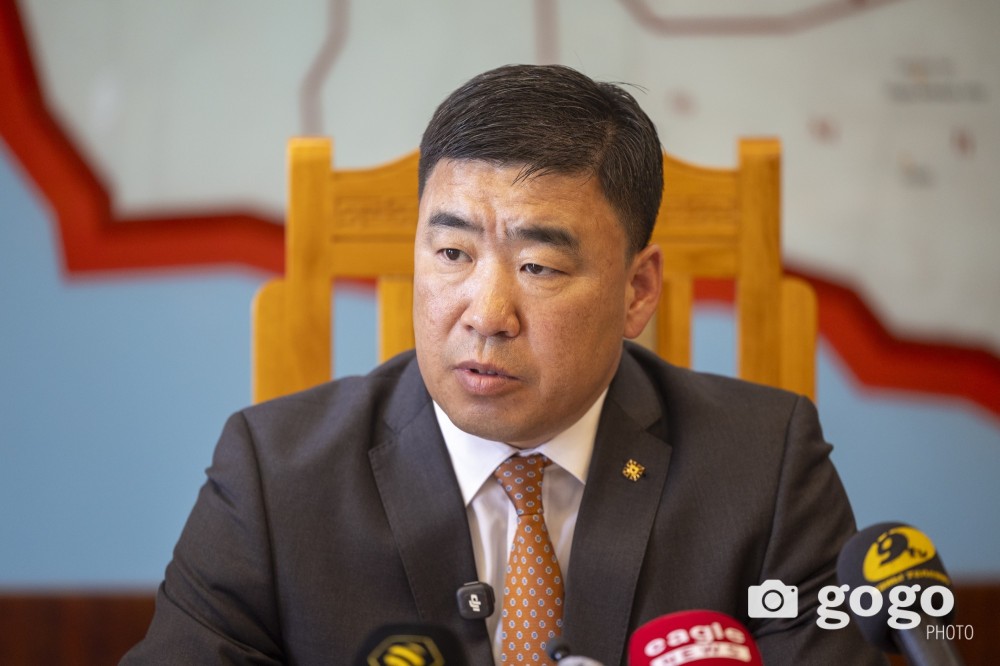
Minister of Food, Agriculture and Light Industry Ts.Iderbat commented on the recent rise in meat prices, saying inflation continues to have a significant impact on the market.
"The government has instructed provinces to meet their own meat demand and build reserve stocks. Under this policy, local governments have begun preparing reserves, while the capital has established a working group to organize meat procurement.
The government is aiming to secure larger livestock reserves than ever before ahead of the autumn purchasing season, adding that it remains uncertain how herders will price their livestock this year.
Three truckloads of meat delivered from rural slaughterhouses to the 'Denjiin 1000' wholesale market returned unsold on the morning of the announcement because, according to vendors, "people were not buying it." Wholesale prices for the meat were MNT 19,000 per kilogram for mutton and MNT 21,000 per kilogram for beef.
Slaughterhouses in Dornod provinces currently have ample supplies of horses, cattle, and sheep. However, he said the price of meat rises by MNT 3,000–4,000 per kilogram as it changes hands between traders and increases further once it reaches shops and markets.
The capital city is also conducting a comprehensive study to identify measures to stabilize meat prices.
The government is expected to discuss lifting the livestock quarantine in the western provinces at its August 5 meeting. If approved, the decision would allow livestock meat from the region to be transported and sold more freely.
Minister of Food, Agriculture and Light Industry Ts.Iderbat commented on the recent rise in meat prices, saying inflation continues to have a significant impact on the market.
"The government has instructed provinces to meet their own meat demand and build reserve stocks. Under this policy, local governments have begun preparing reserves, while the capital has established a working group to organize meat procurement.
The government is aiming to secure larger livestock reserves than ever before ahead of the autumn purchasing season, adding that it remains uncertain how herders will price their livestock this year.
Three truckloads of meat delivered from rural slaughterhouses to the 'Denjiin 1000' wholesale market returned unsold on the morning of the announcement because, according to vendors, "people were not buying it." Wholesale prices for the meat were MNT 19,000 per kilogram for mutton and MNT 21,000 per kilogram for beef.
Slaughterhouses in Dornod provinces currently have ample supplies of horses, cattle, and sheep. However, he said the price of meat rises by MNT 3,000–4,000 per kilogram as it changes hands between traders and increases further once it reaches shops and markets.
The capital city is also conducting a comprehensive study to identify measures to stabilize meat prices.
The government is expected to discuss lifting the livestock quarantine in the western provinces at its August 5 meeting. If approved, the decision would allow livestock meat from the region to be transported and sold more freely.