

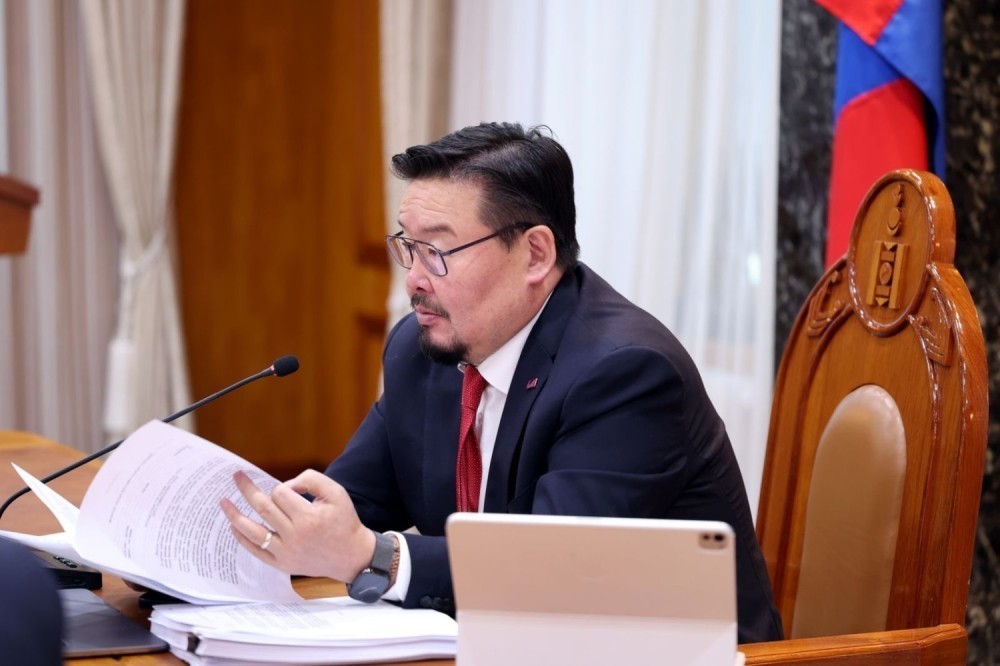
In the latest episode of his weekly podcast “Tsegtsrekh khudulguun,” Prime Minister G.Zandanshatar, returning from the World Economic Forum in Davos, said he has instructed relevant agencies to carry out scientific research, modelling and economic calculations on the feasibility of a small-scale nuclear power plant in Mongolia.
Speaking on the podcast, the Prime Minister reviewed the current international political and economic environment and outlined emerging opportunities for Mongolia. He said that after Davos he gave priority directions to organisations working in the energy sector to act quickly to stabilise supply and to prepare well-evidenced options for the public.
“There is a lot of talk and speculation about nuclear power plants. For example, Kazakhstan decided by public referendum to pursue nuclear energy,” Mr Zandanshatar said. “On the issue of building a small-scale nuclear power plant in Mongolia, we have been tasked with providing citizens with scientifically based information, conducting expert research and discussions, and presenting calculations on the solutions and economic benefits.”
The Prime Minister’s request asks experts to evaluate technical options, safety and environmental safeguards, financing models and projected costs and benefits so that any future policy decisions are grounded in transparent, evidence-based analysis and public discussion.
In the latest episode of his weekly podcast “Tsegtsrekh khudulguun,” Prime Minister G.Zandanshatar, returning from the World Economic Forum in Davos, said he has instructed relevant agencies to carry out scientific research, modelling and economic calculations on the feasibility of a small-scale nuclear power plant in Mongolia.
Speaking on the podcast, the Prime Minister reviewed the current international political and economic environment and outlined emerging opportunities for Mongolia. He said that after Davos he gave priority directions to organisations working in the energy sector to act quickly to stabilise supply and to prepare well-evidenced options for the public.
“There is a lot of talk and speculation about nuclear power plants. For example, Kazakhstan decided by public referendum to pursue nuclear energy,” Mr Zandanshatar said. “On the issue of building a small-scale nuclear power plant in Mongolia, we have been tasked with providing citizens with scientifically based information, conducting expert research and discussions, and presenting calculations on the solutions and economic benefits.”
The Prime Minister’s request asks experts to evaluate technical options, safety and environmental safeguards, financing models and projected costs and benefits so that any future policy decisions are grounded in transparent, evidence-based analysis and public discussion.