

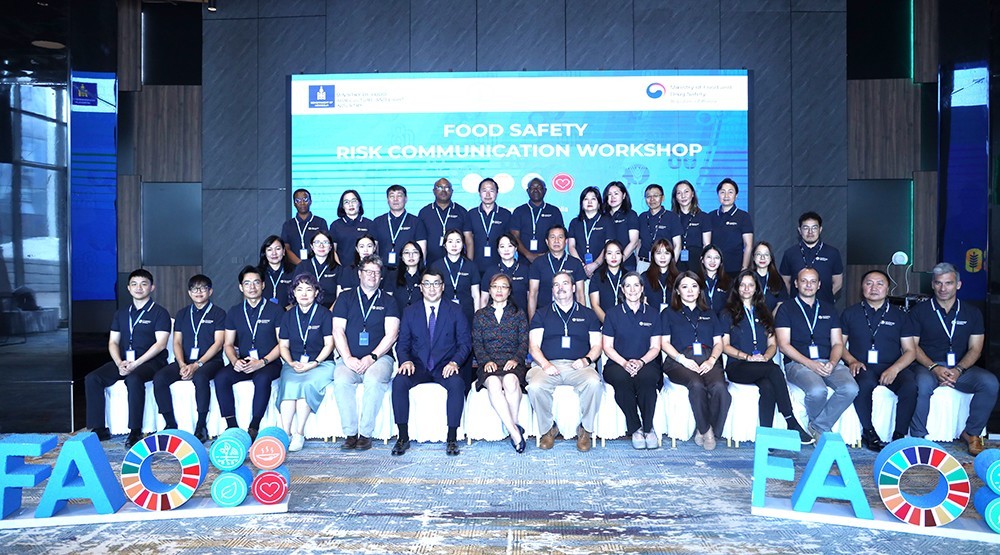
The Food and Agriculture Organization of the United Nations (FAO) is organizing a regional Food Safety Risk Communication Workshop from July 4 to 6, 2025, in Ulaanbaatar. The event brings together over 30 food safety professionals, including international participants and trainers from different countries such as United States, Vietnam, Tanzania, Portugal, Italy and Laos — alongside national experts from Mongolia.
The workshop is designed to strengthen national and regional capacities to communicate public health risks related to foodborne hazards. It focuses on enhancing how competent authorities address both ongoing and emerging food safety issues through transparent, science-based messaging.
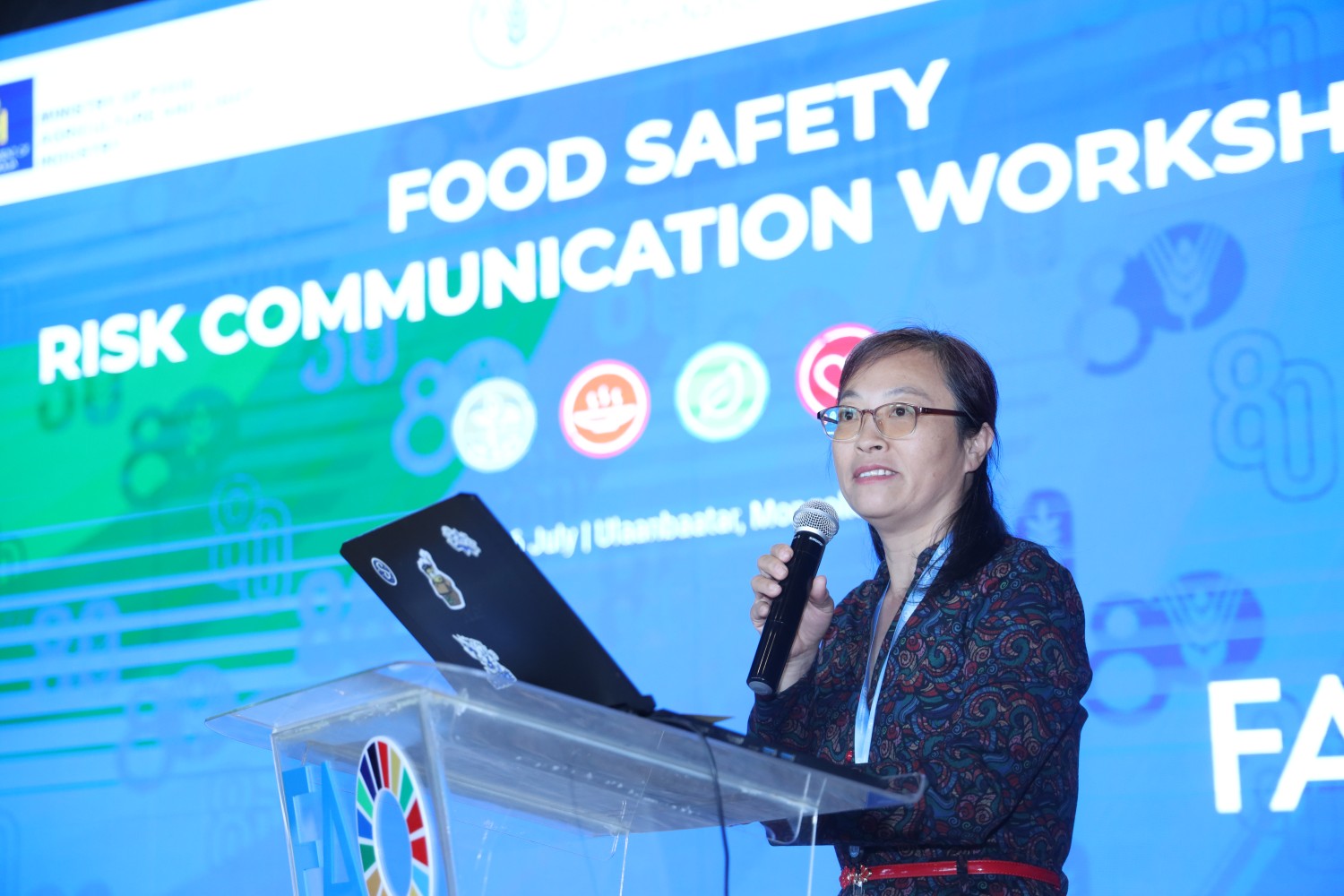
“Risk communication is a vital part of protecting public health and maintaining trust in food systems,” said Dr. Qingyun Diao, FAO Representative to Mongolia. “This workshop is designed to help countries respond effectively to food safety challenges through clear, coordinated communication.”
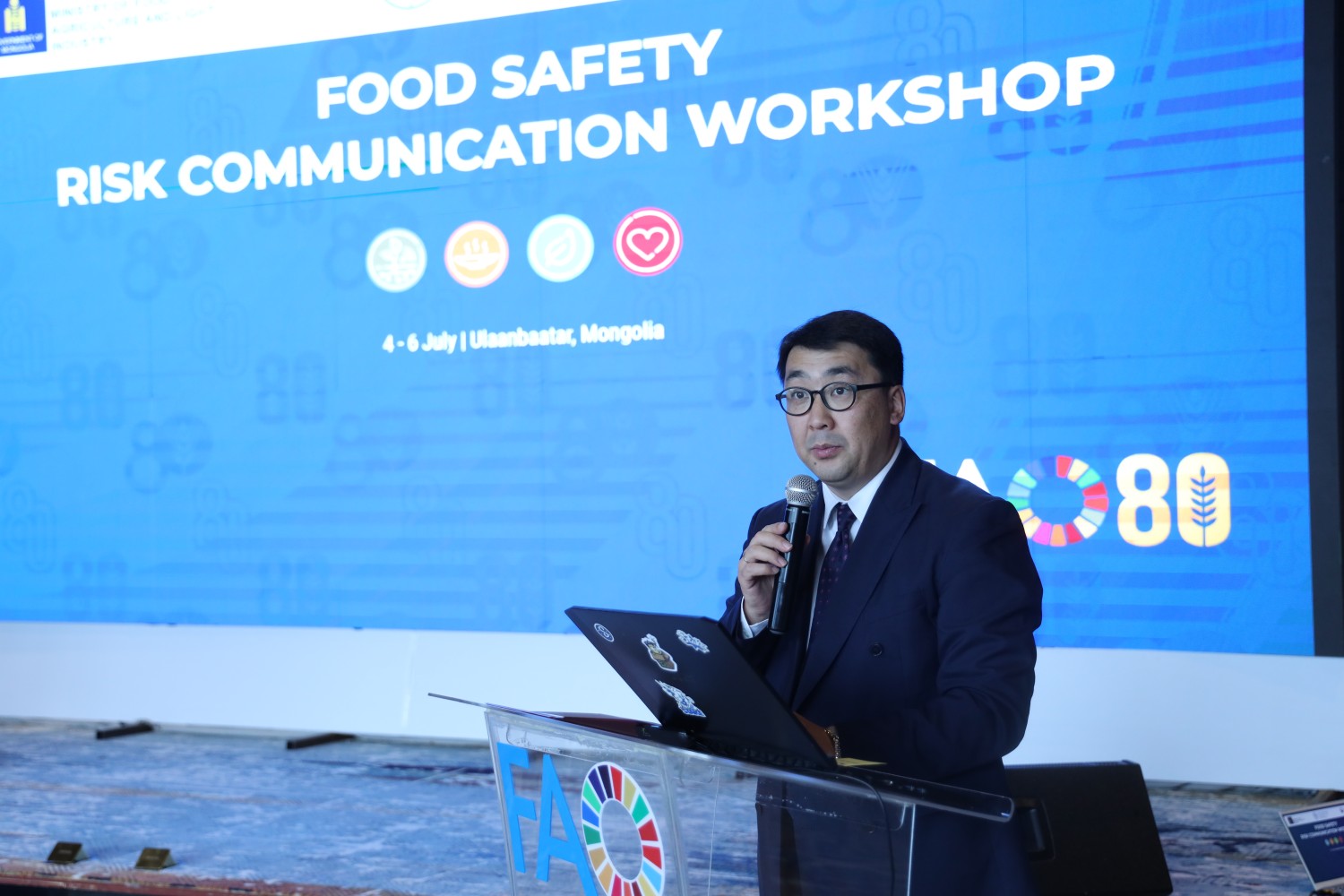
"Accurately identifying food safety risks, conducting science-based assessments, and fostering communication grounded in reliable information to enhance public understanding and trust has become one of our key challenges today. Therefore, 'risk communication' is not just about disseminating information—it is a vital policy tool with the capacity to build mutual understanding and trust," said Mr. T. Jambaltseren, State Secretary of the Ministry of Food, Agriculture and Light Industry, in his opening remarks.
International experts will lead sessions on risk perception, strategic communication planning, message development, and managing misinformation. Participants will present country-specific case studies and engage in hands-on exercises to apply the tools and strategies discussed.
The programme also includes field visits to observe Mongolia’s milk and meat supply chains, providing participants with real-world examples of food safety practices and interagency collaboration.
This activity is part of FAO’s broader work to support the implementation of Codex standards and promote a One Health approach under the One Health for Food Safety and ACT initiatives.
The Food and Agriculture Organization of the United Nations (FAO) is organizing a regional Food Safety Risk Communication Workshop from July 4 to 6, 2025, in Ulaanbaatar. The event brings together over 30 food safety professionals, including international participants and trainers from different countries such as United States, Vietnam, Tanzania, Portugal, Italy and Laos — alongside national experts from Mongolia.
The workshop is designed to strengthen national and regional capacities to communicate public health risks related to foodborne hazards. It focuses on enhancing how competent authorities address both ongoing and emerging food safety issues through transparent, science-based messaging.
“Risk communication is a vital part of protecting public health and maintaining trust in food systems,” said Dr. Qingyun Diao, FAO Representative to Mongolia. “This workshop is designed to help countries respond effectively to food safety challenges through clear, coordinated communication.”
"Accurately identifying food safety risks, conducting science-based assessments, and fostering communication grounded in reliable information to enhance public understanding and trust has become one of our key challenges today. Therefore, 'risk communication' is not just about disseminating information—it is a vital policy tool with the capacity to build mutual understanding and trust," said Mr. T. Jambaltseren, State Secretary of the Ministry of Food, Agriculture and Light Industry, in his opening remarks.
International experts will lead sessions on risk perception, strategic communication planning, message development, and managing misinformation. Participants will present country-specific case studies and engage in hands-on exercises to apply the tools and strategies discussed.
The programme also includes field visits to observe Mongolia’s milk and meat supply chains, providing participants with real-world examples of food safety practices and interagency collaboration.
This activity is part of FAO’s broader work to support the implementation of Codex standards and promote a One Health approach under the One Health for Food Safety and ACT initiatives.