

A 600-year-old tax ship has resurfaced off Korea’s west coast.
South Korean archaeologists have recovered the full remains of a Joseon-era (1392-1910) cargo vessel, shedding light on how a premodern kingdom managed national taxation, logistics and sea-based infrastructure with surprising complexity.
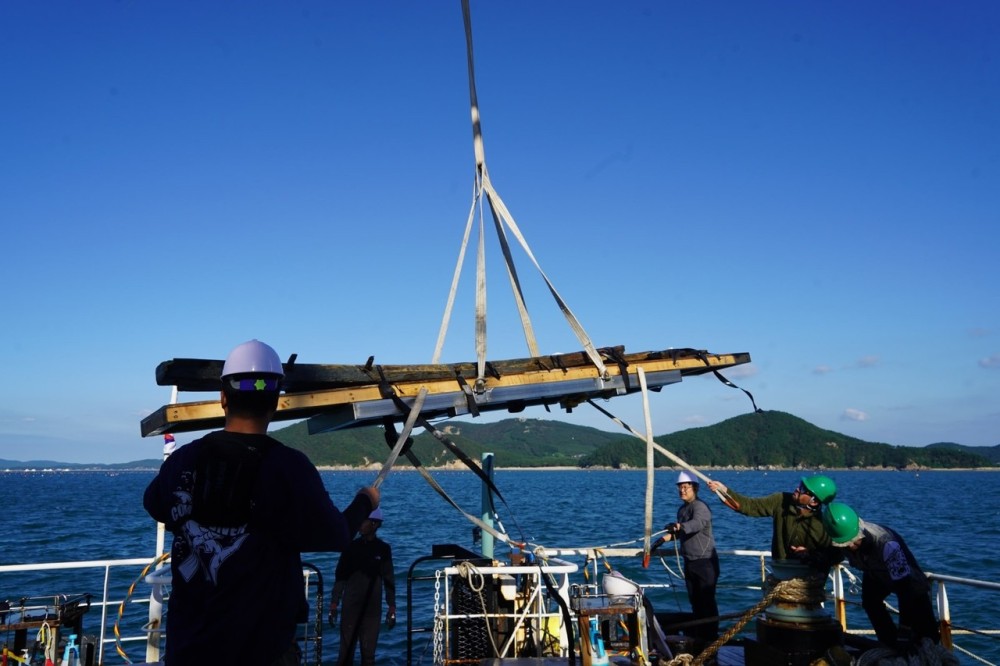
Announced by the National Research Institute of Maritime Heritage on Monday, the 15th-century vessel — named Mado 4 by researchers — was raised from the seabed in October following nearly a decade of conservation and analysis.
It is now the only fully excavated Joseon-era ship ever recovered, and the clearest physical proof yet of the kingdom’s maritime tax network.
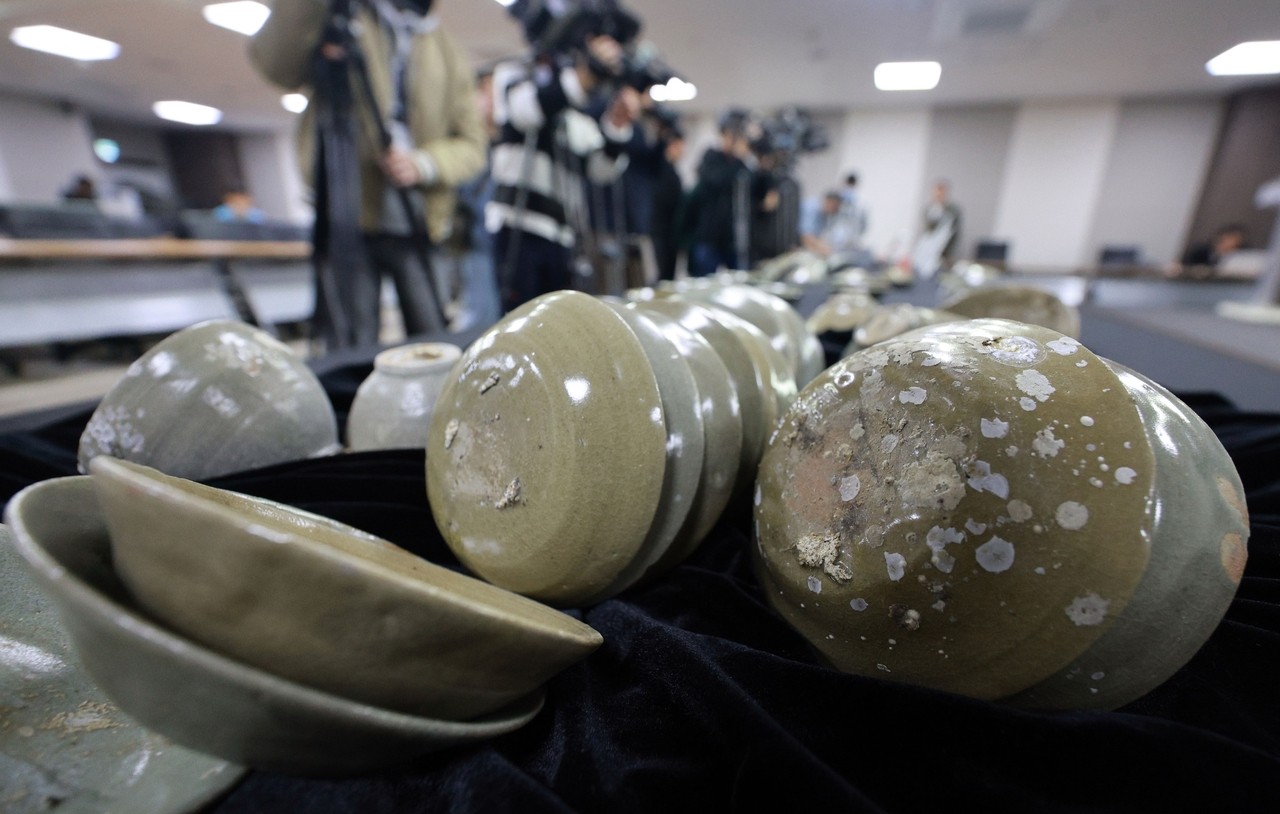
Originally discovered in 2015 off the west coast city of Taean, South Chungcheong Province, the vessel remained submerged while researchers recovered over 120 artifacts from the site. Among them were wooden cargo tags marked with destinations, containers of rice and porcelain produced for government tribute. These findings confirm the ship was part of a state-run transport system, known as "joun," which moved grain and official goods from provincial depots to the royal capital of Hanyang, or present-day Seoul.
“This is not just a ship. It’s the physical infrastructure of the Joseon state coming back to light,” an institute official said. “It reveals how an early bureaucracy moved food, goods and information over long distances.”
Mado 4 is believed to have sunk around 1420 while traveling from Naju, a regional grain collection center in South Jeolla Province. The route was perilous, cutting through strong tides and rocky passages on the west coast, conditions that likely led to the ship’s demise and preserved its remains under layers of sand and silt.
Beyond its historical value, the vessel has yielded surprising insights into Joseon-era engineering.
Researchers discovered a twin-mast design, deviating from the single-mast configuration common in earlier Korean ships, suggesting a focus on speed and maneuverability. Even more significantly, parts of the ship were repaired using iron nails — the first confirmed use of metal fasteners in any traditional Korean vessel — which until now were thought to rely solely on wooden joints.
New clues near Mado 4 site point to much older shipwreck
The announcement came alongside news of another major archaeological development. In the same area, sonar scans and underwater dives have uncovered the remains of a second shipwreck, this one accompanied by celadon ceramics dated to 1150-1175.
If verified, it would become the oldest known shipwreck ever found in Korea, predating Mado 4 by over two centuries and offering a rare window into Korea’s earlier Goryeo Kingdom.
Since the surprise discovery of a Korean shipwreck, Mado 1, by a local fishers in 2007, the Taean coast has become one of East Asia’s most significant underwater archaeological zones. More than a dozen wrecks have been found in the region, revealing a once-bustling maritime corridor that underpinned state finance, tribute exchange and domestic distribution across centuries.
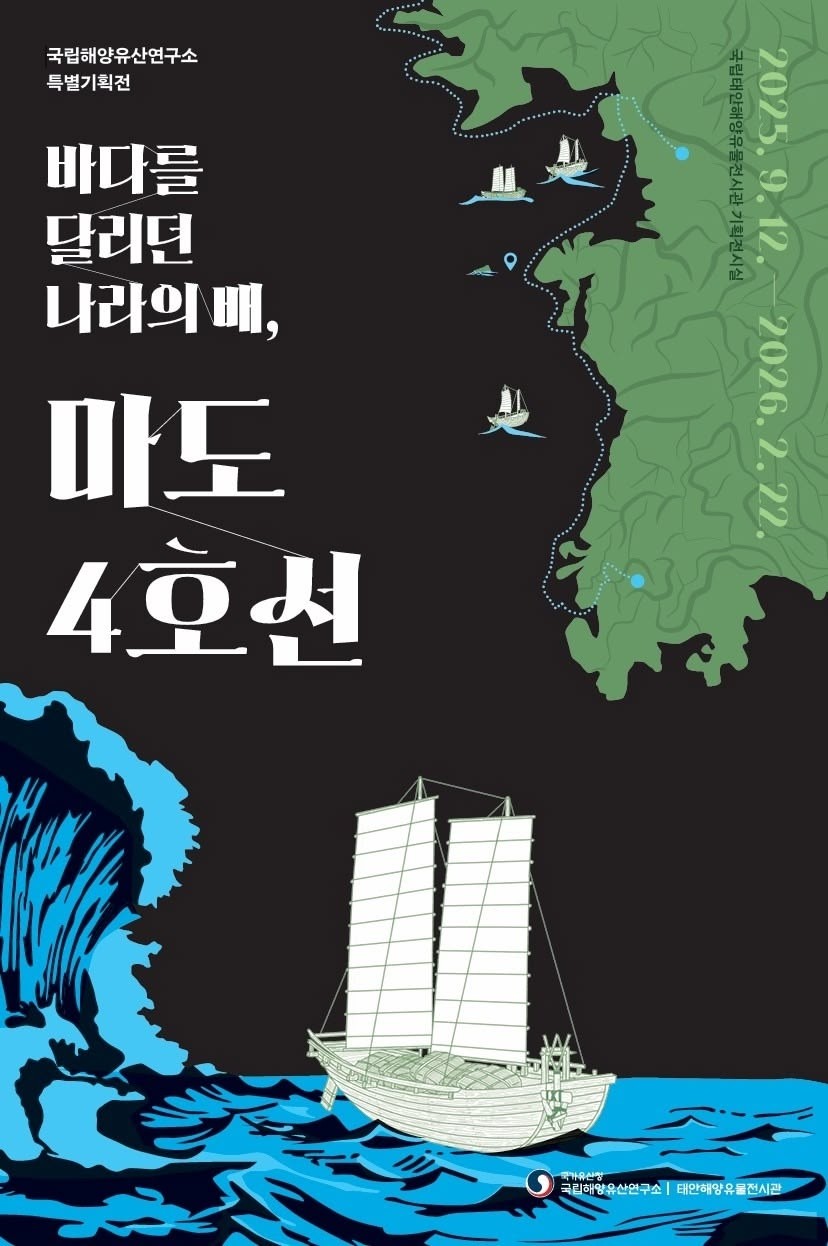
Although Mado 4 is now undergoing long-term desalination and preservation treatment in Taean, a curated selection of artifacts from the ship is currently on public view. The special exhibition, “The Nation’s Ship That Sailed the Sea,” opened in September and runs through February 2026 at the Taean Maritime Museum.
The recovery and study of the vessel are being led by the National Research Institute of Maritime Heritage, under the Cultural Heritage Administration of South Korea.
mjh@heraldcorp.com
Source: https://www.koreaherald.com/
A 600-year-old tax ship has resurfaced off Korea’s west coast.
South Korean archaeologists have recovered the full remains of a Joseon-era (1392-1910) cargo vessel, shedding light on how a premodern kingdom managed national taxation, logistics and sea-based infrastructure with surprising complexity.
Announced by the National Research Institute of Maritime Heritage on Monday, the 15th-century vessel — named Mado 4 by researchers — was raised from the seabed in October following nearly a decade of conservation and analysis.
It is now the only fully excavated Joseon-era ship ever recovered, and the clearest physical proof yet of the kingdom’s maritime tax network.
Originally discovered in 2015 off the west coast city of Taean, South Chungcheong Province, the vessel remained submerged while researchers recovered over 120 artifacts from the site. Among them were wooden cargo tags marked with destinations, containers of rice and porcelain produced for government tribute. These findings confirm the ship was part of a state-run transport system, known as "joun," which moved grain and official goods from provincial depots to the royal capital of Hanyang, or present-day Seoul.
“This is not just a ship. It’s the physical infrastructure of the Joseon state coming back to light,” an institute official said. “It reveals how an early bureaucracy moved food, goods and information over long distances.”
Mado 4 is believed to have sunk around 1420 while traveling from Naju, a regional grain collection center in South Jeolla Province. The route was perilous, cutting through strong tides and rocky passages on the west coast, conditions that likely led to the ship’s demise and preserved its remains under layers of sand and silt.
Beyond its historical value, the vessel has yielded surprising insights into Joseon-era engineering.
Researchers discovered a twin-mast design, deviating from the single-mast configuration common in earlier Korean ships, suggesting a focus on speed and maneuverability. Even more significantly, parts of the ship were repaired using iron nails — the first confirmed use of metal fasteners in any traditional Korean vessel — which until now were thought to rely solely on wooden joints.
New clues near Mado 4 site point to much older shipwreck
The announcement came alongside news of another major archaeological development. In the same area, sonar scans and underwater dives have uncovered the remains of a second shipwreck, this one accompanied by celadon ceramics dated to 1150-1175.
If verified, it would become the oldest known shipwreck ever found in Korea, predating Mado 4 by over two centuries and offering a rare window into Korea’s earlier Goryeo Kingdom.
Since the surprise discovery of a Korean shipwreck, Mado 1, by a local fishers in 2007, the Taean coast has become one of East Asia’s most significant underwater archaeological zones. More than a dozen wrecks have been found in the region, revealing a once-bustling maritime corridor that underpinned state finance, tribute exchange and domestic distribution across centuries.
Although Mado 4 is now undergoing long-term desalination and preservation treatment in Taean, a curated selection of artifacts from the ship is currently on public view. The special exhibition, “The Nation’s Ship That Sailed the Sea,” opened in September and runs through February 2026 at the Taean Maritime Museum.
The recovery and study of the vessel are being led by the National Research Institute of Maritime Heritage, under the Cultural Heritage Administration of South Korea.
mjh@heraldcorp.com
Source: https://www.koreaherald.com/