

Japan will provide a grant of up to ¥980 million to supply advanced diagnostic equipment to Mongolia's National Cancer Center (NCC).
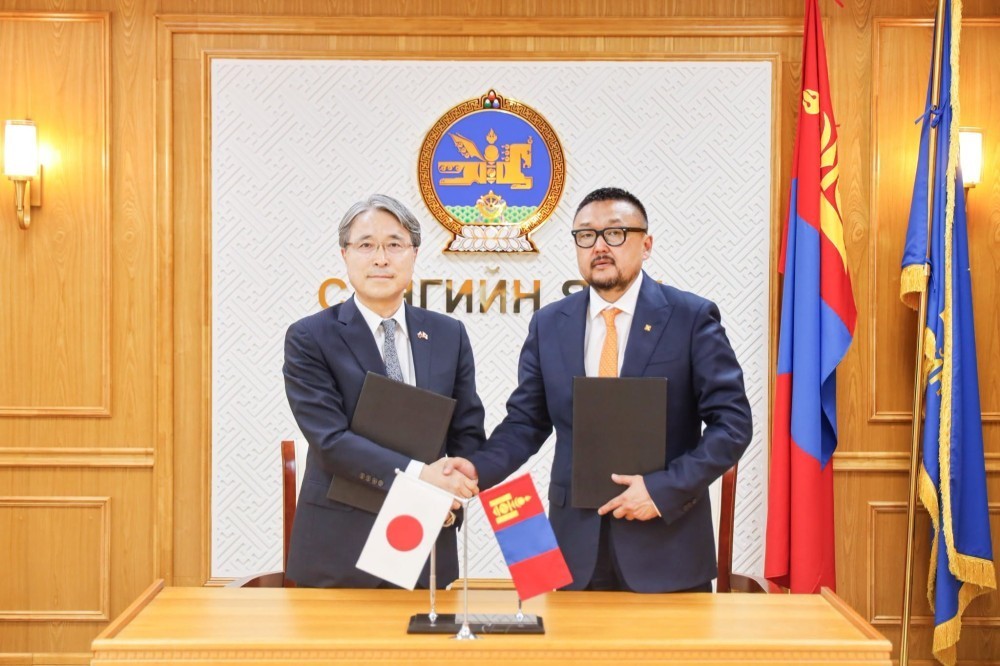
An exchange of notes was signed yesterday by Japanese Ambassador to Mongolia Igawahara Masaru and Mongolian Minister of Finance Z.Mendsaikhan.
The grant will be used to provide the National Cancer Center with essential medical equipment, including computed tomography (CT) scanners, mammography systems, and ultrasound machines, to strengthen cancer diagnosis and treatment services.
According to the project, the shortage and aging of medical equipment have made it difficult to provide timely diagnosis and treatment. As Mongolia's only national referral hospital specializing in cancer care, strengthening the National Cancer Center's capacity is expected to significantly improve the country's overall cancer treatment system.
The project aims to enhance the Center's capacity for early cancer detection, accurate diagnosis, and appropriate treatment through the introduction of modern medical equipment.
It also seeks to support the advancement of Universal Health Coverage (UHC) in Mongolia, promote the concept of human security, and further strengthen health sector cooperation between Mongolia and Japan.
Japan will provide a grant of up to ¥980 million to supply advanced diagnostic equipment to Mongolia's National Cancer Center (NCC).
An exchange of notes was signed yesterday by Japanese Ambassador to Mongolia Igawahara Masaru and Mongolian Minister of Finance Z.Mendsaikhan.
The grant will be used to provide the National Cancer Center with essential medical equipment, including computed tomography (CT) scanners, mammography systems, and ultrasound machines, to strengthen cancer diagnosis and treatment services.
According to the project, the shortage and aging of medical equipment have made it difficult to provide timely diagnosis and treatment. As Mongolia's only national referral hospital specializing in cancer care, strengthening the National Cancer Center's capacity is expected to significantly improve the country's overall cancer treatment system.
The project aims to enhance the Center's capacity for early cancer detection, accurate diagnosis, and appropriate treatment through the introduction of modern medical equipment.
It also seeks to support the advancement of Universal Health Coverage (UHC) in Mongolia, promote the concept of human security, and further strengthen health sector cooperation between Mongolia and Japan.