

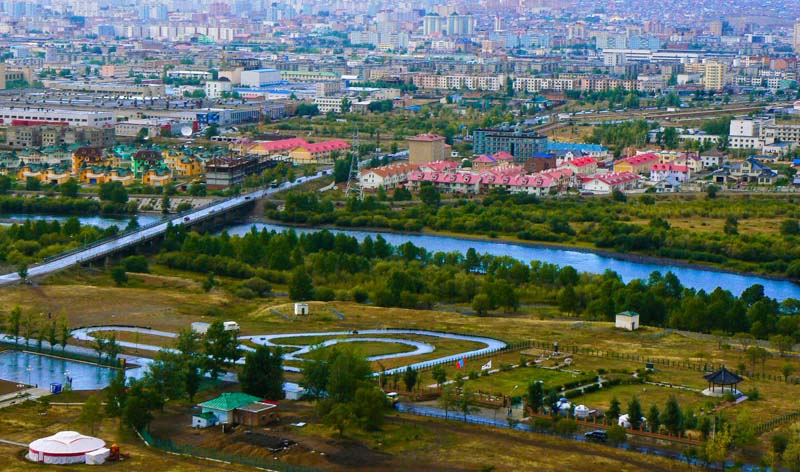
Ulaan Baatar was founded in 1639, between four mountains ridges in the Tuul Valley. The Twentieth-Century pictures show a “Felt City” made of ger’s gathering around Buddhist Monastery. However, the city starting its sustainable construction during the 20-30’s thanks to soviet support. The City is outlined according to a grid map stretches from East to West with the main part of squares and avenues look toward the South and go down toward the railway and the river.
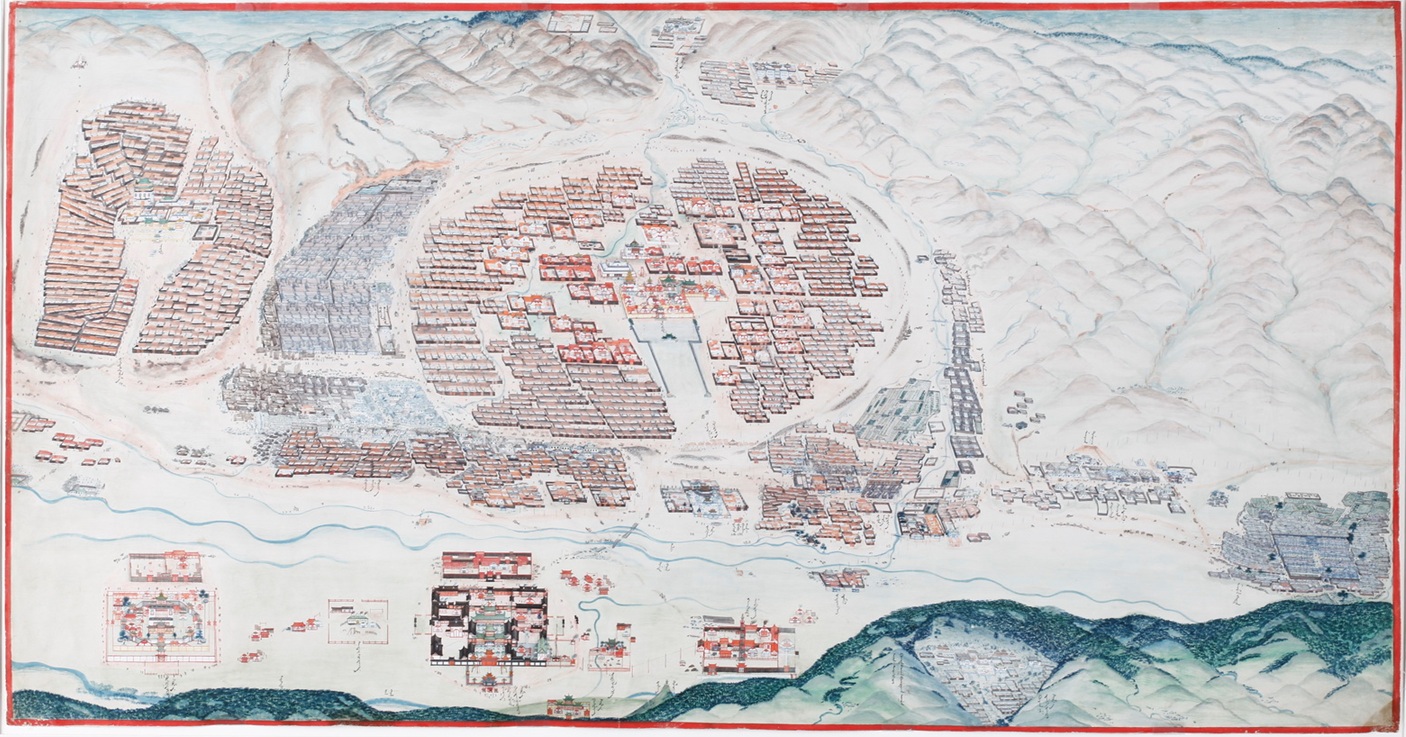
The layout of the City is established in two main parts. On the one hand, “the classical City”, built since the 1920’s, is equipped with water, electricity, sanitation grids and urban heating system managed by the public services. On the other hand, the Ger district, surrounded the City, is not connected to such grids.
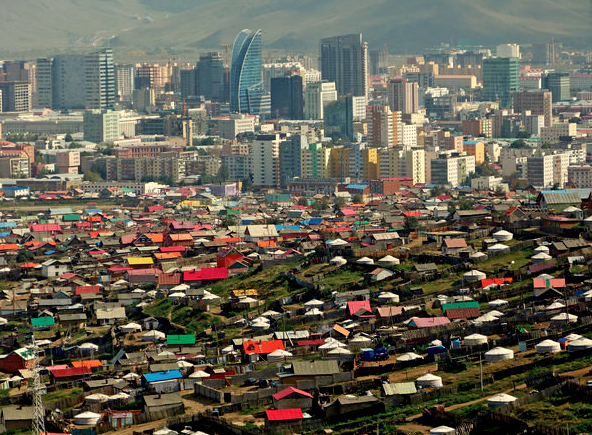
If the interest of the urban heritage seems to be obvious, the challenge today is to find a common ground regarding the best methods to preserve the past of UB.
The urban heritage bring a story, a sense, an identity to the city. Even though the word “Heritage” would initially suggest something antique, it doesn’t necessary refer only to the past. Indeed, the urban heritage is part of the past but it also determined by the present and the future of the City.
Each element constituting the City has a reason for being. Therefore, even if the society is evolving and the way of life is changing, this reason of being did not necessarily fall into obsolescence. Indeed, urban heritage isn’t an impediment for the future of the City. On the contrary, it is the keystone of the City’s future development.
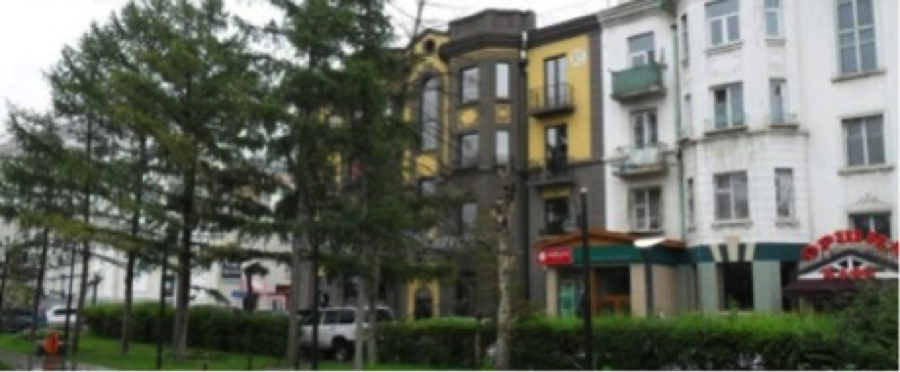
Most of the buildings in the city centre (notably the 40,000 and the 50,0000 apartments) and the public properties, such as ministries, schools, museums were built in the 50-70’s. The cityscape and its architecture are still strongly marked by the urbanism of the soviet period which form a real architectural and urban heritage worth preserving.
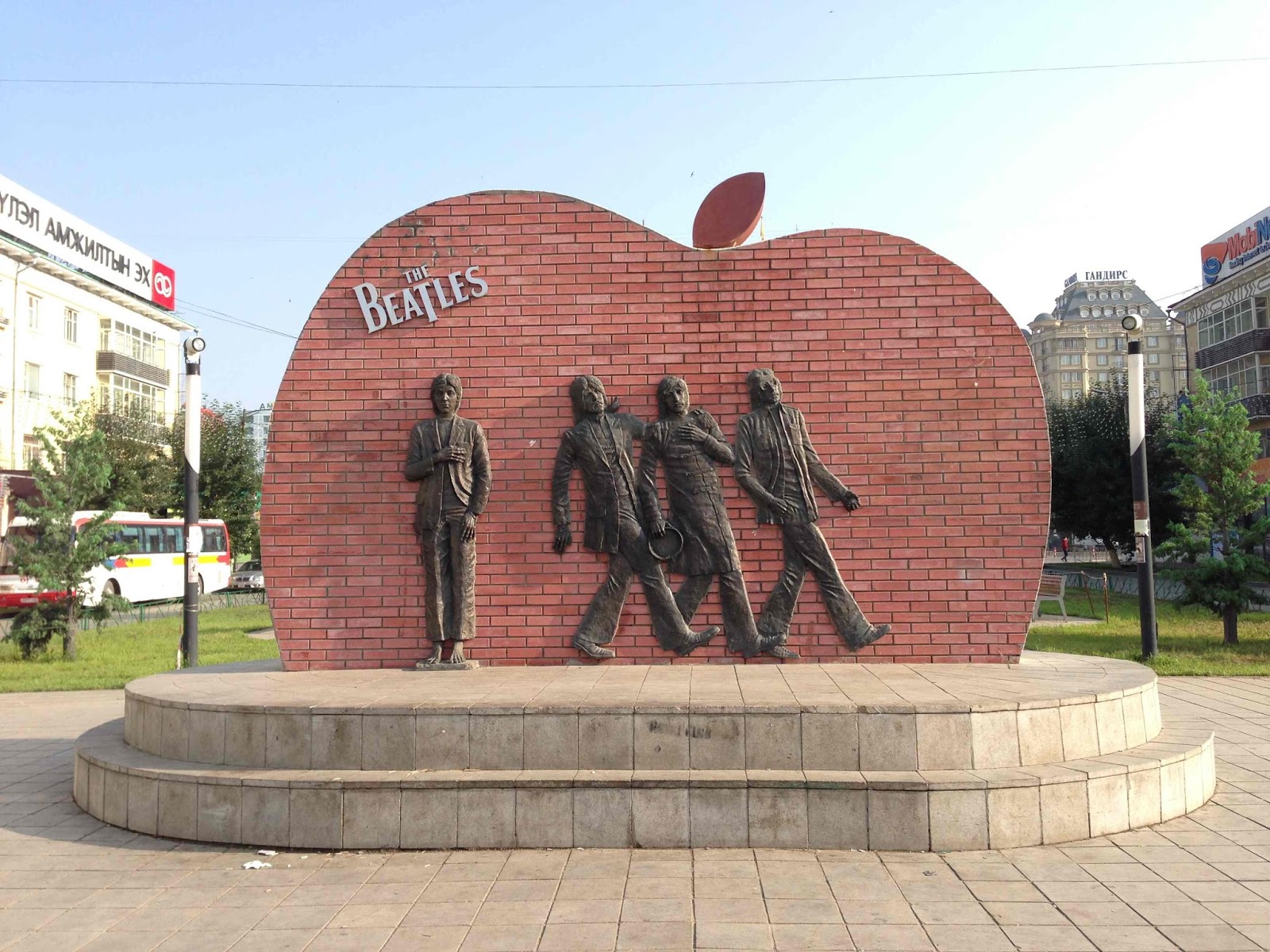 During the summer months, Tserendorj Street (also known as Beatles Street) is increasingly becoming the focal point of social and cultural events that residents of the whole city come to enjoy. From book fairs to fashion shows to music concerts, the area brings together all generations in an inclusive and increasingly creative celebrations of all aspects of Ulaanbaatar life. Far from the often isolated feel of the newly built neighbourhoods, where people live in densely packed, high-rise buildings and barely know their neighbours, this area is home to vibrant social and economic communities that have been more active and able to generate genuine social, economic and cultural participation among residents within the city than any developer has heretofore managed. The life of some of the residents of the 40k and 50k buildings makes up the city's urban heritage, maintaining a true sense of community, and demonstrates the impact that any such redevelopment may have. This is why it must be preserved at all costs for our future generations.
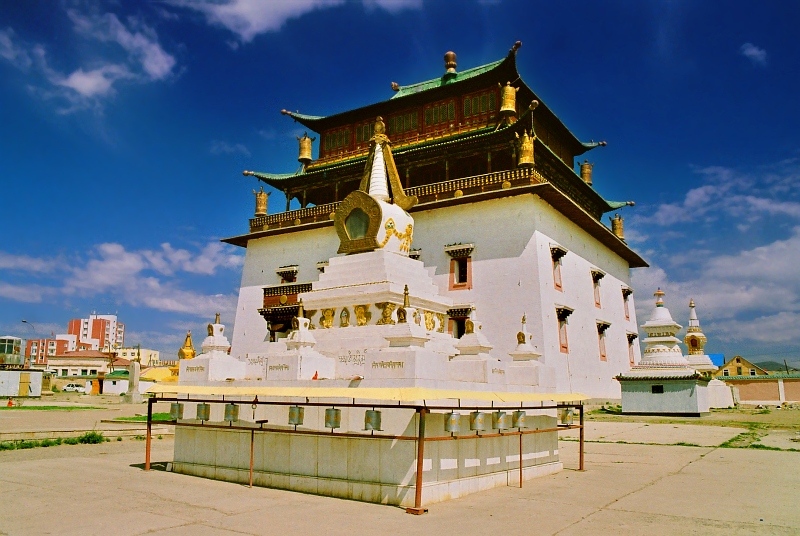
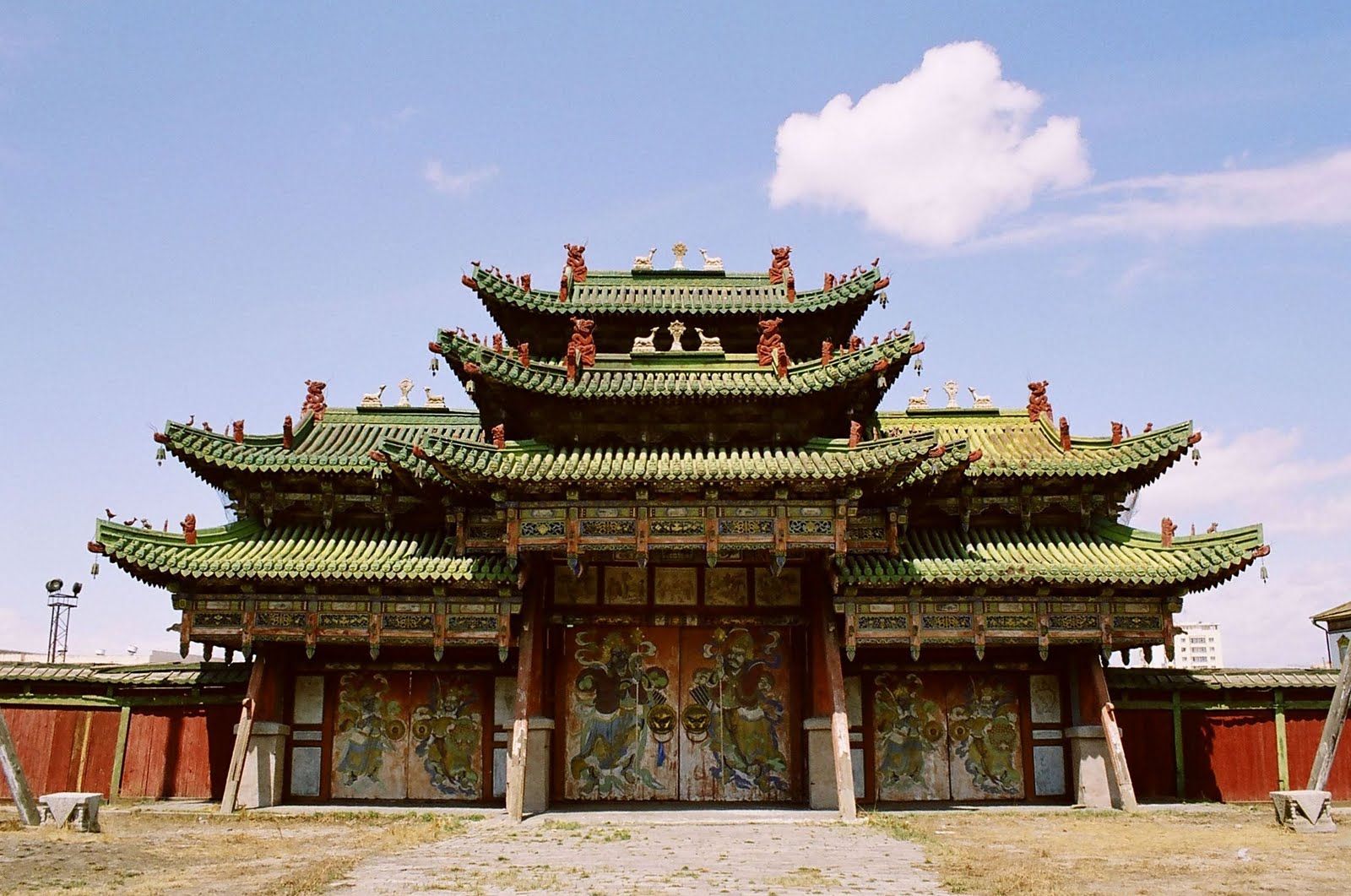
Ulaanbaatar’s urban heritage resides also in its temples and monasteries. At the beginning of the 19th century, over 100 temples and monasteries served a small (50,000) population. During the late 1930s, most of the city's temples and monasteries were destroyed, the only which partly survive was the Gandan Monastery (Gandantegchinleng Khiid). Since 1990s, Mongolian started to openly practice Buddhism again and temples were restored. Nowadays, the list of temples in Ulaanbaatar is significant. Besides the Gandan Monastery, the Chojin lama, the Bogd Khaan Winter Palace and the Bakula Rinpoche temple, without being exhaustive are hidden gems of the architecture and history of the City.
Last but not least, the Ger district remains an integral part of Ulannbaatar, making it a non common city and revealing the Mongolian way of life. Although the Ger district has to face with the lack of amenities allowing inhabitant to have a decent life, the destruction of the Ger district would not be a fair and pragmatic solution. Indeed, instead of its destruction, the development of the Ger district must be considered. The destruction would annihilate the identity of the population, while the redevelopment would renew it.
Through all these concrete examples, it is obvious that it is possible to preserve the urban heritage, looking toward the future of the City and complying with the societal evolution. Incidentally, APUR (Atelier Parisien d’urbanisme), after a couple of missions in Mongolia, point out in its reports that the protection of Ulaanbaatar’s heritage is essential.
 The urban policy has an important role to play in terms of preservation of Ulaanbaatar’s urban heritage. Government regulations are there to promote a safe, sustainable and equitable urban development, which benefits not just the wealthy few but safeguards the wellbeing of the public. With resources scarce, the focus should be upon carefully targeted policy initiatives and interventions so as to generate the greatest public improvements and social good. Nevertheless, a new decree from the Mayor’s office risks undermining the urban heritage by laying out a framework for the redevelopment of the 40k and 50k apartment blocks which make up the core of this area, as well as the construction of new buildings on top of nearly every green or public space in the area. The decree has been made on the grounds that these apartments may no longer be safe in the event of a natural disaster. Whilst the Government should be commended for taking an active stance on protecting the health and safety of its citizens, the decree is neither the most effective or proportionate response to the diagnosed problem, and it appears that ulterior motives of unscrupulous and powerful developers may well be at play.
All the difficulty to find a common ground regarding this controversial issue lie in demonstrating that the enforcement of the rules is key and the preservation of urban heritage, notably through the renovation, could be a way for enhancing the value of the City.
It is clear that within the Ulaanbaatar real estate market the primary issue is not one of construction quality or financing but that of enforcement of the rules. The laws of Mongolia regarding urban development, construction and use of public space are adequate but, through corruption and abuse of power, those laws are not being followed. The Tuul River - a supposedly protected site where no construction is allowed within a 100 meters of the riverbank - is now teeming with new development. Certain new constructions in the city centre saw their foundations poured in the middle of winter, with the cold thus rendering the concrete brittle and the overall structure highly unsafe, while entire districts (most of Zaisan for instance) were built without legal construction permits. While quality and safety remain major issues, greater enforcement and respect of the existing regulations would go a long way in allowing for improvements in, and sustainable development of, the city’s built environment. Unilateral measures taken without adequate consultation, by contrast, risk irreparably damaging it.
As a bare minimum, a full structural assessment, conducted and verified by independent international experts, should be commissioned before property is to be taken from Ulaanbaatar’s citizens without their consent. Wherever it is determined that it is necessary, or possible, to renovate or redevelop individual buildings, then care should be taken to ensure that the approach taken does not leave the area and the people who live there worse off than before. The history of urban planning internationally has shown us that simply demolishing huge swathes of a city like this would do little more than turn the area into a building site for years on end. While this may be acceptable or justifiable in some areas, in a part of the city as vibrant as the 40k and 50k apartments it would push local entrepreneurs out of business and likely destroy the social fabric of a community that is again showing signs of being forward-looking, vibrant and inclusive.
Ulaanbaatar presently has the lowest population density of any global capital, although one vision of the city’s future prescribes commercialisation and increasing population density as key to its future development, in particular with regards to the efficient provision of public services and utilities. Nevertheless, globally the dynamics of the industrial city are somewhat behind us. Residents and authorities of cities from Madrid to New York are focussed upon enhancing the value of their cities by focusing on more human-scale developments that enhance social interaction rather than routing it into commercial thoroughfares; that create opportunities for local level businesses to thrive and provide a suitable and healthy blend of vehicular and pedestrian access. Many such developments have focussed on re-identifying and re-imagining the significance of historical spaces, integrating and updating existing buildings and infrastructure with significant impact.
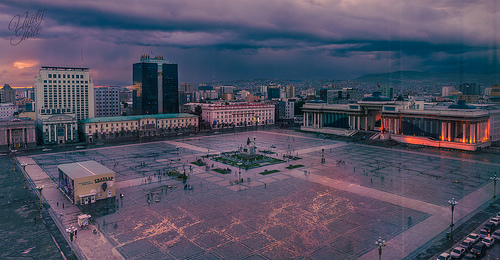
Such developments are testament to the fact that redevelopment need not and should not be done at the expense of the preservation of the urban heritage. There are intelligent uses of space that would permit both increased density, enhanced high-value commercial usage and encourage existing communities to continue to integrate and innovate. Such efforts can be seen in London, Singapore, Hong Kong, but also right here in Ulaanbaatar. The Golomt / Bodi tower and the Municipality of Ulaanbaatar buildings on the main square are the perfect example of marrying the old with the new, complementing each other without compromise. If the architectural integrity of Chinggis Square is maintained, the same should and can be done for the historic city centre of UB. Another good example of intelligent land use in Ulaanbaatar is the “Classic Tower” being built next to the Circus, it is a high density mixed-use tower with ample interior parking that doesn’t clash with its historic surroundings of the Circus and the Mercury Market but transforms what was a disused warehouse space into a well thought out urban and public space, rehabilitating and adding value to its surroundings.
Due to the many illegal constructions and changes of use, the courtyards of the 40k’s have often lost their integrity and are today made up of smaller plots that are left unused or have left awkward empty areas that could be better utilised by building taller buildings without impacting the overall feel of the area, those could be attached to the original 40k’s as in the case of the MUB or could be entirely separate but still in keeping with the character of the area. Another proven solution which has been used throughout the world is to add floors on top of the existing buildings. The existing structure could support at least an additional 2 floors without additional strengthening, those 2 floors could be turned into premium duplex properties or smaller apartments. The add-on floors should preserve the historic character of the buildings and be of the appropriate scale but could also create a contrast between the old “rigid” style of the 40k’s with a much more open and light duplex extension. The Arizona Office Centre in Ulaanbaatar is yet another perfect example of how this can be achieved as the two additional floors were in keeping with the original building but the addition of an exterior lift has given it a modern touch.
Cities are dynamic and very fluid in their development, nowhere more so than in a city that has undergone the rapid socio-economic changes that Ulaanbaatar has seen in the past two decades. For a sustainable urban development to occur in any city, it must be based on a foundation of enhancing existing value and not destroying it.
“Ulaanbaatar is a young city, built in the 20th Century. The city is currently managing an important park of historic buildings which gives it its character and which must be preserved to retain its identity. This historic urban heritage should be listed, protects and used as a model for the creation of new centres.
The equilibrium of the city needs to be preserved through the conservation and restoration of the actual city centre and its urban heritage dating from the 50’s. The aim is to maintain the centre of Ulaanbaatar as it is, and not to increase density in order to avoid real estate speculation.” (APUR, Report Mission Ulaan Baatar, 2012)
Ulaan Baatar was founded in 1639, between four mountains ridges in the Tuul Valley. The Twentieth-Century pictures show a “Felt City” made of ger’s gathering around Buddhist Monastery. However, the city starting its sustainable construction during the 20-30’s thanks to soviet support. The City is outlined according to a grid map stretches from East to West with the main part of squares and avenues look toward the South and go down toward the railway and the river.
The layout of the City is established in two main parts. On the one hand, “the classical City”, built since the 1920’s, is equipped with water, electricity, sanitation grids and urban heating system managed by the public services. On the other hand, the Ger district, surrounded the City, is not connected to such grids.
If the interest of the urban heritage seems to be obvious, the challenge today is to find a common ground regarding the best methods to preserve the past of UB.
The urban heritage bring a story, a sense, an identity to the city. Even though the word “Heritage” would initially suggest something antique, it doesn’t necessary refer only to the past. Indeed, the urban heritage is part of the past but it also determined by the present and the future of the City.
Each element constituting the City has a reason for being. Therefore, even if the society is evolving and the way of life is changing, this reason of being did not necessarily fall into obsolescence. Indeed, urban heritage isn’t an impediment for the future of the City. On the contrary, it is the keystone of the City’s future development.
Most of the buildings in the city centre (notably the 40,000 and the 50,0000 apartments) and the public properties, such as ministries, schools, museums were built in the 50-70’s. The cityscape and its architecture are still strongly marked by the urbanism of the soviet period which form a real architectural and urban heritage worth preserving.
During the summer months, Tserendorj Street (also known as Beatles Street) is increasingly becoming the focal point of social and cultural events that residents of the whole city come to enjoy. From book fairs to fashion shows to music concerts, the area brings together all generations in an inclusive and increasingly creative celebrations of all aspects of Ulaanbaatar life. Far from the often isolated feel of the newly built neighbourhoods, where people live in densely packed, high-rise buildings and barely know their neighbours, this area is home to vibrant social and economic communities that have been more active and able to generate genuine social, economic and cultural participation among residents within the city than any developer has heretofore managed. The life of some of the residents of the 40k and 50k buildings makes up the city's urban heritage, maintaining a true sense of community, and demonstrates the impact that any such redevelopment may have. This is why it must be preserved at all costs for our future generations.
Ulaanbaatar’s urban heritage resides also in its temples and monasteries. At the beginning of the 19th century, over 100 temples and monasteries served a small (50,000) population. During the late 1930s, most of the city's temples and monasteries were destroyed, the only which partly survive was the Gandan Monastery (Gandantegchinleng Khiid). Since 1990s, Mongolian started to openly practice Buddhism again and temples were restored. Nowadays, the list of temples in Ulaanbaatar is significant. Besides the Gandan Monastery, the Chojin lama, the Bogd Khaan Winter Palace and the Bakula Rinpoche temple, without being exhaustive are hidden gems of the architecture and history of the City.
Last but not least, the Ger district remains an integral part of Ulannbaatar, making it a non common city and revealing the Mongolian way of life. Although the Ger district has to face with the lack of amenities allowing inhabitant to have a decent life, the destruction of the Ger district would not be a fair and pragmatic solution. Indeed, instead of its destruction, the development of the Ger district must be considered. The destruction would annihilate the identity of the population, while the redevelopment would renew it.
Through all these concrete examples, it is obvious that it is possible to preserve the urban heritage, looking toward the future of the City and complying with the societal evolution. Incidentally, APUR (Atelier Parisien d’urbanisme), after a couple of missions in Mongolia, point out in its reports that the protection of Ulaanbaatar’s heritage is essential.
The urban policy has an important role to play in terms of preservation of Ulaanbaatar’s urban heritage. Government regulations are there to promote a safe, sustainable and equitable urban development, which benefits not just the wealthy few but safeguards the wellbeing of the public. With resources scarce, the focus should be upon carefully targeted policy initiatives and interventions so as to generate the greatest public improvements and social good. Nevertheless, a new decree from the Mayor’s office risks undermining the urban heritage by laying out a framework for the redevelopment of the 40k and 50k apartment blocks which make up the core of this area, as well as the construction of new buildings on top of nearly every green or public space in the area. The decree has been made on the grounds that these apartments may no longer be safe in the event of a natural disaster. Whilst the Government should be commended for taking an active stance on protecting the health and safety of its citizens, the decree is neither the most effective or proportionate response to the diagnosed problem, and it appears that ulterior motives of unscrupulous and powerful developers may well be at play.
All the difficulty to find a common ground regarding this controversial issue lie in demonstrating that the enforcement of the rules is key and the preservation of urban heritage, notably through the renovation, could be a way for enhancing the value of the City.
It is clear that within the Ulaanbaatar real estate market the primary issue is not one of construction quality or financing but that of enforcement of the rules. The laws of Mongolia regarding urban development, construction and use of public space are adequate but, through corruption and abuse of power, those laws are not being followed. The Tuul River - a supposedly protected site where no construction is allowed within a 100 meters of the riverbank - is now teeming with new development. Certain new constructions in the city centre saw their foundations poured in the middle of winter, with the cold thus rendering the concrete brittle and the overall structure highly unsafe, while entire districts (most of Zaisan for instance) were built without legal construction permits. While quality and safety remain major issues, greater enforcement and respect of the existing regulations would go a long way in allowing for improvements in, and sustainable development of, the city’s built environment. Unilateral measures taken without adequate consultation, by contrast, risk irreparably damaging it.
As a bare minimum, a full structural assessment, conducted and verified by independent international experts, should be commissioned before property is to be taken from Ulaanbaatar’s citizens without their consent. Wherever it is determined that it is necessary, or possible, to renovate or redevelop individual buildings, then care should be taken to ensure that the approach taken does not leave the area and the people who live there worse off than before. The history of urban planning internationally has shown us that simply demolishing huge swathes of a city like this would do little more than turn the area into a building site for years on end. While this may be acceptable or justifiable in some areas, in a part of the city as vibrant as the 40k and 50k apartments it would push local entrepreneurs out of business and likely destroy the social fabric of a community that is again showing signs of being forward-looking, vibrant and inclusive.
Ulaanbaatar presently has the lowest population density of any global capital, although one vision of the city’s future prescribes commercialisation and increasing population density as key to its future development, in particular with regards to the efficient provision of public services and utilities. Nevertheless, globally the dynamics of the industrial city are somewhat behind us. Residents and authorities of cities from Madrid to New York are focussed upon enhancing the value of their cities by focusing on more human-scale developments that enhance social interaction rather than routing it into commercial thoroughfares; that create opportunities for local level businesses to thrive and provide a suitable and healthy blend of vehicular and pedestrian access. Many such developments have focussed on re-identifying and re-imagining the significance of historical spaces, integrating and updating existing buildings and infrastructure with significant impact.
Such developments are testament to the fact that redevelopment need not and should not be done at the expense of the preservation of the urban heritage. There are intelligent uses of space that would permit both increased density, enhanced high-value commercial usage and encourage existing communities to continue to integrate and innovate. Such efforts can be seen in London, Singapore, Hong Kong, but also right here in Ulaanbaatar. The Golomt / Bodi tower and the Municipality of Ulaanbaatar buildings on the main square are the perfect example of marrying the old with the new, complementing each other without compromise. If the architectural integrity of Chinggis Square is maintained, the same should and can be done for the historic city centre of UB. Another good example of intelligent land use in Ulaanbaatar is the “Classic Tower” being built next to the Circus, it is a high density mixed-use tower with ample interior parking that doesn’t clash with its historic surroundings of the Circus and the Mercury Market but transforms what was a disused warehouse space into a well thought out urban and public space, rehabilitating and adding value to its surroundings.
Due to the many illegal constructions and changes of use, the courtyards of the 40k’s have often lost their integrity and are today made up of smaller plots that are left unused or have left awkward empty areas that could be better utilised by building taller buildings without impacting the overall feel of the area, those could be attached to the original 40k’s as in the case of the MUB or could be entirely separate but still in keeping with the character of the area. Another proven solution which has been used throughout the world is to add floors on top of the existing buildings. The existing structure could support at least an additional 2 floors without additional strengthening, those 2 floors could be turned into premium duplex properties or smaller apartments. The add-on floors should preserve the historic character of the buildings and be of the appropriate scale but could also create a contrast between the old “rigid” style of the 40k’s with a much more open and light duplex extension. The Arizona Office Centre in Ulaanbaatar is yet another perfect example of how this can be achieved as the two additional floors were in keeping with the original building but the addition of an exterior lift has given it a modern touch.
Cities are dynamic and very fluid in their development, nowhere more so than in a city that has undergone the rapid socio-economic changes that Ulaanbaatar has seen in the past two decades. For a sustainable urban development to occur in any city, it must be based on a foundation of enhancing existing value and not destroying it.
“Ulaanbaatar is a young city, built in the 20th Century. The city is currently managing an important park of historic buildings which gives it its character and which must be preserved to retain its identity. This historic urban heritage should be listed, protects and used as a model for the creation of new centres.
The equilibrium of the city needs to be preserved through the conservation and restoration of the actual city centre and its urban heritage dating from the 50’s. The aim is to maintain the centre of Ulaanbaatar as it is, and not to increase density in order to avoid real estate speculation.” (APUR, Report Mission Ulaan Baatar, 2012)