

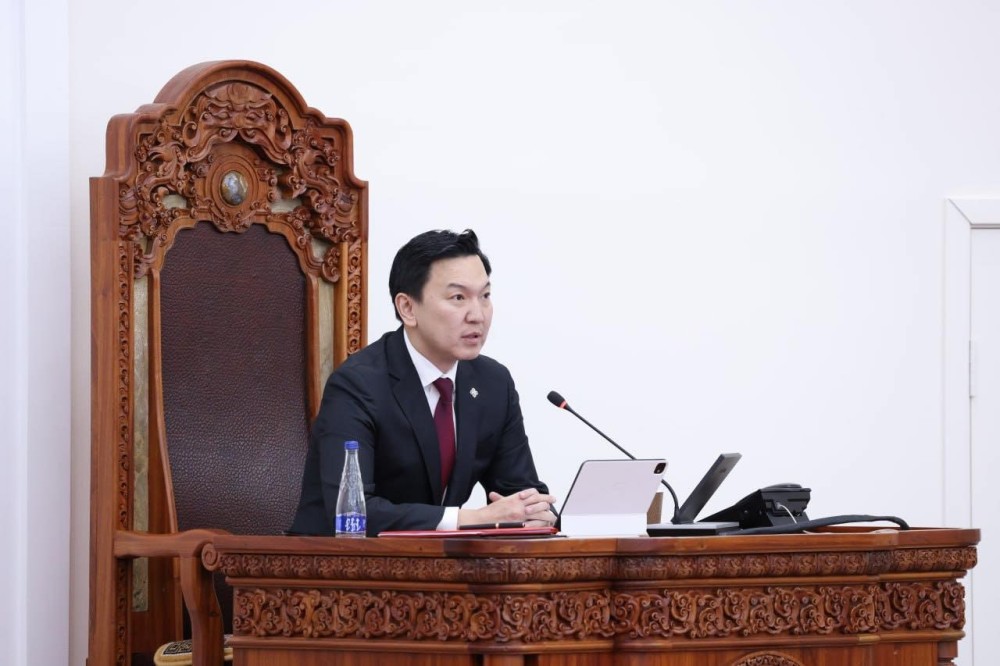
On May 13, 2026, the plenary session of the Parliament of Mongolia began, and proceeded to discuss the draft laws submitted together with the 2027 Budget Framework Statement of the Unified Budget of Mongolia and the 2028–2029 Budget Forecast Bill.
During the debate, Prime Minister N.Uchral presented the government’s position and proposal.
He said the government had submitted amendments to the Tax Law to protect jobs amid the current economic challenges.
Income up to the minimum wage, or MNT 792,000, will not be subject to personal income tax. We are also proposing to raise the VAT payer threshold from MNT 50 million to 400 million. If sales revenue is below MNT 2.5 billion, the corporate income tax rate will be 1%. This is a policy aimed at protecting citizens from price increases and preserving jobs.
He noted that the amended VAT law will take effect on October 1. Under the law, VAT refunds will be set at 20% for purchases over MNT 1 million, 50% for purchases up to MNT 1 million, and 100% for purchases up to MNT 500,000. He added that the fiscal impact of the law is nearly MNT 1.7 trillion.
The fiscal impact of the tax package we are proposing is MNT 2.2 trillion. Some members want to reduce the corporate income tax to 1%. One thing must be understood: taxes are the mechanism used to redistribute wealth.
He added that tax mechanisms are used to collect revenue from higher-income groups and maintain employment for low- and middle-income groups. “Therefore, it is not appropriate to discuss tax cuts simply by reducing percentages. In particular, personal income tax is part of local budgets. The capital city, districts, and all 21 provinces operate independently through personal income tax.
If personal income tax is reduced to 1%, local governments would be unable to function independently. 40% of corporate income tax is allocated to local governments.
If personal income tax up to the minimum wage of MNT 792,000 is eliminated, a person earning MNT 3 million will pay tax only on MNT 2.2 million, and the rest of the income will remain with them. This is the most appropriate policy.
He added that increasing VAT refunds would primarily benefit citizens with higher consumption. The welfare policy being implemented by the government today reaches only 26% of the target group. The support is not visible. Members have a choice. VAT refunds are important. If they believe it is wrong to exempt income up to MNT 792,000 from income tax, the government is ready to withdraw the VAT law. This is the choice of the members of parliament.
On May 13, 2026, the plenary session of the Parliament of Mongolia began, and proceeded to discuss the draft laws submitted together with the 2027 Budget Framework Statement of the Unified Budget of Mongolia and the 2028–2029 Budget Forecast Bill.
During the debate, Prime Minister N.Uchral presented the government’s position and proposal.
He said the government had submitted amendments to the Tax Law to protect jobs amid the current economic challenges.
Income up to the minimum wage, or MNT 792,000, will not be subject to personal income tax. We are also proposing to raise the VAT payer threshold from MNT 50 million to 400 million. If sales revenue is below MNT 2.5 billion, the corporate income tax rate will be 1%. This is a policy aimed at protecting citizens from price increases and preserving jobs.
He noted that the amended VAT law will take effect on October 1. Under the law, VAT refunds will be set at 20% for purchases over MNT 1 million, 50% for purchases up to MNT 1 million, and 100% for purchases up to MNT 500,000. He added that the fiscal impact of the law is nearly MNT 1.7 trillion.
The fiscal impact of the tax package we are proposing is MNT 2.2 trillion. Some members want to reduce the corporate income tax to 1%. One thing must be understood: taxes are the mechanism used to redistribute wealth.
He added that tax mechanisms are used to collect revenue from higher-income groups and maintain employment for low- and middle-income groups. “Therefore, it is not appropriate to discuss tax cuts simply by reducing percentages. In particular, personal income tax is part of local budgets. The capital city, districts, and all 21 provinces operate independently through personal income tax.
If personal income tax is reduced to 1%, local governments would be unable to function independently. 40% of corporate income tax is allocated to local governments.
If personal income tax up to the minimum wage of MNT 792,000 is eliminated, a person earning MNT 3 million will pay tax only on MNT 2.2 million, and the rest of the income will remain with them. This is the most appropriate policy.
He added that increasing VAT refunds would primarily benefit citizens with higher consumption. The welfare policy being implemented by the government today reaches only 26% of the target group. The support is not visible. Members have a choice. VAT refunds are important. If they believe it is wrong to exempt income up to MNT 792,000 from income tax, the government is ready to withdraw the VAT law. This is the choice of the members of parliament.