

Today is marking the 124th birth anniversary of a leader of the fight for freedom and independence of Mongolia D.Sukhbaatar. He was the commander and chief of the People’s Militia, which liberated the capital city in 1921 and re-declared the independence of Mongolia.
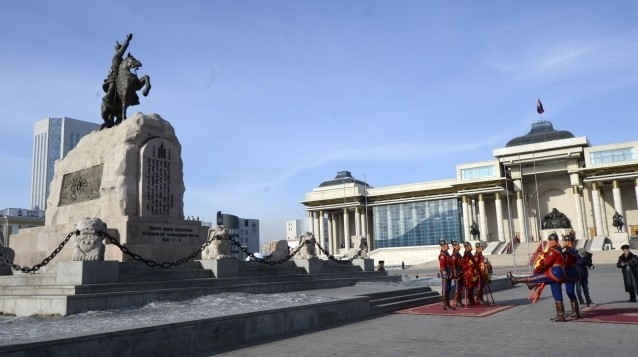
Every year, as a tradition, Mongolians reminisces the great leader and lay wreaths to his Statue on the central square named after him. This year, on this day, Speaker of Mongolian Parliament and Chairman of Mongolian People’s Party M.Enkhbold, Prime Minister J.Erdenebat, Secretary –General of the Mongolian People’s Party D.Amarbayasgalan, members of cabinet and the MPP’s members laid wreaths to D.Sukhbaatar’s statue.
“General Sukhbaatar” photographic exhibition by Researcher O.Baatar opened at the Independence Palace, and the exhibition composing of historic artifacts in connection with D.Sukhbaatar and Kh.Choibalsan is being displayed at the Mongolian National Museum. Also, a ceremony will be held today to lay wreaths at the abandoned site of his home.

Sukhbaatar was born on February 2 of 1893 to an ordinary herdsman Damdin’s family. Sukhbaatar helped his family by carrying meat, collecting firewood and working as a mailman. His father Damdin took his son to Duke S.Jamiyan in 1907 and made Sukhbaatar his disciple. While being with S.Jamiyan, D.Sukhbaatar learnt Mongolian script and mathematics.
D.Sukhbaatar served in the army between 1912 and 1918. After this, he started working at the legal document publishing office. In the meantime, he entered into the secret group. He began taking active parts in the group’s actions after the Goumindang army of China had ousted Mongolia’s military authorities in the capital city, which was then called Niislel Khuree, on January 5 of 1920.
Sukhbaatar was one of the First Seven representatives to ask for the Soviet’s assistance in order to liberate Mongolia from Guomindang’s army and “white” Russian forces. On March 6 of 1921, D.Sukhbaatar was appointed the commander and chief of the newly established People’s Militia of Mongolia.

He worked as the Defense Minister between March and December of 1922, and had been a member of the Army Council between April of 1921 and February of 1923, until he died.
He was one of the signees to the Friendship Agreement between Mongolia and the Soviet Union. D.Sukhbaatar was the first person to be awarded with both the title Hero of the People’s Republic of Mongolia and the Red Banner Order of the USSR.
D.Sukhbaatar passed away upon the sunshine of February 20 of 1923. Historians suggest two explanations to his death, either of a chronic illness or assassination. Some of Mongolian movies tells the story about his death that Sukhbaatar was murdered. The reason of the great leader’s death remains unclear.
Today, a province in the eastern Mongolia and the central square of Ulaanbaatar city are named after him. The equestrian statue of Sukhbaatar stands in the center of Sukhbaatar Square.
Today is marking the 124th birth anniversary of a leader of the fight for freedom and independence of Mongolia D.Sukhbaatar. He was the commander and chief of the People’s Militia, which liberated the capital city in 1921 and re-declared the independence of Mongolia.
Every year, as a tradition, Mongolians reminisces the great leader and lay wreaths to his Statue on the central square named after him. This year, on this day, Speaker of Mongolian Parliament and Chairman of Mongolian People’s Party M.Enkhbold, Prime Minister J.Erdenebat, Secretary –General of the Mongolian People’s Party D.Amarbayasgalan, members of cabinet and the MPP’s members laid wreaths to D.Sukhbaatar’s statue.
“General Sukhbaatar” photographic exhibition by Researcher O.Baatar opened at the Independence Palace, and the exhibition composing of historic artifacts in connection with D.Sukhbaatar and Kh.Choibalsan is being displayed at the Mongolian National Museum. Also, a ceremony will be held today to lay wreaths at the abandoned site of his home.
Sukhbaatar was born on February 2 of 1893 to an ordinary herdsman Damdin’s family. Sukhbaatar helped his family by carrying meat, collecting firewood and working as a mailman. His father Damdin took his son to Duke S.Jamiyan in 1907 and made Sukhbaatar his disciple. While being with S.Jamiyan, D.Sukhbaatar learnt Mongolian script and mathematics.
D.Sukhbaatar served in the army between 1912 and 1918. After this, he started working at the legal document publishing office. In the meantime, he entered into the secret group. He began taking active parts in the group’s actions after the Goumindang army of China had ousted Mongolia’s military authorities in the capital city, which was then called Niislel Khuree, on January 5 of 1920.
Sukhbaatar was one of the First Seven representatives to ask for the Soviet’s assistance in order to liberate Mongolia from Guomindang’s army and “white” Russian forces. On March 6 of 1921, D.Sukhbaatar was appointed the commander and chief of the newly established People’s Militia of Mongolia.
He worked as the Defense Minister between March and December of 1922, and had been a member of the Army Council between April of 1921 and February of 1923, until he died.
He was one of the signees to the Friendship Agreement between Mongolia and the Soviet Union. D.Sukhbaatar was the first person to be awarded with both the title Hero of the People’s Republic of Mongolia and the Red Banner Order of the USSR.
D.Sukhbaatar passed away upon the sunshine of February 20 of 1923. Historians suggest two explanations to his death, either of a chronic illness or assassination. Some of Mongolian movies tells the story about his death that Sukhbaatar was murdered. The reason of the great leader’s death remains unclear.
Today, a province in the eastern Mongolia and the central square of Ulaanbaatar city are named after him. The equestrian statue of Sukhbaatar stands in the center of Sukhbaatar Square.