

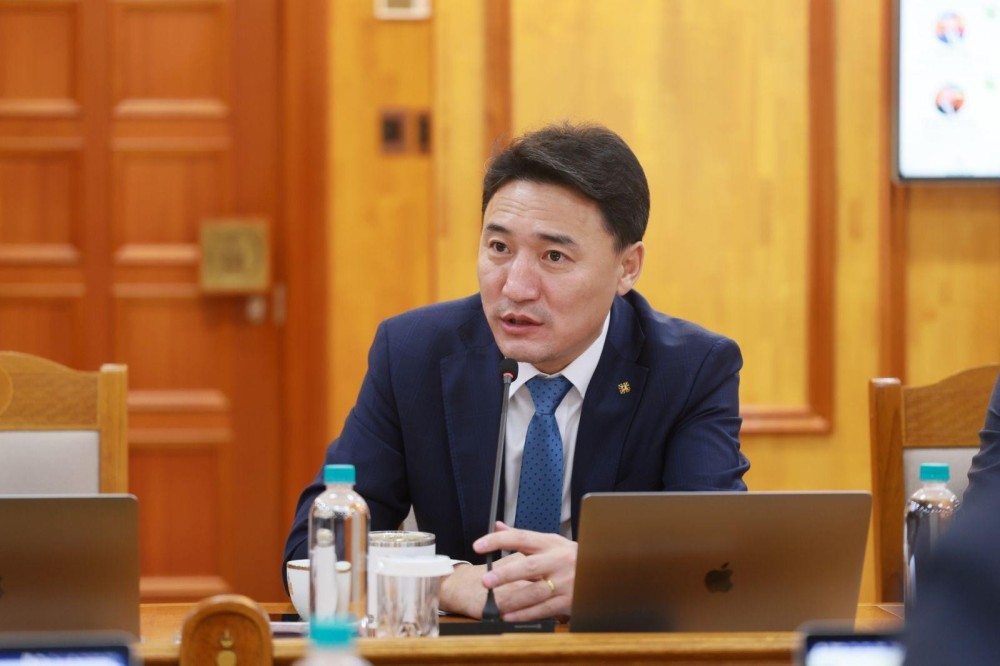
Starting August 4, fuel will be sold by even-odd numbered license plates, with a purchase limit of ₮50,000 worth of fuel per vehicle, Minister of Industry and Mineral Resources G.Damdinnyam announced at a press briefing on August 3.
The Minister said Mongolia had maintained the required level of fuel supplies during the Russia–Ukraine war. However, he noted that disruptions to global oil transportation and refined fuel supplies intensified after tensions involving the United States and Iran affected shipping through the Strait of Hormuz, contributing to a worldwide energy supply challenge.
The government is holding discussions with all possible partner countries to secure additional fuel supplies. Negotiations with Kazakhstan were unsuccessful, while talks are continuing with China and Singapore.
Mongolia has reached a political agreement with the Republic of Korea to import 20,000 tons of AI-92 gasoline and 10,000 tons of Jet A-1 aviation fuel each month.
Although plans to build strategic fuel storage facilities had been discussed for more than two decades, implementation only began after funding was approved on December 30, 2025. Construction of fuel storage tanks with a total capacity of 300,000 tons started in March 2026.
The first phase, consisting of 150,000 tons of storage capacity, is expected to be completed this year. Once operational, the reserve will provide approximately three months of fuel storage, enabling Mongolia to withstand a temporary supply disruption of up to 40% without major difficulties.
Starting August 4, fuel will be sold by even-odd numbered license plates, with a purchase limit of ₮50,000 worth of fuel per vehicle, Minister of Industry and Mineral Resources G.Damdinnyam announced at a press briefing on August 3.
The Minister said Mongolia had maintained the required level of fuel supplies during the Russia–Ukraine war. However, he noted that disruptions to global oil transportation and refined fuel supplies intensified after tensions involving the United States and Iran affected shipping through the Strait of Hormuz, contributing to a worldwide energy supply challenge.
The government is holding discussions with all possible partner countries to secure additional fuel supplies. Negotiations with Kazakhstan were unsuccessful, while talks are continuing with China and Singapore.
Mongolia has reached a political agreement with the Republic of Korea to import 20,000 tons of AI-92 gasoline and 10,000 tons of Jet A-1 aviation fuel each month.
Although plans to build strategic fuel storage facilities had been discussed for more than two decades, implementation only began after funding was approved on December 30, 2025. Construction of fuel storage tanks with a total capacity of 300,000 tons started in March 2026.
The first phase, consisting of 150,000 tons of storage capacity, is expected to be completed this year. Once operational, the reserve will provide approximately three months of fuel storage, enabling Mongolia to withstand a temporary supply disruption of up to 40% without major difficulties.