

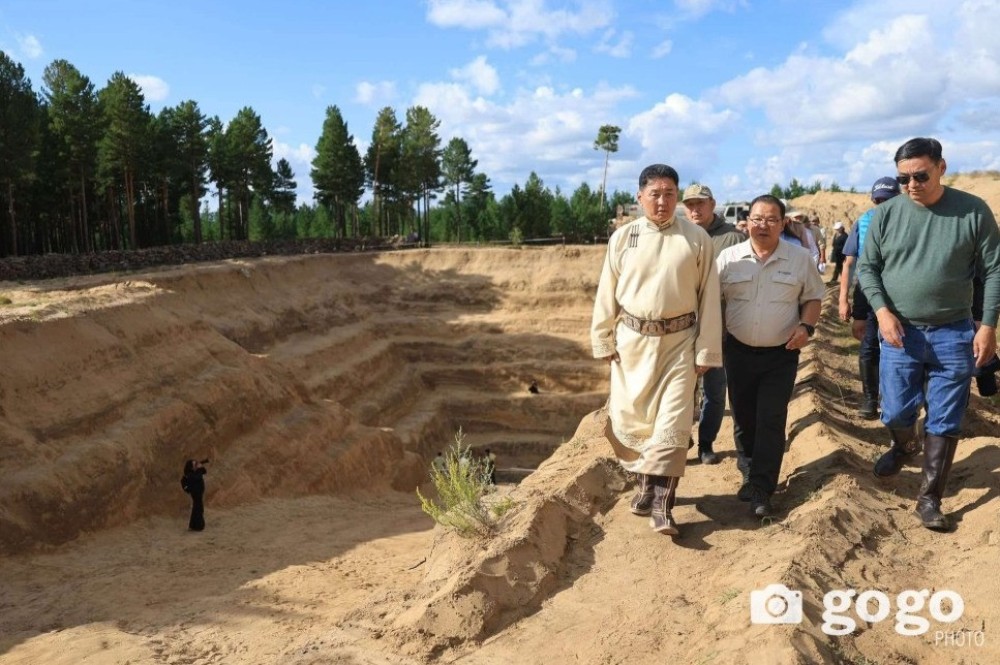
President U.Khurelsukh reviewed the progress of ongoing archaeological research at the Duurlig Nars Hunnu archaeological site in Bayan-Adarga soum, Khentii province.
Since 2006, detailed archaeological research at the site has been conducted by the Institute of Archaeology of the Mongolian Academy of Sciences, the National Museum of Mongolia, and the National Museum of Korea under the joint Mongolia–Korea “Mon-Sol” project.
Researchers are currently excavating Tomb No. 160, described as the largest Hunnu noble tomb discovered in the Eurasian region. The monument has a total length of approximately 80 meters, while its main structure measures 40x40 meters.
A total of six large tombs of Hunnu nobles have been identified at 14 locations in the area. Researchers believe they were associated with members of the upper Hunnu elite, including the Shanyu, the title used for the supreme ruler of the Hunnu.
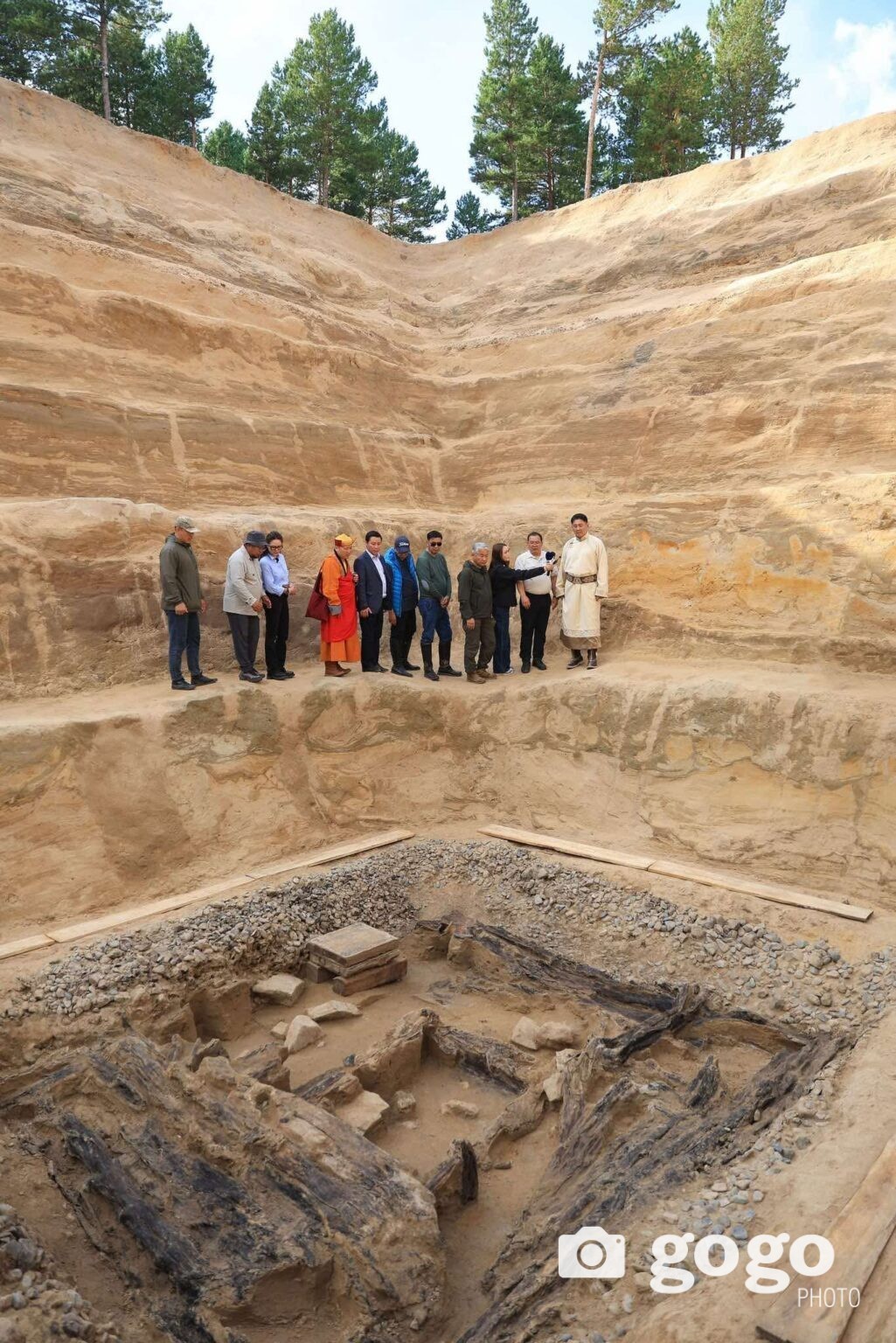
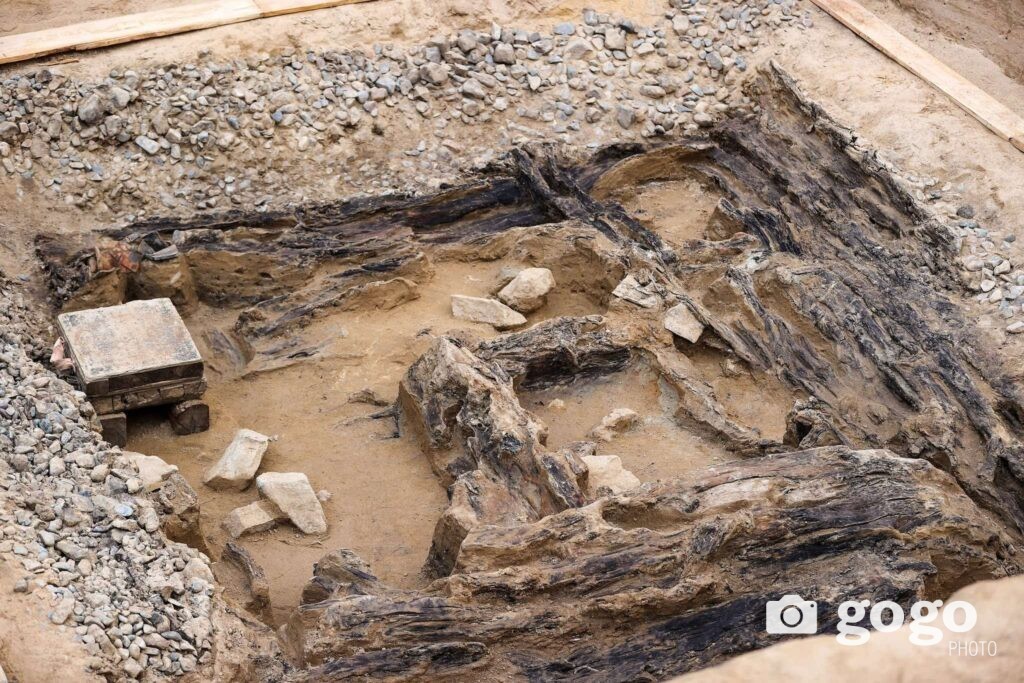
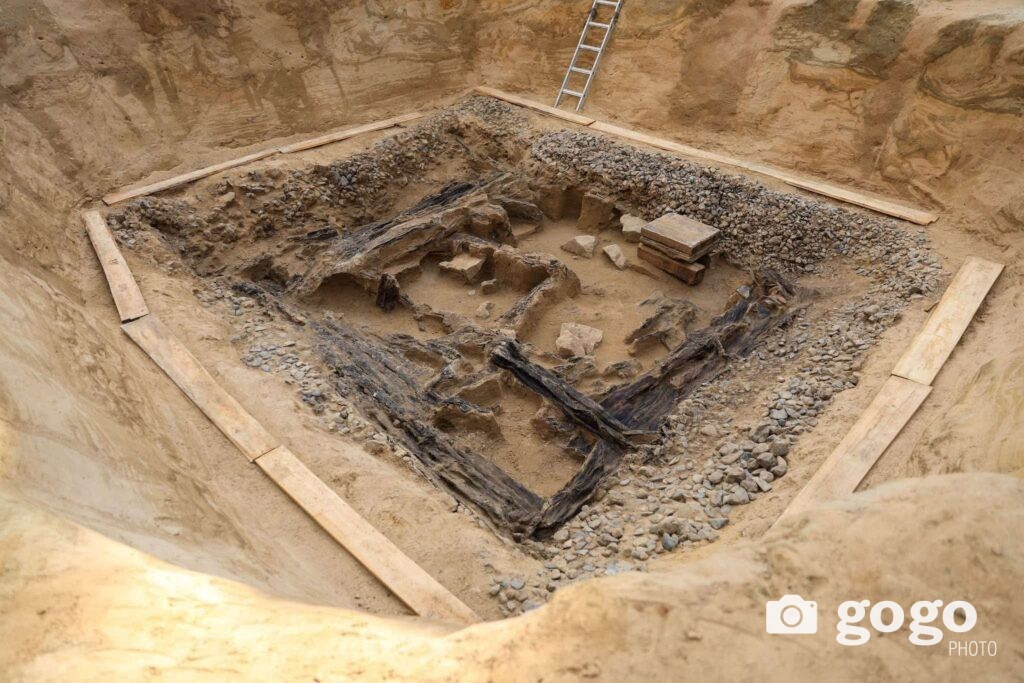
Following the excavation of six satellite tombs, researchers began investigating the main tomb. Excavation and examination of the burial area, including the wooden burial chamber, are currently underway.
The excavation has reached a depth of approximately 15 meters, equivalent to a five-story building. The structure of the tomb pit, from the surface down to the burial chamber, indicates an inverted-pyramid design.
A growing number of significant artifacts have been discovered above the wooden burial chamber, including the remains of a chariot painted black and red and decorated with gold and bronze elements.
President U.Khurelsukh thanked the research team for their work and wished them success in continuing the excavation. He also noted that the joint Mongolia–Korea “Mon-Sol” project is an important expression of the friendship and cooperation between the two countries and their peoples.
The Duurlig Nars Hunnu site is one of the “Hunnu Noble Tombs and Burial Complexes” registered on the UNESCO World Heritage List.
Located in a pine forest south of the Bayan-Adarga soum center, the archaeological site contains approximately 300 graves dating to the Hunnu period. The site was first discovered in 1974 by Perlee Khuduu and Academician D.Tseveendorj. It was surveyed and documented in 1990 under the joint Mongolia–Japan “Three Rivers” project.
Between 2006 and 2012, researchers excavated three Hunnu noble tombs, two medium-sized tombs with square stone structures, and 13 smaller accompanying tombs.
Thousands of artifacts have been unearthed at the site, including black-painted chariots, gold coffin ornaments, bronze vessels, lamp stands, horse and livestock equipment, gold and precious-stone necklaces and other ornaments, jade objects, black-painted cups and utensils, ladles and strainers, clay vessels, bronze mirrors, and wooden combs.
Researchers believe that newly discovered and previously undocumented artifacts, including a complete horsehair bridle and a gold-plated bronze coffin handle, will make an important contribution to the study of Hunnu history and culture.
The artifacts discovered at the site are being preserved and made available to the public by the Chinggis Khaan National Museum, National Museum of Mongolia, and Khentii Province Museum.
Plans are also underway to establish a Research and Information Center and an open-air museum at the Duurlig Nars archaeological site in the future.
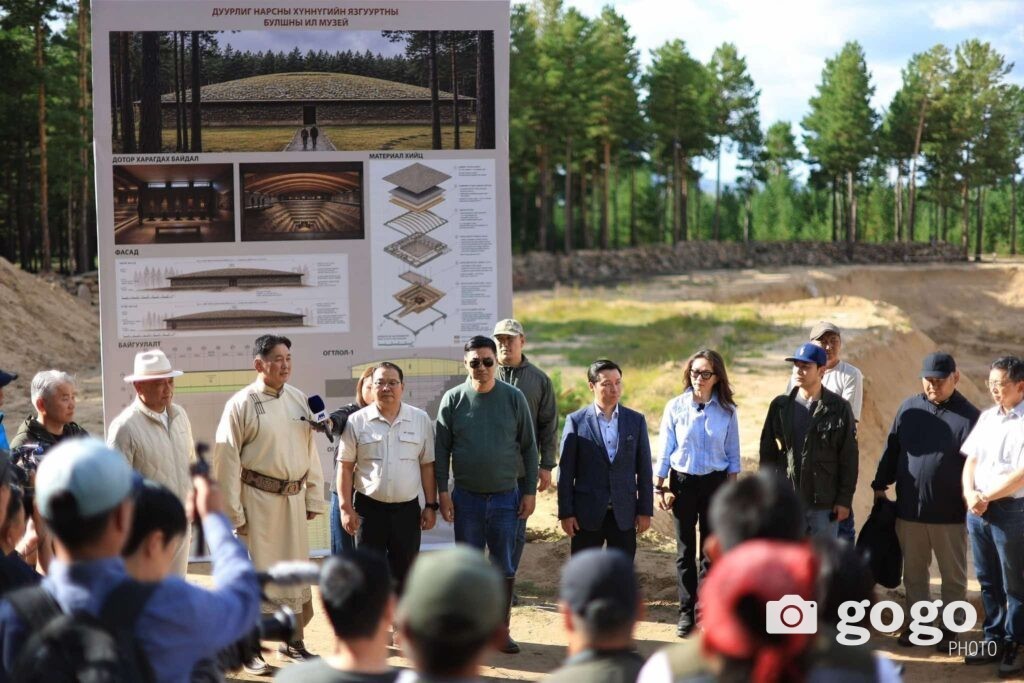
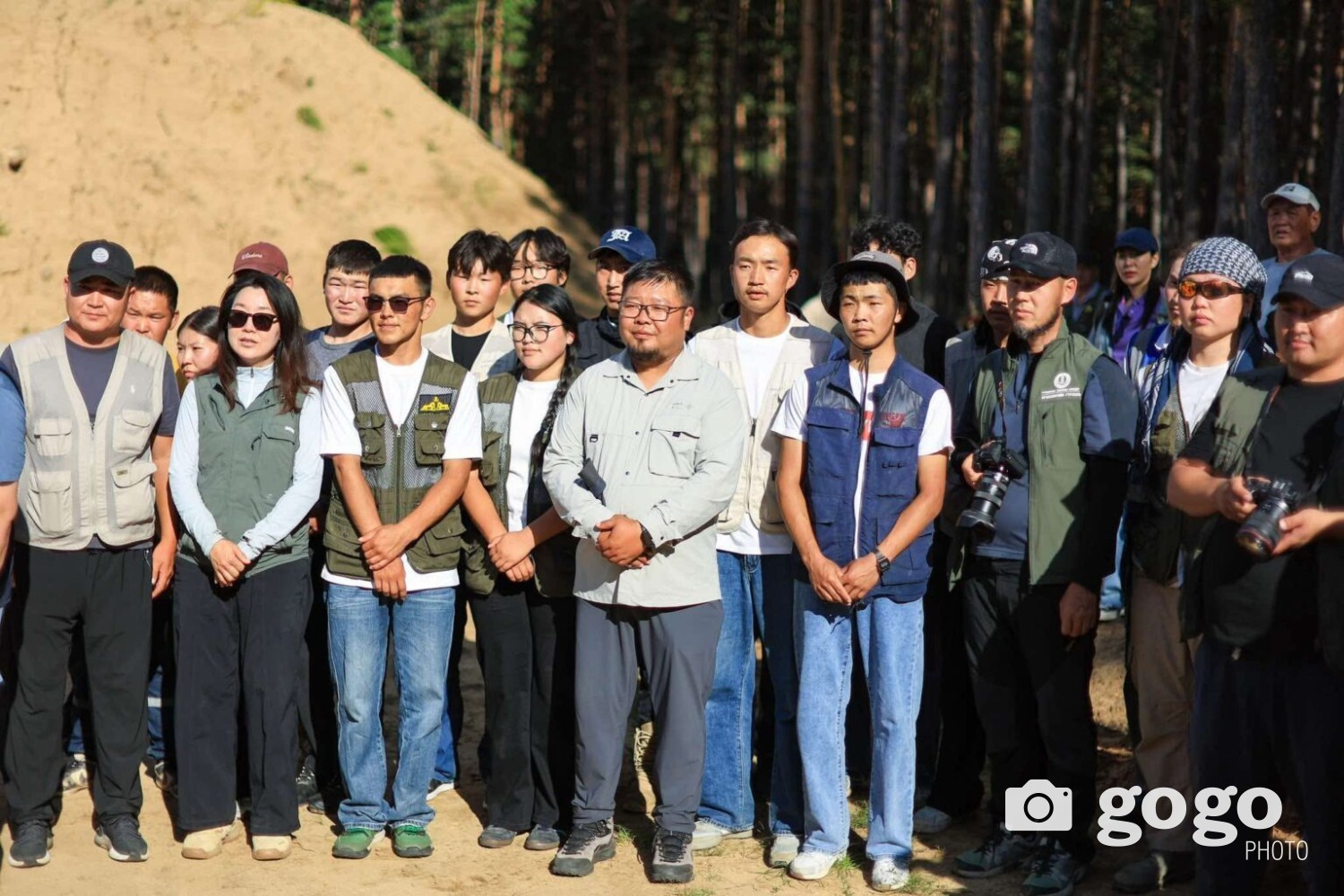
President U.Khurelsukh reviewed the progress of ongoing archaeological research at the Duurlig Nars Hunnu archaeological site in Bayan-Adarga soum, Khentii province.
Since 2006, detailed archaeological research at the site has been conducted by the Institute of Archaeology of the Mongolian Academy of Sciences, the National Museum of Mongolia, and the National Museum of Korea under the joint Mongolia–Korea “Mon-Sol” project.
Researchers are currently excavating Tomb No. 160, described as the largest Hunnu noble tomb discovered in the Eurasian region. The monument has a total length of approximately 80 meters, while its main structure measures 40x40 meters.
A total of six large tombs of Hunnu nobles have been identified at 14 locations in the area. Researchers believe they were associated with members of the upper Hunnu elite, including the Shanyu, the title used for the supreme ruler of the Hunnu.
Following the excavation of six satellite tombs, researchers began investigating the main tomb. Excavation and examination of the burial area, including the wooden burial chamber, are currently underway.
The excavation has reached a depth of approximately 15 meters, equivalent to a five-story building. The structure of the tomb pit, from the surface down to the burial chamber, indicates an inverted-pyramid design.
A growing number of significant artifacts have been discovered above the wooden burial chamber, including the remains of a chariot painted black and red and decorated with gold and bronze elements.
President U.Khurelsukh thanked the research team for their work and wished them success in continuing the excavation. He also noted that the joint Mongolia–Korea “Mon-Sol” project is an important expression of the friendship and cooperation between the two countries and their peoples.
The Duurlig Nars Hunnu site is one of the “Hunnu Noble Tombs and Burial Complexes” registered on the UNESCO World Heritage List.
Located in a pine forest south of the Bayan-Adarga soum center, the archaeological site contains approximately 300 graves dating to the Hunnu period. The site was first discovered in 1974 by Perlee Khuduu and Academician D.Tseveendorj. It was surveyed and documented in 1990 under the joint Mongolia–Japan “Three Rivers” project.
Between 2006 and 2012, researchers excavated three Hunnu noble tombs, two medium-sized tombs with square stone structures, and 13 smaller accompanying tombs.
Thousands of artifacts have been unearthed at the site, including black-painted chariots, gold coffin ornaments, bronze vessels, lamp stands, horse and livestock equipment, gold and precious-stone necklaces and other ornaments, jade objects, black-painted cups and utensils, ladles and strainers, clay vessels, bronze mirrors, and wooden combs.
Researchers believe that newly discovered and previously undocumented artifacts, including a complete horsehair bridle and a gold-plated bronze coffin handle, will make an important contribution to the study of Hunnu history and culture.
The artifacts discovered at the site are being preserved and made available to the public by the Chinggis Khaan National Museum, National Museum of Mongolia, and Khentii Province Museum.
Plans are also underway to establish a Research and Information Center and an open-air museum at the Duurlig Nars archaeological site in the future.