

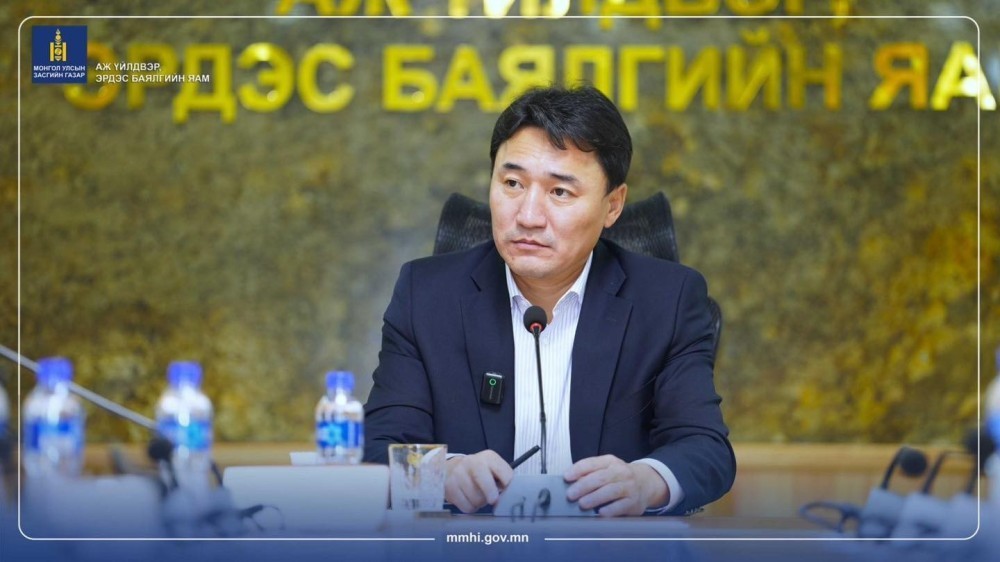
The second meeting of the Steel Industry Complex Working Group, established by Prime ministerial decree, was held on February 3, 2026 to review a preliminary technical and economic feasibility study and approve a plan to select international strategic investors and partners.
G.Gankhuyag, manager of the Production, Technology and Project Development Department at Erdenes UTP LLC, presented the preliminary feasibility study. He told the group that Mongolia imported about 1 million tonnes of steel products by the end of 2025, and that domestic steel consumption is projected to reach 1.7 million tonnes by 2030.
On that basis, the study estimates a steel complex with 1 million tonnes per year capacity could meet roughly 60–70% of domestic demand and enable local production of key products such as rebar, steel balls and billets.
Minister of Industry and Mineral Resources G.Damdinnyam said the project should pursue an export-oriented strategy rather than serving only domestic demand. “Mongolia has the advantage that steel produced in Mongolia can reach the European market in 10 days, while steel from China can take 60 days,” he said. He added that high-quality Mongolian steel could target sectors with low sales risk and strong demand, such as automotive components, wind turbines and specialised drilling steel.
The Minister said Mongolia has moved from planning into practical preparation and that an international open tender for strategic partners is ready to be announced.
The second meeting of the Steel Industry Complex Working Group, established by Prime ministerial decree, was held on February 3, 2026 to review a preliminary technical and economic feasibility study and approve a plan to select international strategic investors and partners.
G.Gankhuyag, manager of the Production, Technology and Project Development Department at Erdenes UTP LLC, presented the preliminary feasibility study. He told the group that Mongolia imported about 1 million tonnes of steel products by the end of 2025, and that domestic steel consumption is projected to reach 1.7 million tonnes by 2030.
On that basis, the study estimates a steel complex with 1 million tonnes per year capacity could meet roughly 60–70% of domestic demand and enable local production of key products such as rebar, steel balls and billets.
Minister of Industry and Mineral Resources G.Damdinnyam said the project should pursue an export-oriented strategy rather than serving only domestic demand. “Mongolia has the advantage that steel produced in Mongolia can reach the European market in 10 days, while steel from China can take 60 days,” he said. He added that high-quality Mongolian steel could target sectors with low sales risk and strong demand, such as automotive components, wind turbines and specialised drilling steel.
The Minister said Mongolia has moved from planning into practical preparation and that an international open tender for strategic partners is ready to be announced.